February Star Stories Live

Abriachan Forest

I’ll once again be collaborating with Abriachan Forest (a dark sky discover site) to bring you another online Star Stories in February. This month we have two guest speakers fulfilling the astronomy and storytelling segments.

Eric Walker from the Highlands Astronomical Society joins us to speak about his passion for night sky and deep sky photography. He’ll be sharing some great tips to help you capture the wonders of the night sky yourself and many of the breathtaking pictures he’s captured over the years. (http://www.spacegazer.com)

Afterwards we’ll be joined by Daniel Allison – an acclaimed oral storyteller who performs everywhere from schools and prisons to global festivals. Daniel hosts the House of Legends Podcast and is the author of The Bone Flute, Silverborn, Scottish Myths & Legends and Finn & The Fianna. (https://www.houseoflegends.me)

Plus a What’s Up guide to the night sky from your truly. Due to current circumstances this event is free and open to everyone however we would kindly ask you to donate to the speakers directly via links which will go up during the sessions.Many thanks for your support in advance.

Join the event here: https://fb.me/e/4MxdmU9gt
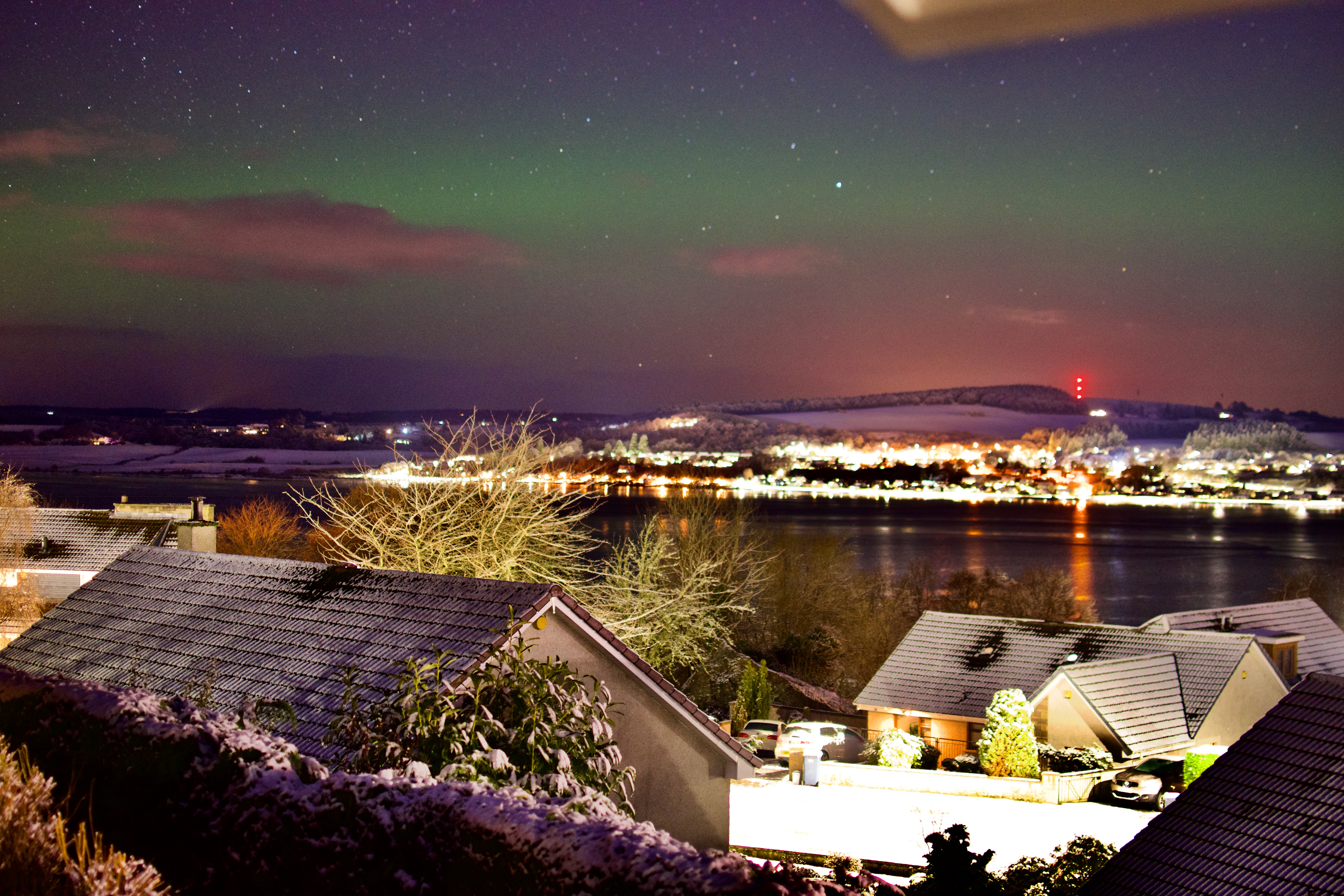
Aurora Borealis display from Inverness

I got lucky the other night and snapped the northern lights from my house in Inverness looking over towards the Black Isle. I was out filming for a stargazing video and noticed the bright glow naked eye.

Many people living in the north of Scotland wonder why they’ve never seen the northern lights because they’re more common than you might think.

Three of the main problems:

1. We hardly ever go outside in the cold of winter and spend so much time indoors.
2. Too much light pollution.
3. Looking in the wrong direction.

And here’s some simple solutions:

1. Get outside more and go for night walks – something I’ve been doing even more during lockdown.
2. Walk somewhere local but away from street lights. Try to get elevated – a local wood or hill perhaps.
3. Look North.

The Inverness Courier shared the image with a short story here.

Einstein Goes To Hollywood

Join me at 7pm on Sunday the 31st January for a special live talk with Glasgow University’s Professor Martin Hendry – Professor of Gravitational Astrophysics and Cosmology.

Martin will be taking a light-hearted look at how ideas from Einstein’s theories have found their way into lots of the blockbuster movies we know and love. Plus a What’s Up guide to February skies from yours truly.

This event is brought to you by the Merkinch Nature Reserve Astronomy programme. It’s free and open to everyone but if you enjoy the session we would ask you to kindly donate using the provided links during the event stream.

The event will be broadcast live from my facebook page. Please use the following link to join the stream: https://fb.me/e/2hskXuAmx

The Andromeda Galaxy

Many people are unaware that you can observe a totally independent galaxy, outside our own Milky Way, with a basic pair of binoculars, or even the naked eye with good seeing. Here’s how to find Andromeda, our brightest and closest large galactic neighbour.

Finding it

Mars is well placed high and bright in the SW at the moment to help you find Andromeda. From Mars find the four stars marking the great square of Pegasus and then star hop to its rough location using my guide below. Scan this region of sky with binoculars and you should eventually see a faint glow of diffuse light. That’s Andromeda.

What you’re seeing

The Andromeda galaxy is our nearest galactic neighbour at around 2.5 million light years away. Which means when you see it, the light reaching you left Andromeda millions of years ago, a time long before human beings dominated our planet. How is it we can see Andromeda at this stupefying distance when we can only see stars within a few thousand light years? The reason is size and composition. Andromeda, just like our own Milky Way galaxy, is a vast spiral storm of stars, over 100,000 light years in diameter. The glow of light you see is from an accumulation of over one trillion stars.

Very Active Peak Geminids

Andy Coley. Taken from Portskerra in Sutherland.

From my own exposure last night and the testimony of many eye witness accounts posted on my Facebook page, the peak of the 2020 Geminids was one of the most active meteors showers in several years. Many parts of northern Scotland had clear skies with reported activity reaching up to 40-50 meteors per hour.

From my own location at the western end of Inverness I was able to observe a flurry of bright shooting stars early in the evening was all set to head out into darker locations when clouds rolled in. Thankfully, skies opened up again after 11pm and I witnessed several more under partially clear skies, with a particularly bright example fizzing overhead towards the north west around 11.30pm.

I’ll leave you with some amazing photographs captured around the north of Scotland.

Chris Cogan up in Muie, Sutherland
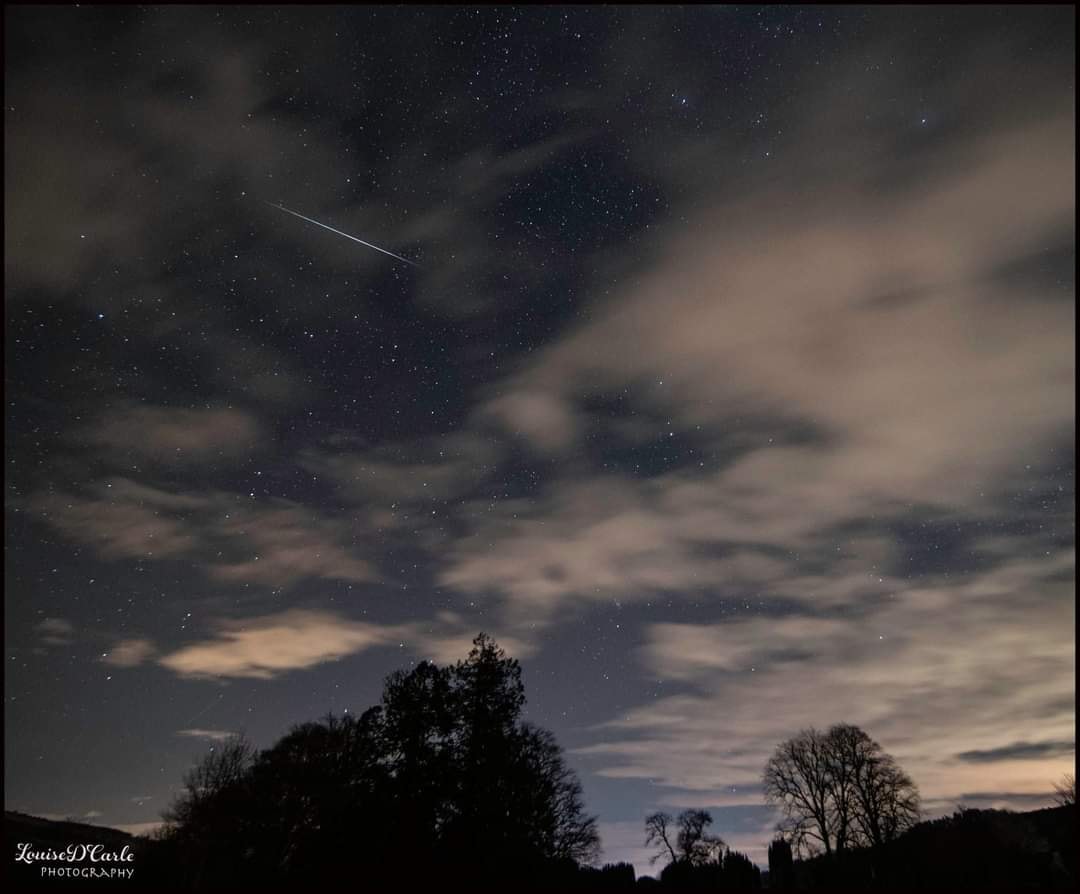
By Louise Carle
A Geminid meteor and the Milky Way over Abriachan Forest by Laura Stewart

Live Stargazing at the Stones of Callanish

Image by Claire Rehr

I’m very much looking forward to partnering with Callanish Stones & Visitor Centre, Gallan Head Community Trust and An Lanntair to deliver a live stargazing talk from the famous Callanish stones on the Isle of Lewis. This event is part of the 2021 Hebridean Dark Sky Festival

Tickets and further details for the event are available here from An Lanntair.

Callanish and the Cosmos by Scott Davidson.

Highland Astronomy and the Hebridean Dark Skies Festival team up for a special online stargazing event, live from one of the darkest places on the Isle of Lewis, in association with Calanais Visitor Centre and Gallan Head Community Trust.

Join us from the comfort of your own home – or outdoors – for a fascinating insight into the night sky.

Stephen Mackintosh (Highland Astronomy) is a freelance astronomer, night sky photographer and STEM educator based in the Highlands of Scotland. He delivers public outreach astronomy talks, tours, and private stargazing events at select dark sky locations around the Inverness area and wider Highlands.

Stephen will be on hand to answer any questions you have, from ancient astronomy to what you can see in the night sky right now.

As part of this year’s festival, Highland Astronomy is also doing live events at Scaladale Centre and Grinneabhat in Bragar.”