Comet A3 Tsuchinshan–ATLAS

Comet A3 spotted and photographed naked eye from Sicily.

I’ve recently posted guides on observing the bright comet A3 Tsuchinshan–ATLAS from northern latitudes in mid October. As it happened I was travelling in Sicily during the initial (evening) observation window but wasn’t holding out much hope of seeing it given likely sky brightness and the comet’s relatively low elevation above the western horizon

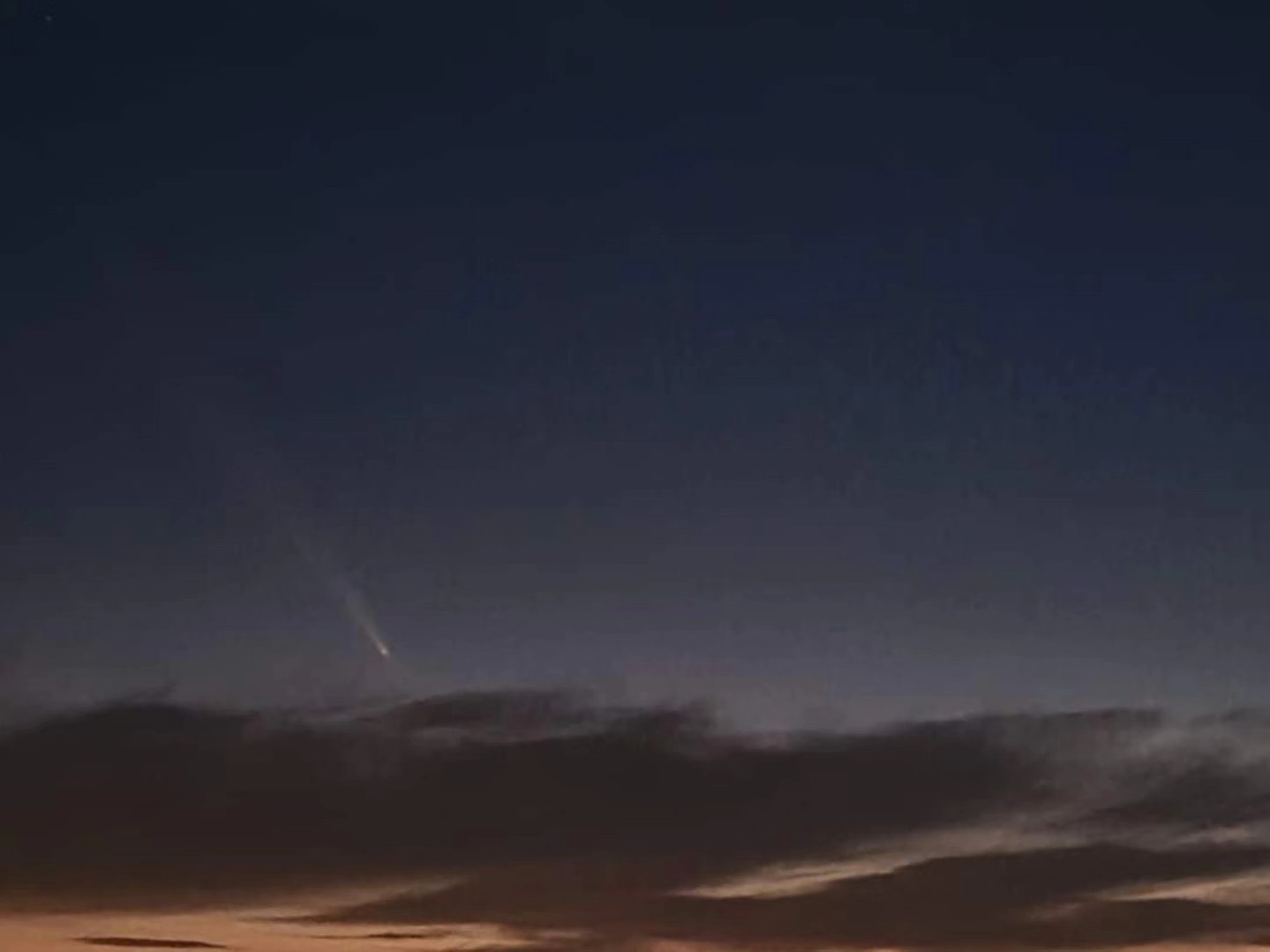
I was however delighted to see and photograph it during very clear naked eye visibility on the evening of October 13th, near Noto in southern Sicily. The comet was so bright I could actually see it through the front windscreen of my car when travelling along a quiet farm road, and promptly pulled over for better views, capturing these images with my mobile phone.

In the first image Venus is the bright planet to the left and comet A3 is clearly visible with nucleus and tail extending in a pronounced vector away from the location of the Sun (below the western horizon).

The tail of a typical comet is absolutely enormous (sometimes stretching tens of millions of miles back from the nucleus), and comprises an ionic dust cloud of diffuse material blasted away from the comet by the intense solar radiation of the Sun.

Meanwhile, back home in Scotland, some followers also spotted and photographed the Comet. Below are two such samples captured by Howard Taylor in Dumfries & Galloway (1st image below) and Caroline Hay outside Carluke (2nd image below).

To see the comet for yourself look towards the western horizon after sunset, as skies darken to an azure blue. The comet will rise higher in altitude going into late October but may unfortunately lose brightness as it recedes back whence it came to the still and dark fringes of the Oort cloud.

If you miss A3 this time you’ll need to be cryogenically frozen for a good 80,000 years before it makes a repeat return to Earth’s night sky.

Ticket Links for Sounds of the Cosmos Abriachan Special

Thin waxing crescent Moon above Abriachan Forest

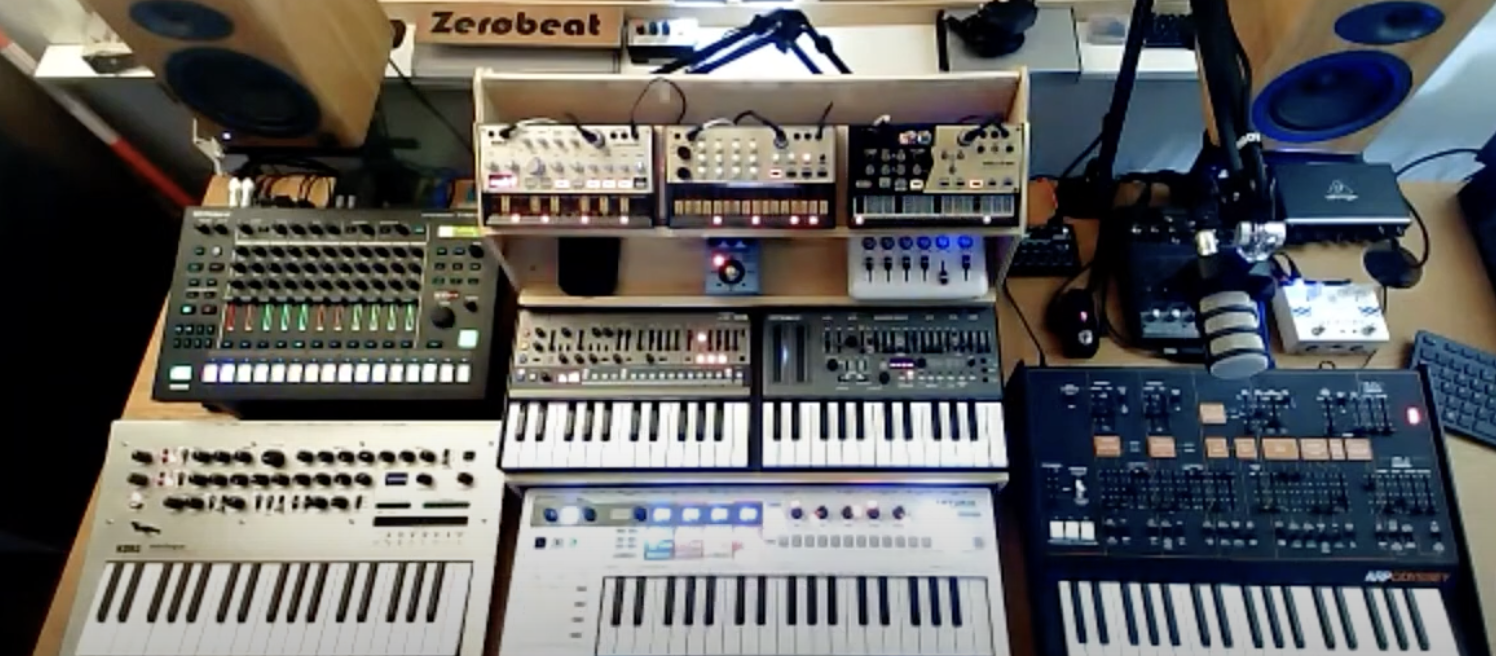
Tickets are now up for the launch event of 2024 Astronomy season at Abriachan Forest. A special live synthesiser set from QRM will accompany the usual stargazing and astronomy.

The new stargazing season at Abriachan Forest (a Dark Sky Discovery site) gets underway on November 2nd with a special musical themed event featuring local analogue synthesiser group QRM. In addition to the usual stargazing and astronomy, QRM will play a fully live synthesiser set against a backdrop of space and astronomy themed cosmic visuals.

Event format is weather proofed so please book with confidence. As well as our indoor synthesiser set from QRM we’ll have outdoor (or indoor) night sky guiding with astronomer Stephen Mackintosh plus possible telescopic views of visible planets.

Refreshments and home bakes available. Due to site and classroom capacity, booking via Eventbrite is essential. Admission is free for under 16s with accompanying adults but please inform Abriachan of any large booking requests.

You can final all details and book your tickets here.

Stargazing Season Launch with Sounds of the Cosmos at Abriachan Forest

The new stargazing season at Abriachan Forest gets underway on November 2nd with a special musical event featuring local analogue synthesiser group QRM. In addition to the usual stargazing and astronomy, QRM will play a fully live synthesiser set against a backdrop of space and astronomy themed cosmic visuals.

Further details and ticket links for this launch event (and others) will be posted here on my blog or Facebook page in the next few weeks.

You can sample some of QRM’s live performances here. We anticipate the Abriachan performance to be about 30 minutes long with some Q&A with the band afterwards.

Star Stories Impact

Here’s some facts and figures highlighting the impact of the Star Stories astronomy programme, running up at Abriachan forest since 2018 (after a pilot in 2017). As principle researcher for the Spark Award grant I’ve been sharing impact data with STFC, who’ll use it to better target future funding for science and astronomy outreach.

Impact Summary

  • Over 40 face to face events delivered
  • Close to 1800 total attendees
  • Highland Astronomy Facebook community grown to 14,000 followers
  • Wide geographical distribution (see map)
  • 40% of attendees Under 16s
  • Balanced engagement between male and female
  • Local schools, scouting and astronomy organisations engaged with
  • High quality home baking by @Judith Mackintosh

Examples of astronomy topics and themes explored during the events:

Meteors, Venus, Life of Stars, Saturn, Aurora, Variable Stars, Night sky photography, Buying a Telescope, Orion, Island Universes, Scale of the Universe, Mesolithic Stargazing, Renaissance Astronomy, Globular Clusters,Summer and Winter Solstice, Moon, Gravitational Waves, Multiverses, Lord Kelvin, Age of Universe, Planetary Nubulae, Black Holes, Space Telescopes

Astronomy speakers:

  • Martin Hendry
  • Steve Owens
  • Graham Bradshaw
  • Maarten De Vries
  • Claire Rayne
  • Anthony Luke
  • Eric Walker
  • Catherine Haymans
  • Stephen Mackintosh
  • Glasgow Science Centre team

Storytellers:

  • Barbara Henderson
  • John Burns
  • Suzann Barr
  • Trish Matthews
  • Daniel Allison
  • Allis Balance
  • Chris Holland
  • Fiona Macdonald
  • Clelland McCallum
  • Gordon MacLellan

Key Findings

  • To engage wide audiences try to blend science and culture.
  • Binoculars are an empowering and inexpensive tool to access the night sky with large groups
  • Well managed social media pages are a great way to build communities and drive engagement
  • Audiences, particularly young people, are highly engaged by very challenging and abstract cosmology (don’t dumb down)
  • The ‘wonder’ of the night sky is a highly motivating vehicle to increase engagement in science and mathematics

The Future

Star Stories is now a well established astronomy outreach programme within the Highlands, close to the city of Inverness. Its events continue to sell out each season . Our new programme of events will kick off at the start of the 2024 winter season in October. We look forward to expanding the scope of the work, reaching new audiences and developing new and exciting content that will forge a bridge into science, mathematics and astronomy.

The Age of the Universe and Lord Kelvin

Our 2023/2024 season of astronomy outreach at Abriachan Forest ended on a high note this Saturday with a visit from Martin Hendry, Professor of Gravitational Astrophysics and Cosmology. Since 2022 Martin has been acting vice principle at the University of Glasgow and was formerly head of the school of Physics and Astronomy.

Martin’s packed talk was broadly about the age of the universe, but touched on the age of stars, stellar classification, cepheid variables, rates of cosmic expansion, and the important work undertaken by female astronomers like Henrietta Leavitt, Annie Jump Cannon and Williamina Fleming, who were instrumental in helping us calculate the distances to star clusters and galaxies. A special tribute was also paid to Lord Kelvin on the 2024 bicentenary of his birth.

Alas, we were not graced with clear skies for open air stargazing, so following Martin’s talk we both hosted a virtual planetarium tour instead, referencing many of the clusters, galaxies and some stars mentioned in the main talk.

Thanks to Suzann for the Kelvin and Constellation witches fingers which captivated some of the younger audience members, and my wife Judith for the excellent home bakes. I look forward to announcing our new new 2024/2025 program in October. Stay tuned for details.

Calculations of the age of the universe using a variety of datasets and methodologies, including galactic red shifts and globular clusters have broadly placed the age of the universe at about 14 billion years old.

Essential Reading on Black Holes

I rarely recommend popular science books but feel I need to make an exception with Brian Cox and Jeff Forshaw’s excellent ‘Black Holes – The Key To Understanding The Universe’ published by William Collins.

For me this book surpasses A Brief History of Time, and joins a tiny subset of popular science books that aren’t afraid to delve into some real mathematics, adding richness and depth to typically analogy laden exposition.

Within the pages you’ll find real equations and Penrose diagrams explaining the basics of special and general relativity. These sections will certainly challenge many readers but also equip them for the chapters that follow, when Cox and Forshaw dive into the wonderful abstract world of event horizons, singularities, worm holes, rotating black holes, multiverses and other weird and exotic by products of general relativity and quantum theory.

The material here feels very up to date and references many recent discoveries and theoretical papers. The style is sharp, understandable and with just the right hint of dry humour to keep things light hearted and entertaining.

I accessed the very affordably Kindle version but have enjoyed it so much I’ll be treating myself to a hardback copy – not least because many of the excellent diagrams are in full colour – something my ebook reader can’t reproduce.