Galaxy NGC 2841

Spiral-Galaxy-NGC-2841

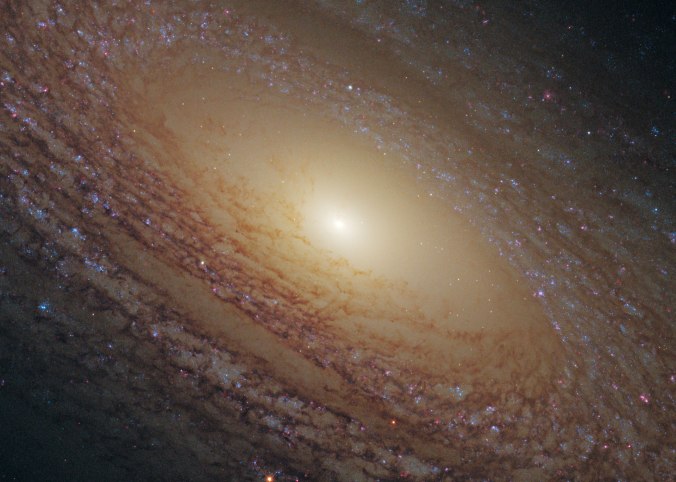
Galaxy NGC 2841. Imaged by Hubble nearly 50 million light years away in the constellation Ursa Major. This is an example of a spiral galaxy with no central bar, just a beautiful continuum of overlapping circular dust lanes.

It contains between 400 billion to 1 trillion stars, and like most galaxies outside our local group its receeding away from us, in this case at nearly 500 miles per second.

Autumn Equinox

42227757_2169060323330908_3632100907031724032_n

Temple of Kukulcan, Chichen Itza

Happy Autumnal Equinox – the official end of summer and start of autumn in the northern hemisphere!

The word equinox is latin for ‘equal night’, and marks the time when the Sun shines directly over the Earth’s equator, bringing 12 hours of daylight and darkness for nearly all inhabitants of planet Earth. It’s also the time when the Sun rises and sets almost directly East and West from our perspective.

Many ancient cultures recognised and marked the two equinoxes as the dividing points between each solstice in June and December. Perhaps none moreso than the ancient Maya of Central America, who aligned an elaborate temple in Chichen Itza in such a way that the body of a great serpent ripples down the steps on each equinox.

Today, thousands of people still gather on the equinoxes to mark this marvel of ancient construction, and the relentless passage of time.

Precise equinox time: 1.54am on Sunday 23rd September

The Milky Way

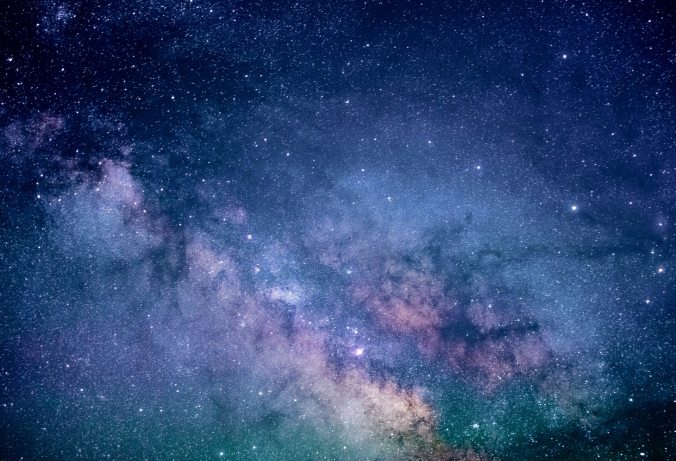
With Moonless skies at the moment it’s a great time to view the Milky Way running from South to North and cutting through the zenith close to midnight.  Look for the bright central regions close to the horizon near Sagittarius and up past the dark bands of dense galactic material around the constellations Cygnus.

Even if the weather’s looking patchy get out for that late night walk somewhere dark. You might be rewarded with tantalising glimpses during breaks in the cloud.  It’s these excursions when expectations are low that I often find the most rewarding when the sky finally opens up.

41091346_2161268987443375_7105273253718917120_n

“There’s something fascinating about our own home galaxy. Even if we still cannot look at it from above and gaze at the full span of its arms, the sideway view offers a quite a showdown.

To me the central part of the milky way is the most spectacular sight of the night sky. It’s something you can clearly see with the naked eye when you are away from city lights. It’s a sight that really brings your down to Earth and lets you wonder at how small we are, while comforting you in the thought that you are part of this Earth and the Universe.”Adrien Mauduit

Increasing Astronomical Darkness

Sunset_Scotland_(5805593910)

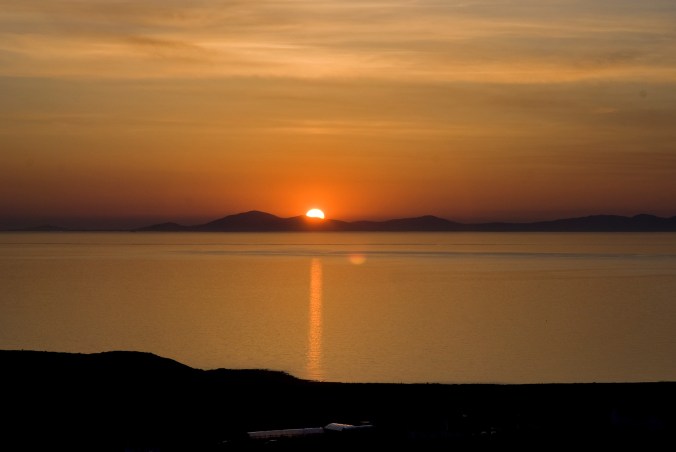
You might notice the nights seem to be pulling in quickly at the moment. This isn’t your imagination. We’re in a period of greater daylight change as we approach the Autumn equinox on September 22nd.

At the moment the Sun is setting around 20 mins earlier each week. Compare that to July when Sunset times were only changing by around 5 mins per week, and almost no noticable change over the summer solstice on June 21st.

Of course this is great news for stargazers, with astronomical twilight now kicking in around 9.50pm meaning your late night forays under clear skies will reveal increasing numbers of stars and fainter nebulae.

For seekers of dark skies this month’s new moon is September 9th so binoculars, cameras and telescopes at the ready.

Clear skies.

New Star Stories Events and Speakers

milky way

The winter Star Stories programme at Abriachan Forest is really coming together with loads of exciting talks and observing opportunities to look forward to in the months ahead. Booking links will be added as the Eventbrites go up:

12th October – Neolithic Stargazing – Dark sky observing, storytelling and talk on ancient stargazing from Stephen Mackintosh – EVENT SOLD OUT.
Eventbrite: https://www.eventbrite.co.uk/e/neolithic-stargazing-tickets…

16th November – Leonids Meteor Shower Special – With guest speaker Dr Anthony Luke, Lecturer of Natural and Applied Science at UHI, giving a talk on the chemistry of stars, meteors and comets. 60% of tickets already allocated.
Eventbrite: https://www.eventbrite.co.uk/e/stargazing-leonid-meteor-sho…

5th December – Evening with Professor Martin Hendry – A special guest talk from Martin Hendry, Professor of Gravitational Astrophysics and Cosmology at Glasgow University, entitled “Exploring the Dark Side of the Universe”
Eventbrite: https://www.eventbrite.co.uk/e/star-stories-with-martin-hendry-tickets-49979041659

21st December – Winter Solstice Special – Mark the shortest day under a full moon with an evening of moon and bright star observing and a talk on the winter solstice from astronomer Stephen Mackintosh.
Eventbrite: please check back

12th January – Audience with Dark Sky Man – Observing under a crescent Moon with guest talk from author of Stargazing For Dummies and On Tour Manager of the Glasgow Science Centre, Steve Owens.
Eventbrite: please check back

9th February – Dark sky observing and Photography special – With guest speaker Graham Bradshaw of Graham Bradshaw Photography. Graham is a local photographer who has taken some stunning landscape, aurora and night sky photos. Eventbrite: https://www.eventbrite.co.uk/e/star-stories-photography-special-tickets-49979762816

27th April – TBC

All evenings will include indoor and outdoor learning opportunities with Clelland, Suzann, Ronnie and the rest of the Abriachan team. Please check eventbrite links for full details.  More events, details and ticket links will appear on my Facebook site here.

The Perseids 2018

22853366_1990781601158782_2571278860771252483_n

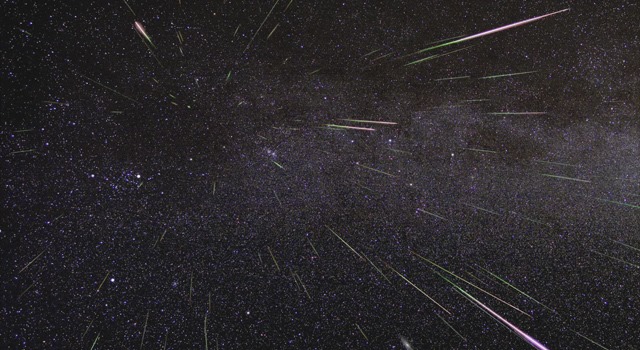
The period between August 11th -13th will mark peak activity for the annual Perseid meteor shower.  Like all annual meteor showers the Perseids occurs due to the Earth ploughing through the fine debris left behind by a short period comet, in this case Comet Swift-Tuttle.  Rates of shooting stars could be as high as 60-70 per hour at peak although this figure is under the most favourable of conditions and you’ll likely see less.

This year’s Perseids looks set to be the best shower of the year due to favourable Moon conditions.  A thin crescent Moon will set before the shower gets properly underway providing excellent sky conditions if you’re sufficiently away from urban lighting and (of course) have clear skies.

Even if you don’t see any shooting stars you can always look out for Saturn and Mars in the south, both setting between 2 – 4am in the morning, and appreciate the increasing number of stars popping into view as our subarctic skies gradually darken.

The radiant for the shower is within the constellation Perseus the hero, although you don’t need to look in this direction to see them.  In fact some of the longest fireballs and streaks caught on camera will be picked up looking away from the radiant.

Due to the brightness of skies this far north you’ll want to wait for the Sun to dip as far below the horizon as possible to achieve the most favourable darkness, this means you’ll want to observe as late as possible, ideally close to or after midnight if you can.

Shooting stars and meteor showers are one and the same phenomena – fine lumps of material impacting the earth’s atmosphere about 40-60 miles overhead.  These tiny pieces of debris are travelling so fast they superheat when entering the atmosphere and burn up rapidly.  Occasionally a larger piece will impact resembling a spectacular fireball.

Screen Shot 2018-08-02 at 15.47.44.png

Remember, you don’t have to look directly at the radiant to see a meteor shower, this is just the area of space they’ll originate from.

Observing Meteor Showers

You don’t need any special equipment to view a meteor shower, in fact binoculars or telescopes will just narrow your field of view. Grab a deck chair or a warm blanket, prepare a hot drink, wrap up warm and lay out under the darkest conditions you can find. It’s an excellent activity to do alone or if you have children they’ll love an excuse to get outside for some after dark play.

Put away any lights or bright mobile phones and simply look up and wait. Remember it takes up to 30 minutes for your eyes to fully dark adapt and any exposure to bright lights will start the process all over again. If you need a light red touches are best for preserving your night vision.

Clear skies!