Over on my Youtube channel I’ve posted a quick introduction to Video Astronomy using inexpensive security cameras like the Samsung SCB2000.
Moon Formation
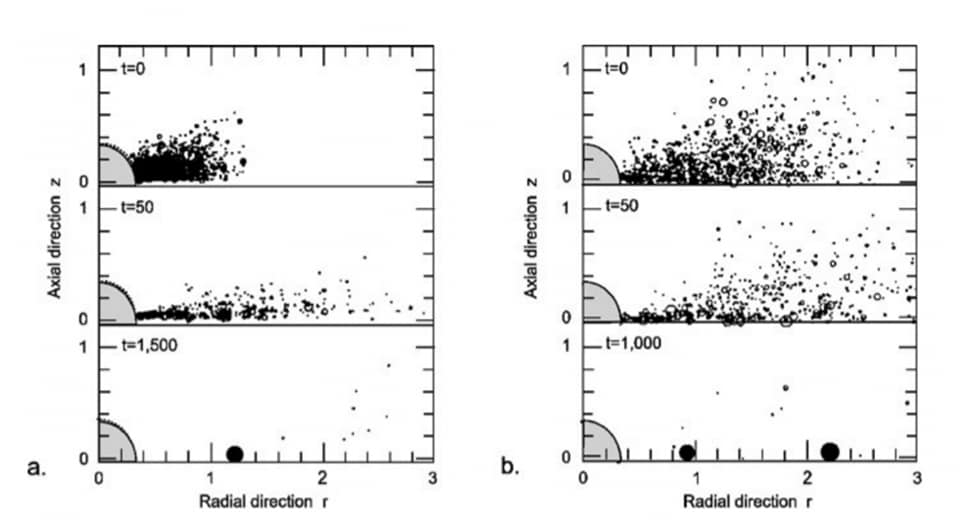
According to simulations by Canup and Ida (2014) the Earth came very close to hosting two smaller Moon’s (right) rather than the large single Moon we ended up with (left).
This fascinating ‘what if’ modelling is based on the giant impact hypothesis. A faster rate of rotation of the post impact disk is the main requirement for a two Moon system to take hold.
Of course multiple moon system are very common. Saturn for example has an abundance of them, with the most recent count totalling 82 orbiting bodies.

Why do we See what we See?

When we think about the vast array of electromagnetic radiation all around us – from Gamma rays, X-rays , UV, Microwaves and Radio waves – a natural question to ask is why do human eyes see in a very narrow band we call ‘visible light’?

The answer is undoubtably tied to the energy output of our nearest star – the Sun. Its peak radiation just happens to be at this ‘visible’ band of radiation. I’ve illustrated this below with a black body radiation profile of our Sun.

Our eyes have therefore evolved to ‘see’ this particular narrow range of otherwise insignificant wavelengths. There’s nothing inherently important about visible light – in fact it makes up a tiny 0.0035 percent of the entire electromagnetic spectrum.
Understanding this makes me wonder about the potential sensory apparatus of life that might have evolved elsewhere in the universe. Other stars with different stellar classifications to our Sun have different peak radiation profiles.
If we had evolved next to a source of intense gamma rays for instance, we would very likely be completely blind to visible light but adept at observing small granular differences in the intensity of gamma radiation.
Night Shining Clouds
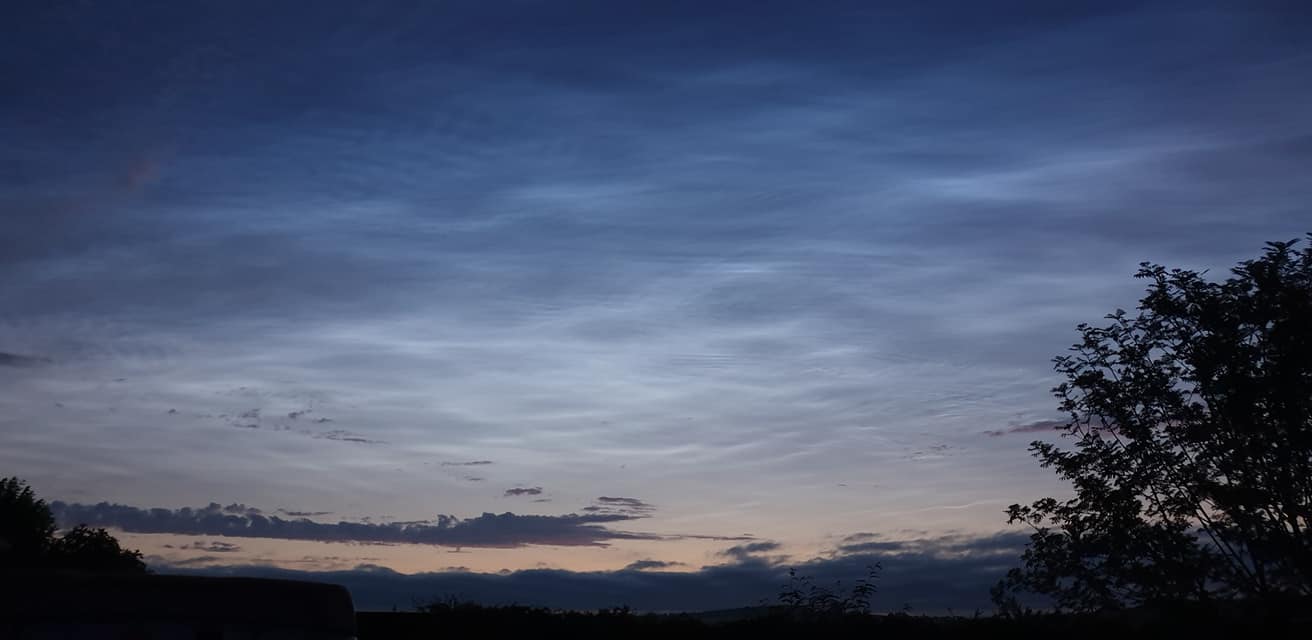
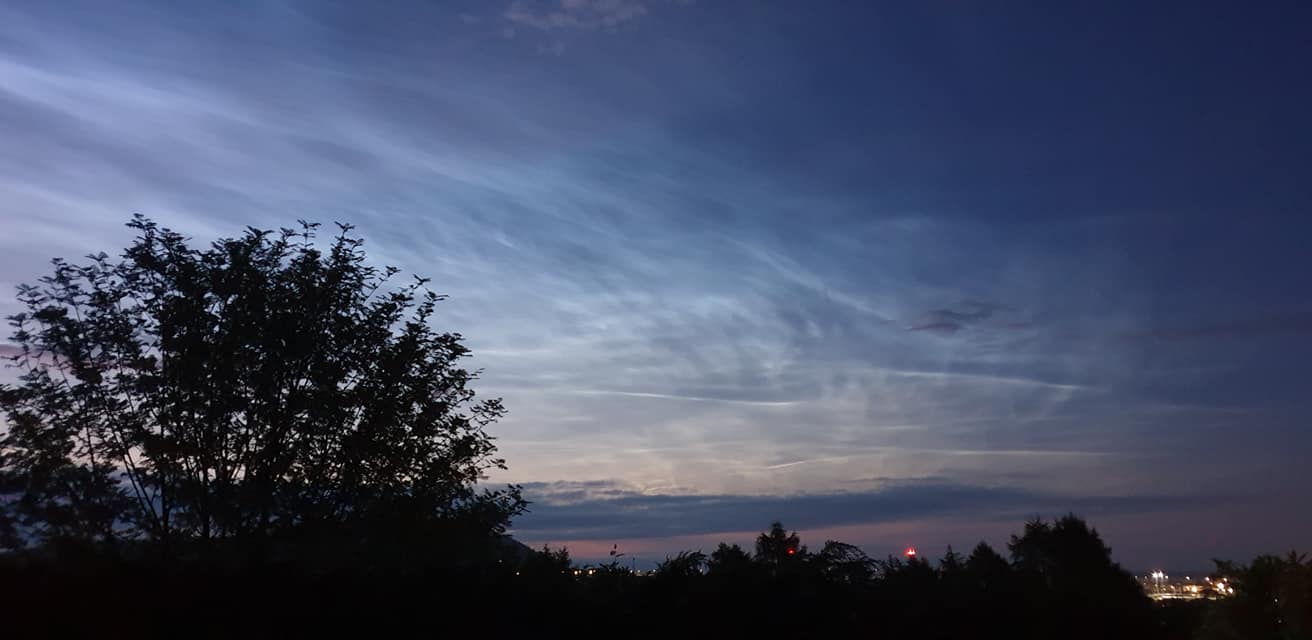
Lots of wonderful Night Shining Clouds sighted up in the Highlands of Scotland recently. These Polar Mesospheric Clouds are over 50 miles overhead and are lit by the Sun grazing below the northern horizon during mid summer. You need to be between about 50 and 65 degrees north or south of the equator to see them.

Betelgeuse’s Great Dimming
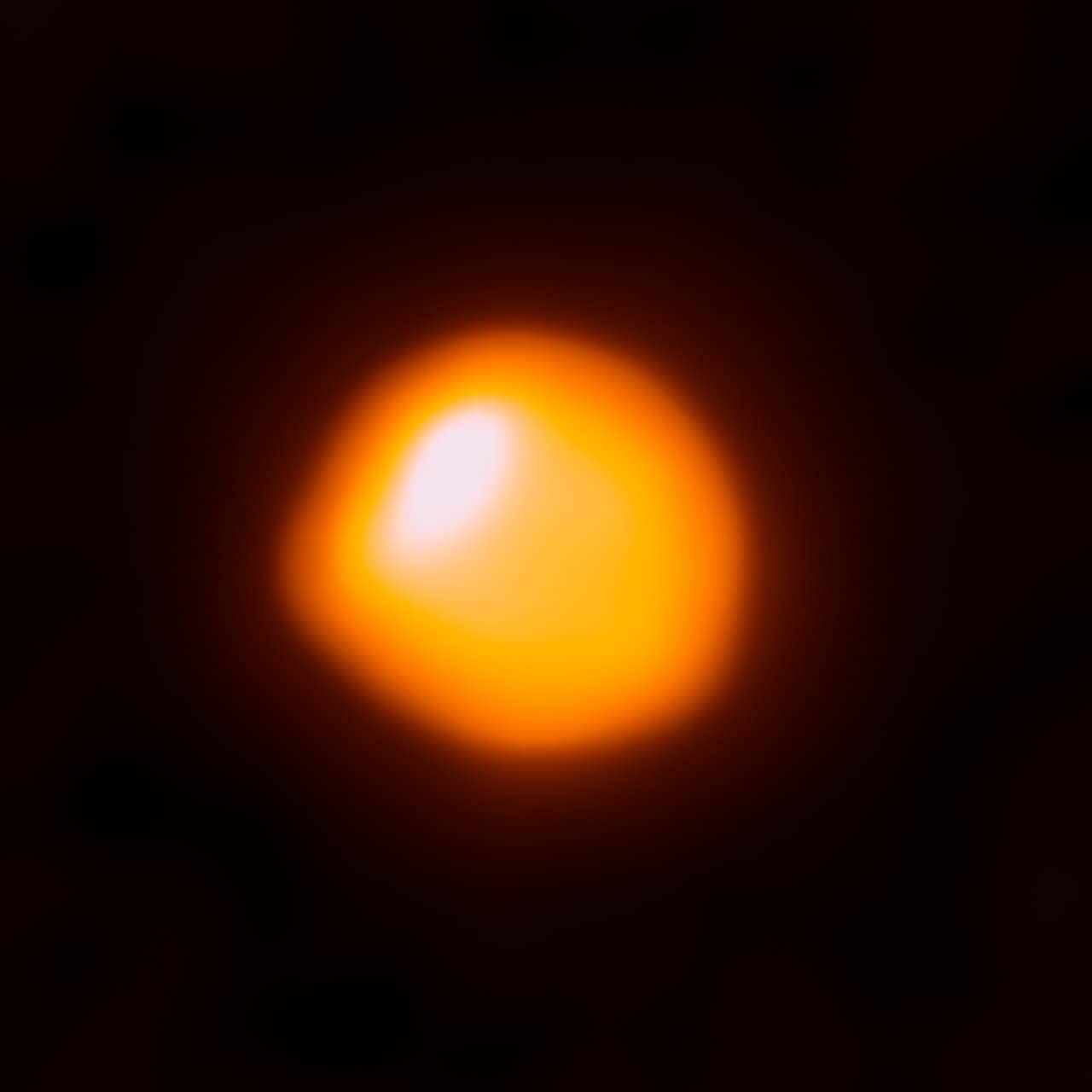
The mystery surrounding the dramatic dimming of red supergiant Betelgeuse, observed over a period of several weeks back in winter 2019, has finally been resolved. In astronomy circles this event is now known as Betelgeuse’s Great Dimming.
A paper published in Nature by a team based at the VLT (Very Large Telescope) has concluded that one part of Betelgeuse underwent a temporary convective cooling process on part of its photosphere, allowing a previously ejected cloud of stellar plasma to condense into a kind of opaque nebulosity, obscuring some of the light from the star over a period of time.
Enormous stars like Betelgeuse have highly turbulent and dynamic surfaces and this event has helped us better understand the periodic mass loss that red supergiants experience in their last stages of evolution, as they literally ‘puff away’ vast swathes of their extended atmosphere into space.
It’s fair to say we’re still at the very earliest stages of truly understanding the complex processes controlling these dying stars.
I feel very privileged and humbled to have witnessed this exciting event (with others) from the surface of a tiny world over 550 light years away, and by extension 550 years after it actually happened.
If you want a deeper dive I’ve included the nature paper link here.
June 10th Solar Eclipse
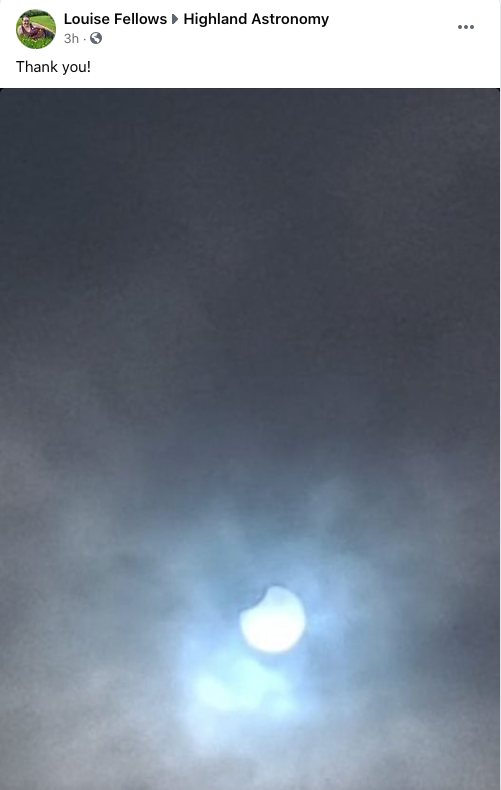
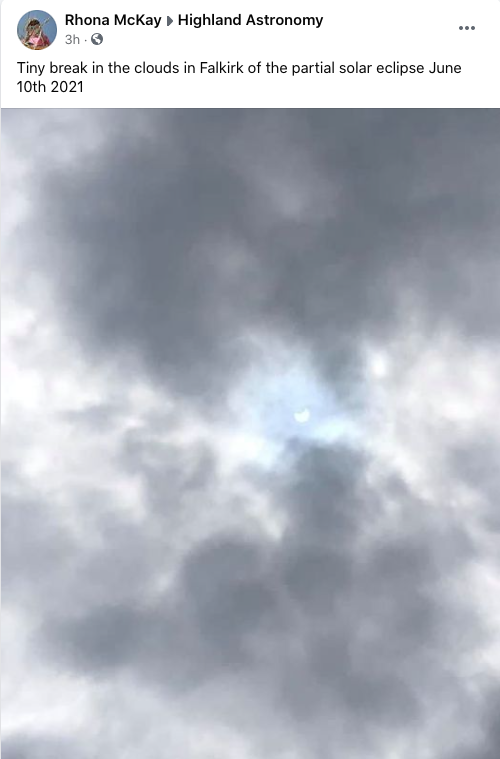
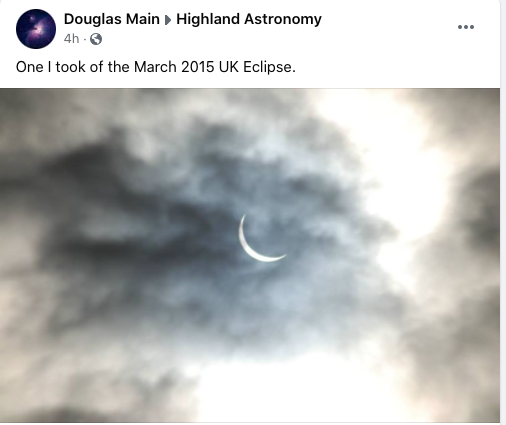
Re-sharing some of the wonderful solar eclipse images posted to the community section of my Facebook page today.
Thank you so much for sharing and joining the marathon livestream earlier today, which had a reach of over a quarter of a million on Facebook.
Inverness turned out to be one of the best places to see today’s partial solar eclipse.
You can watch the livestream again here: https://fb.watch/61U_F2KS9d/






Tidal Disruption Event
Amazing visualisation of a star captured and ripped apart by the immense gravitational well of a Black Hole.
As the outer atmosphere of the star is accelerated by the black hole’s gravity much of it reaches escape velocity and is strewn into space, while some becomes trapped in a highly eccentric orbit. Stellar material reaching the event horizon closer to the back hole is super heated by frictional heating and turbulent flow, generating a bright accretion disk.
Meanwhile jets of concentrated electromagnetic radiation and ionised particles are blasted deep into space along the axis of rotation – a so called astrophysical jet. This transfer of kinetic energy means the black hole system is slowly loosing angular momentum over time.
I often think the universe at this scale is like witnessing a vast machine running on the conservational of energy. A wonderful illustration of the exchange of gravitational potential, angular kinetic, linear kinetic, heat and mass energy.
All energy was created at the big bang singularity and all physical processes from star birth, star death, black holes and even organic human life is the transfer and redistribution of this original energy state.
Video credit: DESY, Science Communication Lab
 | Modulo | Universe