Spica and the Precession of the Equinoxes

36002552_2090358814534393_5758748470382952448_o

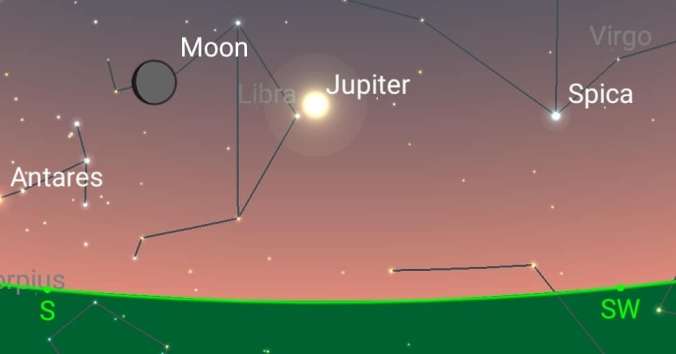
A line of the Moon, Jupiter and the bright star Spica can be seen tonight in the S/SW as the Sun sets (try after 11.30pm or later if it’s still too light).  Spica is the brightest star in the constellation Virgo and was the star that helped unearth the 26,000 year cycle known as the Precession of the Equinoxes.

As the story goes a temple in Thebes built around 3000 BC was originally aligned with Spica but the Heliacal sighting was found to have significantly drifted off target some 3200 years later.  This fact was taken up by the Greek astronomer, mathematician and geographer Hipparchus who used this and other data to approximate the precessional cycle time of the heavens (as he saw it) to be over 30,000 years.  An over estimate but a respectable first guess.

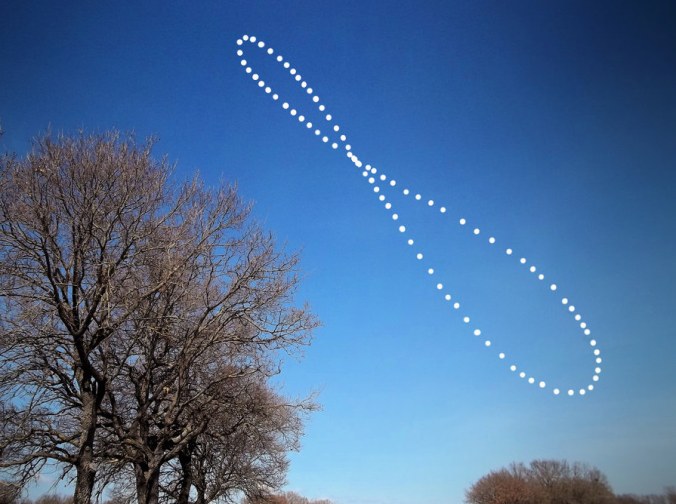
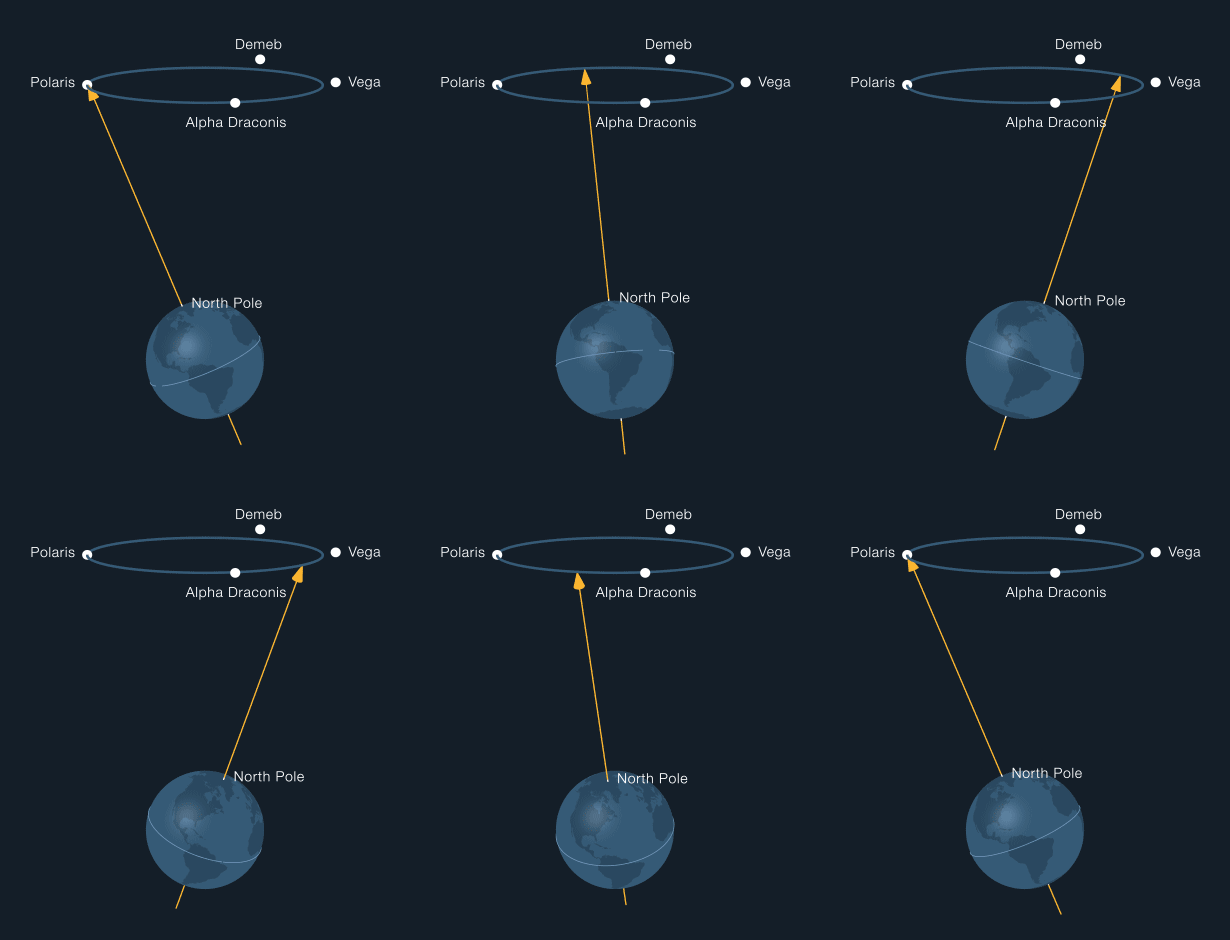
Of course we now know the real reason for this apparent cyclic drift of the constellations over long time scales – 25,772 years to be accurate.  A wobble in the earth’s local axis of rotation (see animation below) caused by the gravitational influence of the Moon and Sun on Earth’s equatorial bulge.

BOSF_02_04_Ani2-2

There are a couple of interesting side effects of this dynamic.  Firstly our pole star slowly changes over thousands of years.  In ancient Egyptian times (3000 BC) the northern  pole star was Thuban in the Constellation Draco, and in around 12000 years time the pole star will have moved close to brilliant Vega.

The other effect is that the dates of the original Zodiacal star signs are now completely out of sync with the position of the Sun. A child born today (June 24th) is still designated as a ‘Cancer’ (because the Sun is supposed to be in the constellation Cancer right now).  But the Sun isn’t in Cancer – it’s actually in Taurus.

Solstice Special at Abriachan

4541761_c3861388

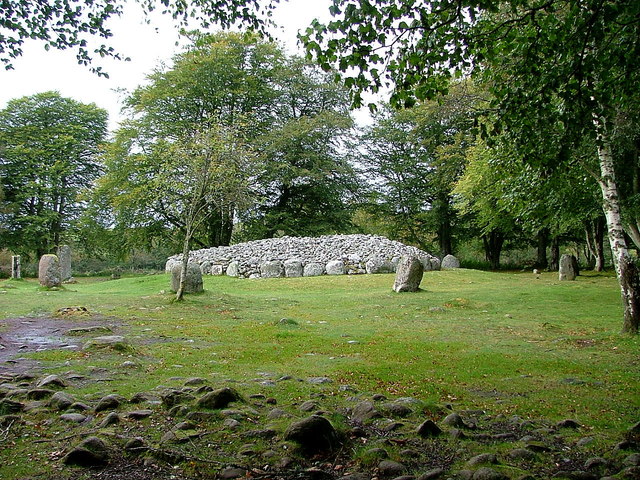
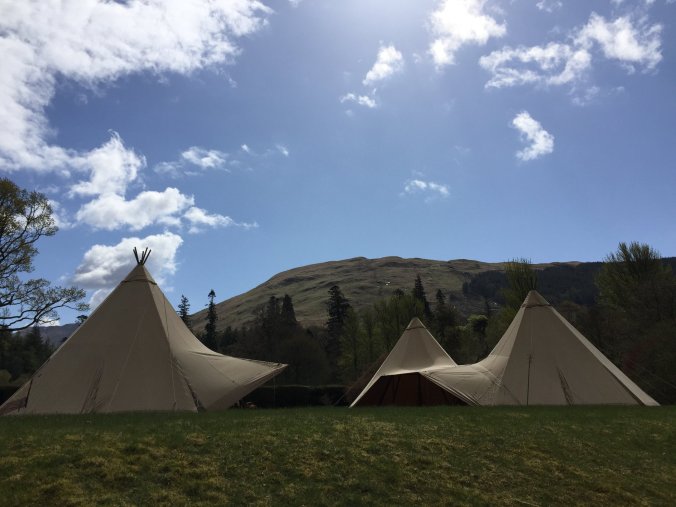
The summer Solstice goes largely unmarked these days. Join me up at Abriachan forest on the longest day to learn all about the Sun’s standstill and why it resonated so deeply with our ancestors.

Join us at Abriachan Forest to celebrate the longest day with a Solstice evening of anicent astronomy and storytelling.

We’ll kick off with a talk from local astronomer Stephen Mackintosh, learning about solar and lunar time keeping, horizon calendars & henges, seasonal constellations and more. Stephen will also give an overview of June’s night skies, including a feast of planetary opportunities and tips on how to get the best views.

We’ll then step back in time and sample the entertainment of our ancestors, as storyteller and countryside ranger Clelland McCallum recounts an ancient tale around the flames of an open campfire.

A warm welcome from the Abriachan Staff with refreshments to toast the Sun’s standstill.  All ages welcome. Tickets are £6 per person. Children 8 years and younger go free.

Booking essential via Eventbrite.  Ticket link here.

Edge on Galaxy

NGC 1032. A perfectly edge on view of a giant spiral galaxy in the constellation Cetus, around 100 million light years away.

potw1820a.jpg

A lovely edge on view of galaxy NGC 1032.

This beautiful image, ablaze with the light from over 100 billions suns, perfectly captures the thin aspect of large galactic discs.  Most spiral galaxies are incredibly slender relative to their diameter. The thickness of our own Milky Way is only 1% of its total 100 thousand light year diameter.  So next time you see the band of the Milky Way overhead you can roughly approximate its width to be 1000 light years.

The dynamics of gravity and centrifugal force can explain much about the formation of spiral galaxies but the fine detail and the rotational speed of the various bands of stellar material are still shrouded in some mystery.  Without concepts like ‘dark matter’, for instance, the outer portions of many galaxies are rotating so fast they would simply rip themselves apart.

Many people are uncomfortable with terms like ‘dark matter’ and ‘dark energy’ because they’re ‘inferred’ phenomena rather than being directly detected.  This might be so but science is riddle with such pre-emptive constructions.

Take air for example.  For untold millennia people knew about the existence of this invisible substance which would fill people’s lungs and impede the flow of water ‘an air lock’.  However, it would have to wait until the discovery of modern chemistry for air to be properly defined as a mixture of several atomic elements (mainly oxygen and nitrogen).


Astronomy Guiding at Scapa Festival

31894544_832835000237043_995368678121799680_o

I had a fun two days of astronomy guiding at the newly launched Scapa yoga festival near Loch Fyne.  One of the perks for the job was a family ticket for the festival so I decided to take the camper van and family along too.

The drive from Inverness was pretty arduous, but when we arrived it was a lovely setting and ended up being one of the most peaceful and chilled out festivals we’ve been to.  Numbers were kept at reasonable levels so that toilets and open spaces were jostle free and relaxing.

The astronomy work ran for two days late in the evening and was in partnership with the Wild Things! group.  The original plan was for a late night constellation walk to the beach but as the clouds rolled in we instead elected for an atmospheric campfire, with a general discussion about the stars.

This format worked out very well with lots of interested folk dropping in to participate in what became a very vibrant Q & A, covering topics as far reaching as star navigation, astrology, shooting stars, black holes and stellar evolution.  On the Saturday evening some people stayed for the whole two hours, transfixed by the discussions.  Astronomy is a subject with the power to transport people back into a state of childhood wonder!  It’s undoubtably the most accessible and mind-blowing of all the sciences.

By all accounts the festival was a great success and I wish the organisers lots of luck with Scapa 2019.

Solar Day at Abriachan

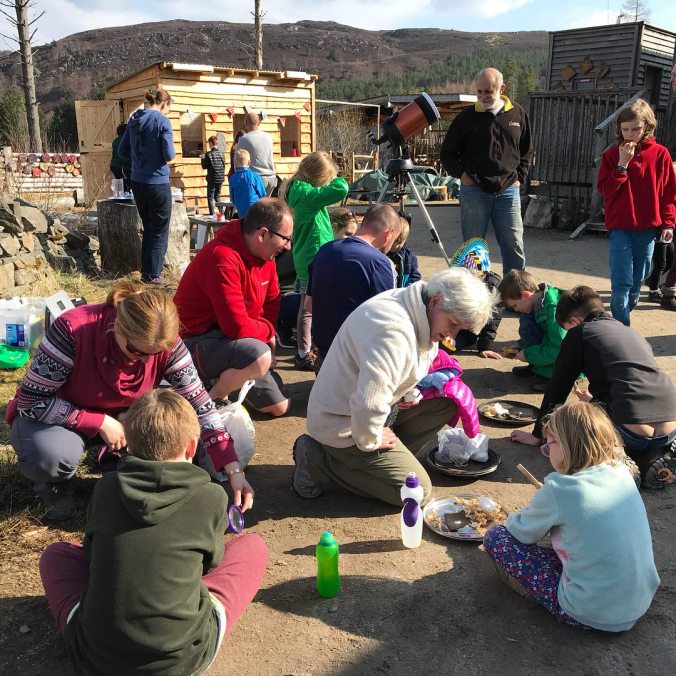
We were blessed with a lovely sunny day on Saturday for our day of Solar learning up at Abriachan.  We were fully prepared for indoor activities as forecasts were looking pretty grey.  But as the weekend swung around skies cleared and we ended up seeing plenty of Sun all day.

30171873_1638005529588556_6419296626281205776_o

A day of fun solar learning

Since conditions were so good we moved everything outside, including the talk I’d prepared which was originally put together on powerpoint.  I demonstrated basic shadow time keeping and direction finding, and how solar eclipses take place using a scale model of the Moon and Earth (with the moon’s orbit inclined at 5 degrees).

Based on our model the Earth and Moon were around 3 meters apart with the former about the size of a large orange.  At this scale the Sun would be 10 meters in diameter and over a mile away!  With this model the relative rarity of total solar eclipses becomes clear (on average one every 18 months).

During the talk we also touched upon:

  • Sun gods and how our ancestors perceived the Sun as a perfect orb with no imperfections
  • The human fear of eclipses
  • The discovery of Sun spots and how they revealed that the Sun is spinning
  • How spectroscopy revealed that our Sun is in fact a star (at very close proximity)
  • Why the Sun is loosing mass – over 600 million tons of hydrogen per second
  • The ultimate fate of our Sun – how it will eventually flare up as a red giant star before cooling and shrinking down to a white dwarf

After the talk Clelland took over for some fun outdoor activities including a scale walk of the solar system, DIY spectroscopes and solar lasers using big magnifiers.  We also did a fun experiment simulating the colour of the sky and sunsets using milk in water bottles.

In terms of solar viewing, I setup the 200mm with a full objective white light filter, and we also had a Sunspotter, kindly on load from Glasgow Science centre.  Both setups produced clear views of the Sun’s photosphere, but unfortunately there were no sunspots to see.  This isn’t entirely surprising given we’re bang in the middle of the 11 year solar cycle minimum, although large spots can appear suddenly at any time.  We hope to one day invest in a good quality hydrogen alpha filter for these events, as these reveal many more interesting features, like edge prominences and coronal loops.

Overall a fun day of learning with great interaction and questions from the adults and little ones alike.

Distant Galaxies in Virgo

As the constellation Virgo rises earlier and earlier after darkness we’re entering a time of great opportunity for observing distant galaxies.

Within the upper right hand stretches of Virgo are giant clusters of galaxies strung out in loose bundles. Some of these very distant galaxies can even be see in bioculars if you’re under excellent dark skies.  Telescopes will pick them out better and it’s here that aperture rules.  Faint galaxies need big objective lenses to see clearly.

More galaxies are scattered to the lower right of the constellation too, including the famous Sombrero galaxy (pictured).

29694820_2046635758906699_786504064794359757_n

The Sombrero Galaxy

Your fleeting glances will look nothing like Hubble’s post processed images but you will be witnessing the hazy light from billions of ancient stars for yourself.  These galaxies are island universes just like our Milky Way, and contain many billions of stars.

Clear skies.


29683473_2046635782240030_4186644273116556291_n

Wild Astronomy – Inverness Science Festival

milky way

I’ll be giving a public lecture at the Inverness Science Festival on May 11th 2018.  I’d love to use some images from local astro photographers, particularly night sky photos taken in the Highlands or north of Scotland.  If you’d like your images used I’ll fully credit you in the talk.  Please PM me for details.

Talk Title: Wild Astronomy

Description: The Highlands of Scotland have some of the darkest skies in Europe but how often do we escape our back gardens and ‘get out there’ to appreciate the night sky?

In this talk astronomer Stephen Mackintosh discusses what makes our Highland skies so special, the sights and objects we should look for, and how a backpack and a pair of binoculars is all you really need to open up the wonders of the night sky.

Time and Location:  May 11th, 7-8pm at University of the Highlands and Islands STEM Hub, An Lòchran, Inverness Campus, Inverness