Lunar Burns Night

Moon between clouds

The star of the evening – a waxing gibbous moon

What do you get if you cross a bright gibbous moon, award winning haggis and a celebration of Scotland’s bard?  A Lunar Burns Night!

This was our fourth stargazing event up at Abriachan and despite somewhat blustery conditions, ended up being loads of fun with a good turnout across all ages.
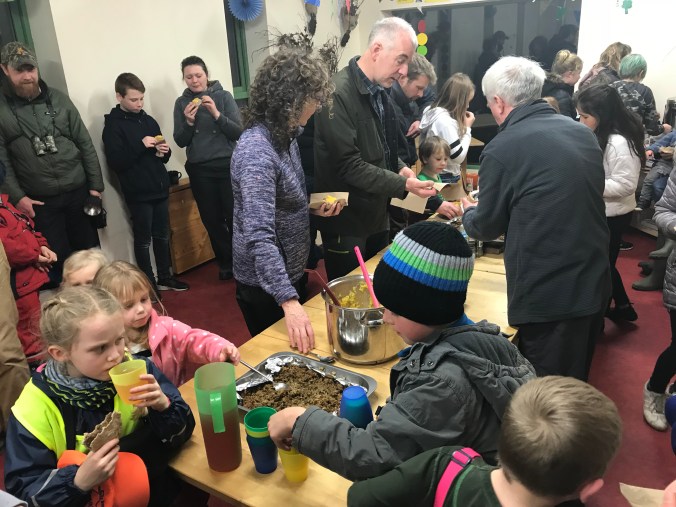
Haggis handwarmers

Haggis and neep hand warmers

After introductions from the Abriachan crew we kicked off outside with the moon high in the south and making dramatic appearances between fast moving clouds.  After a bit of moon gazing and chat I took everyone back inside the forest classroom for an illustrated talk on the moon – its phases, cycles, observational phenomena and even some discussion on manned moon bases (why the obsession with Mars when we could be building a lovely moon base at much lower cost and risk?).
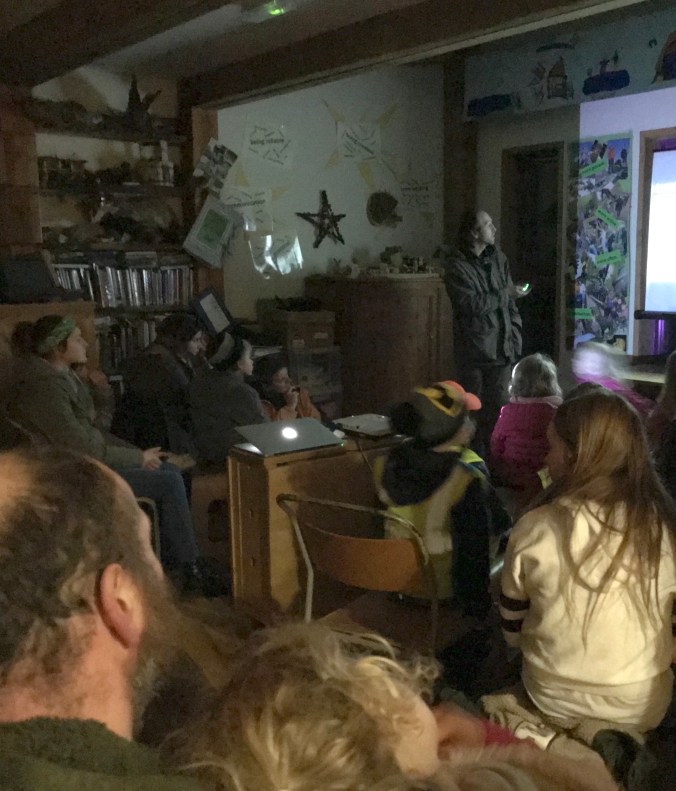
Stephen presenting Lunar Facts

Presenting my moon talk

After the talk Roni and Suzann called everyone through for Clelland’s dramatic ‘knife wielding’ address to the Haggis, followed by a tasty spread of haggis and neep wraps.  The younger ones then took centre stage as they expertly simulated millions of years of lunar surface evolution – by dropping (never throwing!) metal balls into giant flour trays.  This was followed by 3D moon phases and a competition to see who could guess the real separation between the Earth and Moon.

Clelland addressing the haggis

Addressing the haggis

The evening was topped off up with a haggis drive and Cottar’s tales from Clelland.  I also took a group out for some final moon gazing, and managed to glimpse a few brighter stars between the cloud breaks.

The only disappointment was being unable to set up the video telescope to show folks closeups of the lunar surface.  The sporadic showers and wind made that too challenging on the night, but I don’t think anyone really noticed.


We have more astronomy nights planned at Abriachan before the encroachment of our long summer days.  On March 10th we’re hosting a Star Cluster special under dark sky conditions, followed by a Solar Special on April 14th, where we’ll hopefully be projecting the Sun onto a big screen for all to see.  For details please check Abriachan’s or my own Facebook pages.  As ever thanks to the Abriachan team for helping make these events so fun and welcoming.

Clear skies!
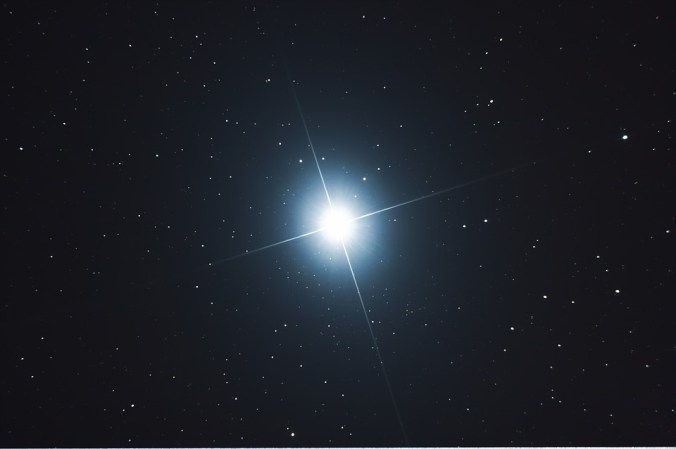
 

Sirius Rising

sirius-2080966_960_720-2

The dog star ‘Sirius’ is now high and visible in winter skies looking South. Draw a line down and left from Orion’s belt and you can’t miss the brightest star in the night sky.

Sirius means ‘scorching’ and was considered a second Sun of sorts to many ancient cultures. Its incredible brightness is due to its close proximity. At only 9 light years away it’s the 5th closest star system to our Sun and a fairly typical hydrogen fusing main sequence star likely to live a long stable life of several billion years.  This is in contrast to short lived giant stars like Rigel and Betelgeuse, which are very distant and appear bright  due to their bloated sizes and massive energy output.

Sirius
Procyon is sometimes mistaken for Sirius but it rises earlier, hence its name which means ‘before the dog’.  The Arabs told a tale linking Procyon and Sirius as two sisters, who became separated by a great river (the Milky Way) while searching for their missing brother.

Winter Open Star Clusters

You can see three excellent examples of open star clusters within the Orion and Taurus constellations, all in one convenient direction during winter skies (looking south or south east) and in a rough line drawn out by Orion’s belt.

Open clusters

Start with the Orion nebula (M42), below the three belt stars in Orion.  This star forming region contains a very young open cluster called the Trapezium which is surrounded by glowing clouds of ionised hydrogen gas. You can see this nebula in binoculars but it looks best in a low or medium power telescope eyepiece.

Moving up into the eye of Taurus to the red giant star Aldebaran, we find the Hyades cluster. Aldebaran is like a premonition of the fate that awaits out own sun. A red giant around 7 billion years old, bloated and shuddering in its final gasps before it collapses down to a white dwarf. Shining brightly all around Aldebaran are the members of the Hyades open cluster (although they are much further away) – quite a mature cluster at around 500 millions years old.  Best viewed in binoculars.

And finally moving higher and to the right we find the Pleiades, a lovely jewel box of middle age hot stars (and many less bright members) slowly drifting apart to join the general distribution of stars. When the dinosaurs roamed the earth this cluster would have resembled the Orion nebula – bright and nebulous, its hot infant stars lighting up the surrounding hydrogen gas clouds.

Clear skies.

Lunar Maria

Happy New Year everyone.  There’s been a lovely bright full moon on display over the new year, allowing me to venture out for well lit evening walks, stopping every so often to study the bright lunar disc both unaided and with binoculars.

One very obvious thing you can notice from looking at the moon, especially naked eye, is the contrasting dark and light regions.

aHR0cDovL3d3dy5zcGFjZS5jb20vaW1hZ2VzL2kvMDAwLzAxOS8wOTEvb3JpZ2luYWwvanVseS1za3l3YXRjaGluZy1wb3J0bGFuZC5qcGc=

The dark regions are called lunar ‘maria’ which is latin for ‘sea’. These regions are relatively smooth and have a low abundance of craters, which suggests they’re younger than the brighter more heavily cratered regions.

But how can the moon, a dead world with no significant geological activity, have younger regions?

The answer is from giant impacts.

Pluto-asteroid.thumbnail

Imagine a massive asteroid hitting the moon. Not only will it generate a huge crater but the heat from the impact will cause the solid rock underneath to become molten and well up in a huge overflowing lava event. This overflow pours across the surface of the moon a bit like applying fresh plaster to a wall, masking all the old craters and creating what we now see as ‘maria’.

I’ll be talking about this and much more at our special moon night on the 27th Jan out at Abriachan Forest.

The Geminids

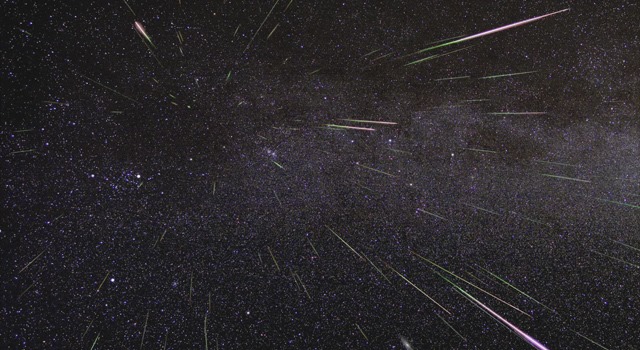
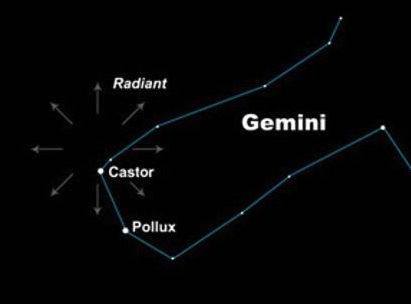
One of the most energetic meteor showers of the year is fast approaching with activity predicted between Dec 4th – Dec 16th. With the best possible observing conditions the Geminids can produce displays of up to 120 meteors per hour, although you’ll likely see rates much lower than this in reality.

Occasionally and unpredictably, meteor showers can erupt into storms. One of the most famous ‘storms’ happened in 1833 when the Leonids produced over 100,000 meteors per hour! Who knows what this December will bring.

22853366_1990781601158782_2571278860771252483_n

Observing Meteor Showers

You don’t need any special equipment to view a meteor shower, in fact binoculars or telescopes will just narrow your field of view. Grab a deck chair or a warm blanket, prepare a hot drink, wrap up warm and lay out under the darkest conditions you can find. It’s an excellent activity to do alone or if you have children they’ll love an excuse to get outside for some after dark play.

Put away any lights or bright mobile phones and simply look up and wait. Remember it takes up to 30 minutes for your eyes to fully dark adapt and any exposure to bright lights will start the process all over again. If you need a light red touches are best for preserving you night vision.

Good luck and clear skies!


24232756_1990781597825449_1759741144663717495_n

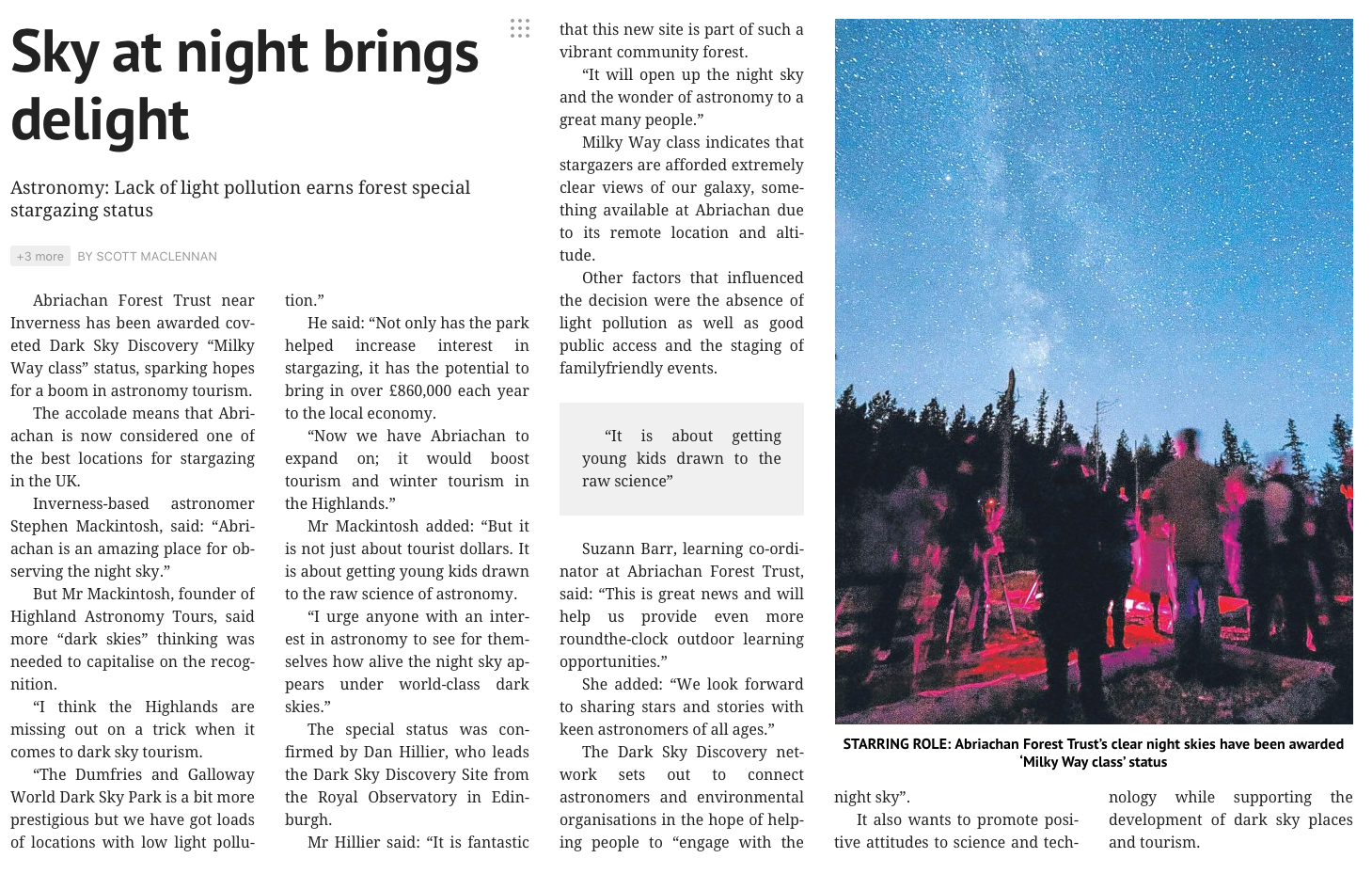
Abriachan Forest Trust Gains ‘Milky Way’ Dark Sky Discovery Status

_98949791_darkskytwo-2

I was delighted to help Abriachan Forest Trust gain ‘Milky Way’ Dark Sky Discovery status this month after working on a joint nomination with Abriachan’s learning coordinator Suzann Barr.  This is the first site in the Inverness area to be awarded the status and it’ll hopefully attract winter tourism and lots of opportunity for astronomy based public engagement.

The Highlands really are blessed with excellent dark skies – we just need to do more to capitalise on it and perhaps emulate some of the great work that’s been done in the Scottish Borders where the Galloway International Dark Sky Park brings substantial benefits to the local economy.

After the status was formally awarded by Dan Hillier (who leads the Dark Sky Discover network from Edinburgh’s Royal Observatory) I generated a press release which several news bodies picked up, not least BBC Scotland.

Link to  BBC Scotland Article.

The Press and Journal also ran a full page article reproduced below:

Screen Shot 2017-12-11 at 08.55.03

Mercury at Maximum Elongation

mercury_craters

Heavily cratered Mercury

If you have flat and unobstructed views towards the south west there’s a chance of observing one of the most elusive planets this evening – Mercury.

Mercury is hard to see because it orbits so close to the sun, meaning it’s usually lost in the glare of our parent star.

However the planet is currently at its maximum eastern elongation from the Sun, so there’s a small window of opportunity to spot Mercury just after sunset low in the south west. Grab a pair of binoculars and see if you get lucky.

For us high northern latitude observers it’s a tough ask due to the currently flat orientation of the ecliptic, but even if you don’t see Mercury you should catch Saturn sitting just a little higher on the horizon.

Mercury goes through several peak elongations from east to west during a year, providing alternating opportunities to see the planet in pre-dawn or evening skies

23825988_1987886464781629_6988328571217155685_o

Maximum eastern elongation

Despite being closest to the sun, Mercury isn’t the planet with the highest temperatures – that prize goes to Venus with its thick carbon dioxide cloud base.  This is because Mercury has no atmosphere to trap or distribute heat.  If you were able to stand on Mercury, your daytime temperatures would be a blistering 427C.  However, if you hid in the shadow of a large crater or travelled into the dark half of Mercury, temperatures would plummet to a freezing -173C!  Again, due to a lack of atmosphere to smooth out the temperature extremes.