Finding the Andromeda Galaxy Naked Eye

This October I’ve been carrying out night sky survey work as part of a community project to certify Strathnairn as an International Dark Sky Park. This has involved lots of travelling about late at night taking sky quality meter (SQM) readings when conditions are just right – clear skies and the Moon and Sun well below the horizon. You can read about this dark sky conservation work here.

While I’ve been out under the stars I’ve filmed a few stargazing video for my community pages. Here’s a popular one on finding the Andromeda Galaxy – our biggest close galactic neighbour. It always amazes me that you can observe this object with the naked eye, and see the accumulated light from over 100 billion stars at a distance greater than 2 million light years!

Starry Skies for New Season of Star Stories

Thanks to everyone who came to Abriachan Forest on Saturday night. We had a fantastic opening event to kick off the 2021/22 Star Stories astronomy programme.

We enjoyed clear skies all evening and I was able to offer uninterrupted guiding of the whole night sky from north to south and east to west. Some of the highlights included:

– Views of Saturn and Jupiter low on the southern horizon, with telescopic views of Saturn’s majestic rings.

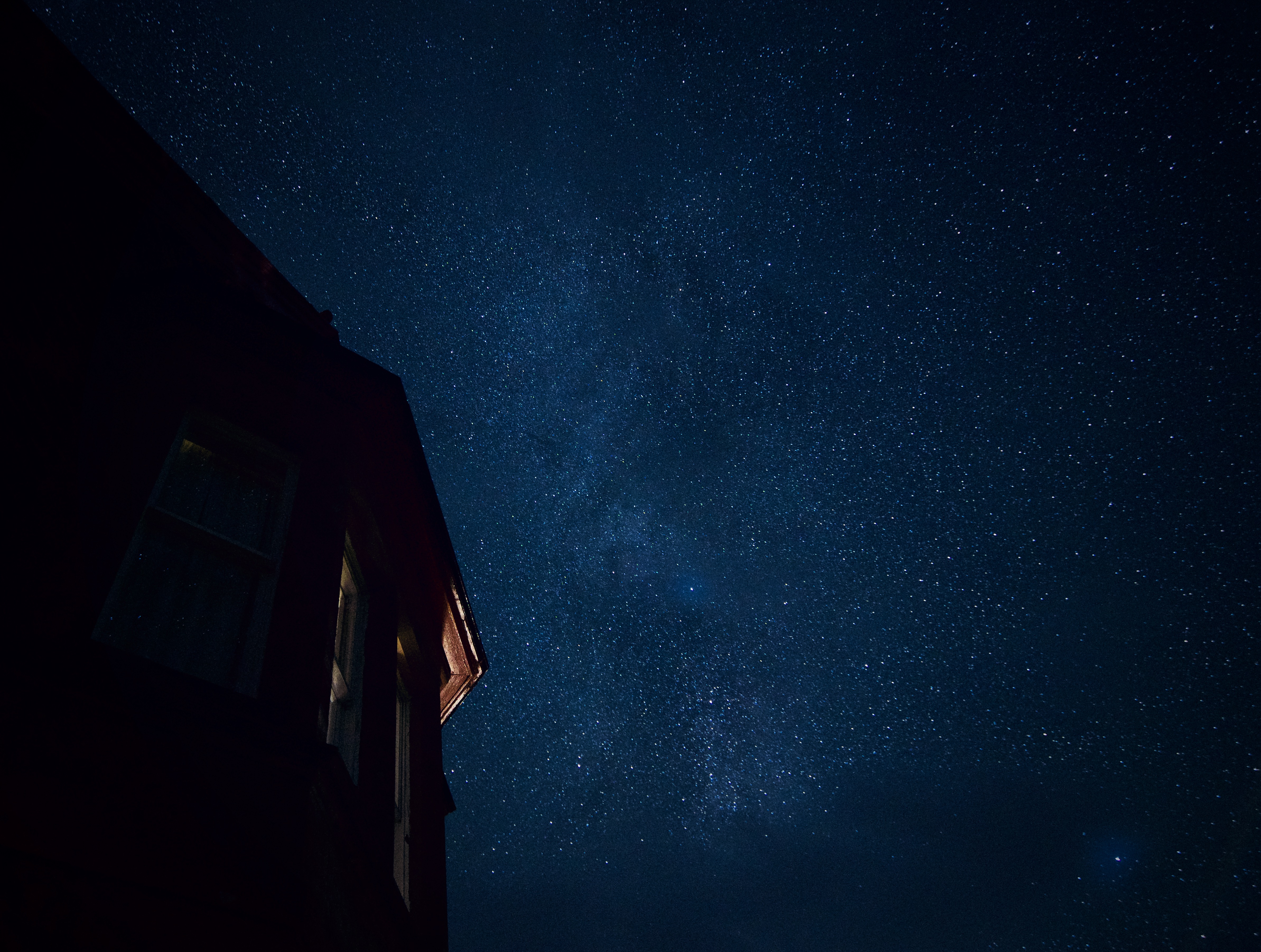
– A full power Milky Way glowing overhead from north to south with clear visibility of the dark lanes of obscuring galactic dust near the Cygnus Rift.

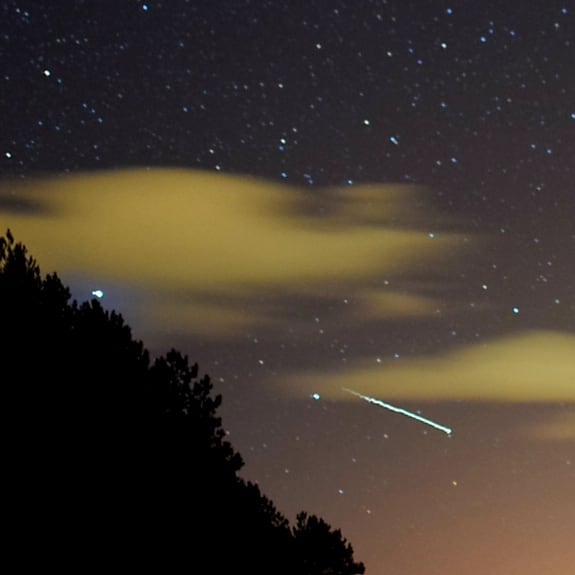
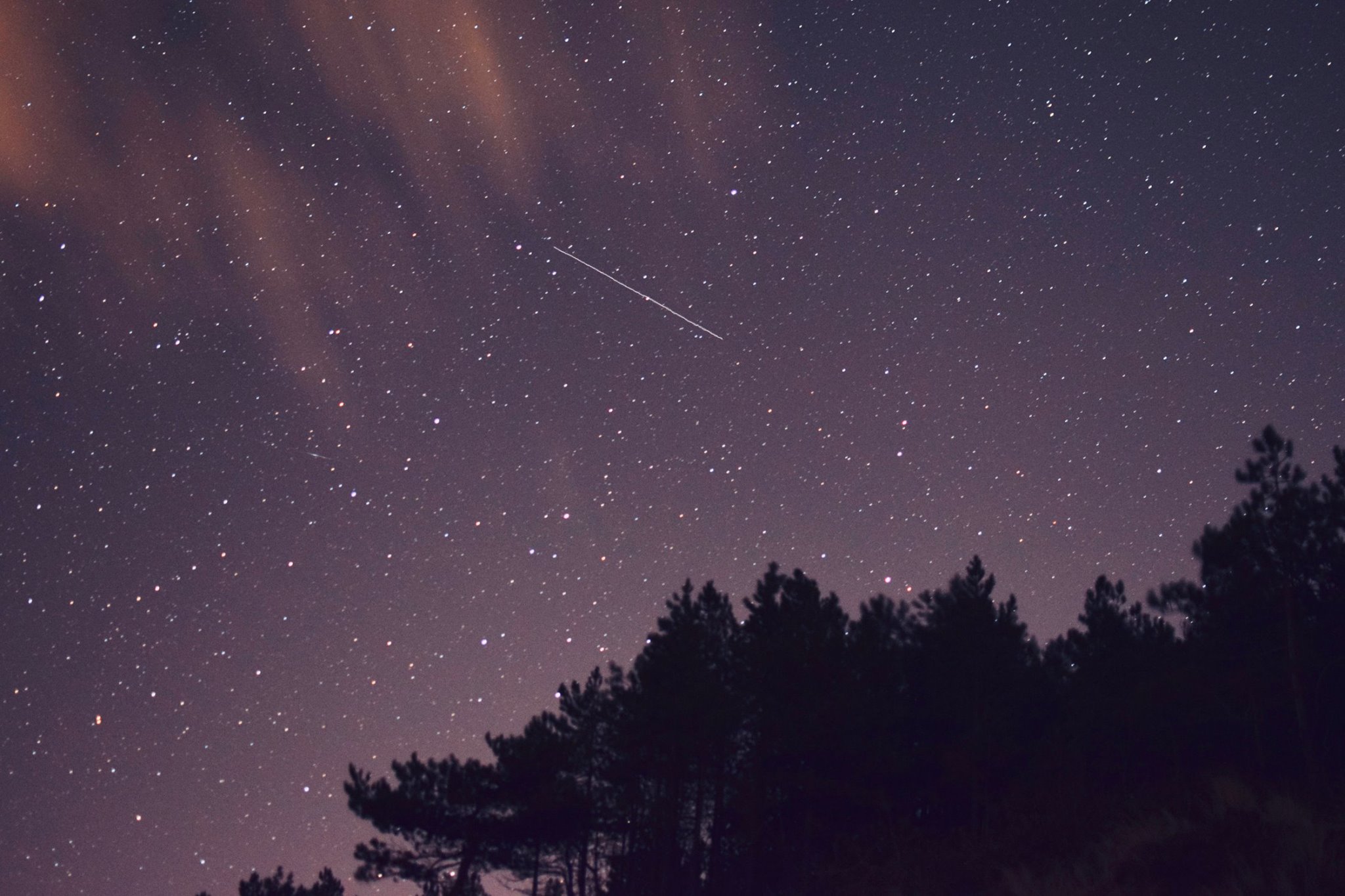
– Several bright meteors flashing past.

– The Pleiades open star cluster rising in the east followed by Taurus with the red giant Aldebaran.

– The Andromeda galaxy clearly visible naked eye and offering fantastic views in binoculars.

– Numerous bright stars and clusters.

Also a big thanks to the Abriachan team for the Bat walk + talk and Bat box workshop.

Tickets are now available for the next event on November 27th. Please follow my Highland Astronomy facebook page for the latest on tickets and events.

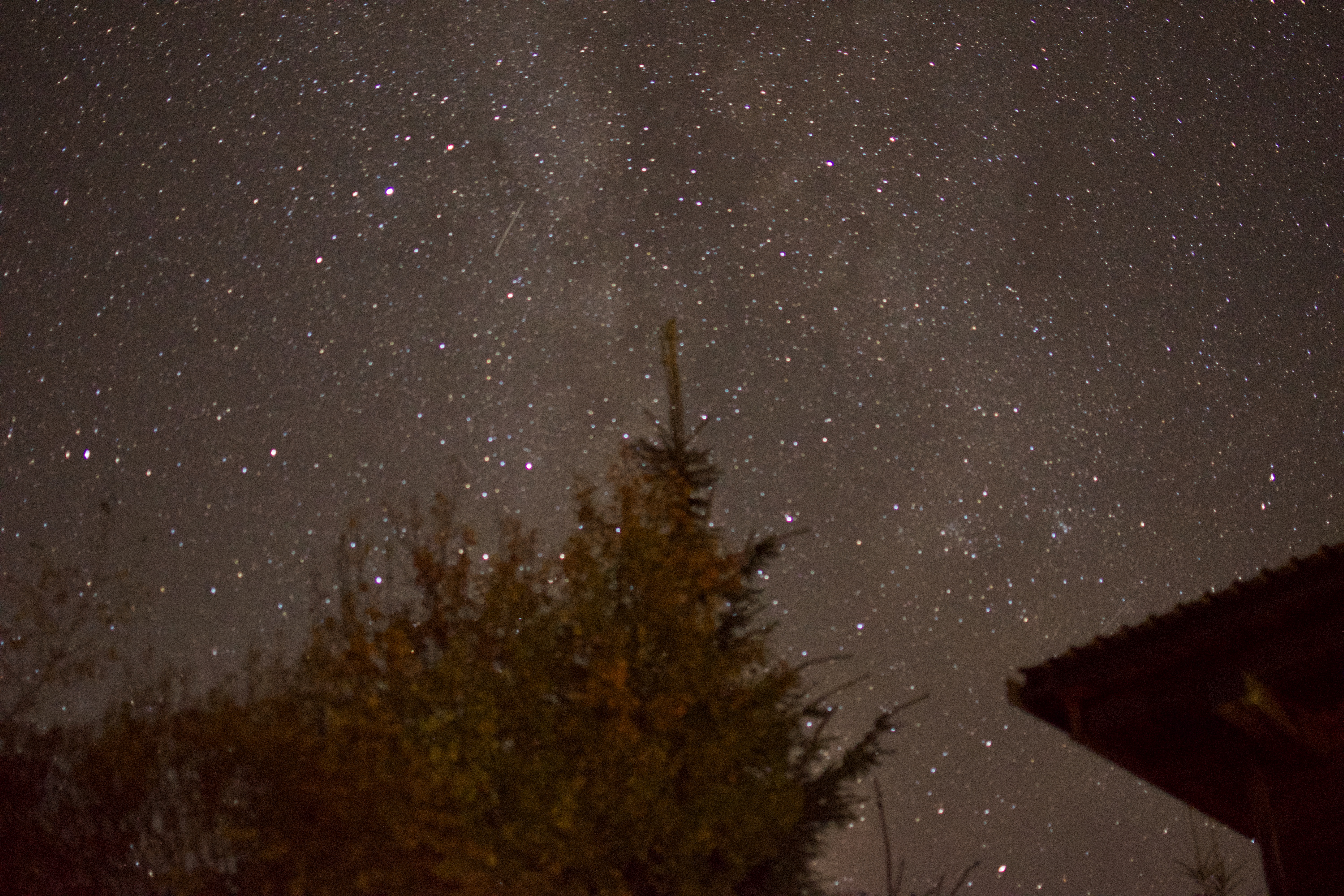
I managed a few pics at the end of the session inserted above (a little out of focus I’m afraid).

The Andromeda Galaxy

Many people are unaware that you can observe a totally independent galaxy, outside our own Milky Way, with a basic pair of binoculars, or even the naked eye with good seeing. Here’s how to find Andromeda, our brightest and closest large galactic neighbour.

Finding it

Mars is well placed high and bright in the SW at the moment to help you find Andromeda. From Mars find the four stars marking the great square of Pegasus and then star hop to its rough location using my guide below. Scan this region of sky with binoculars and you should eventually see a faint glow of diffuse light. That’s Andromeda.

What you’re seeing

The Andromeda galaxy is our nearest galactic neighbour at around 2.5 million light years away. Which means when you see it, the light reaching you left Andromeda millions of years ago, a time long before human beings dominated our planet. How is it we can see Andromeda at this stupefying distance when we can only see stars within a few thousand light years? The reason is size and composition. Andromeda, just like our own Milky Way galaxy, is a vast spiral storm of stars, over 100,000 light years in diameter. The glow of light you see is from an accumulation of over one trillion stars.

Dark Skies at Torridon

DSC_0022.jpeg

The Milky Way over the grounds of the Torridon Resort

I’ve had some fantastic excursions out to the Torridon Resort recently, where I deliver outreach astronomy and stargazing for guests at the hotel.

Weather can be unpredictable this far west but when conditions open up the skies are undoubtably some of the darkest in Scotland, easily surpassing the darkness levels over the Cairngorms, which are still hindered by skyglow from the populated Moray coast.  This far west there’s almost no skyglow and inky black skies allow amazing views of the Milky Way and deep sky objects like the Andromeda galaxy, open star clusters and faint nebulae.

In addition to hosting several stargazing dinners I was also involved in some filming with the BBC up at the Torridon and look forward to seeing if the starry sky sequences make the final cut.

If you’d like to treat yourself or a loved one to a special stargazing experience please see the details here on the Torridon’s website.  Meanwhile, enjoy some recent pictures I took from the hotel grounds and nearby Achnasheen.

Galaxy Photobomb

DSC_0208 2.jpeg

When an entire galaxy (faintly) photobombs your night sky picture!

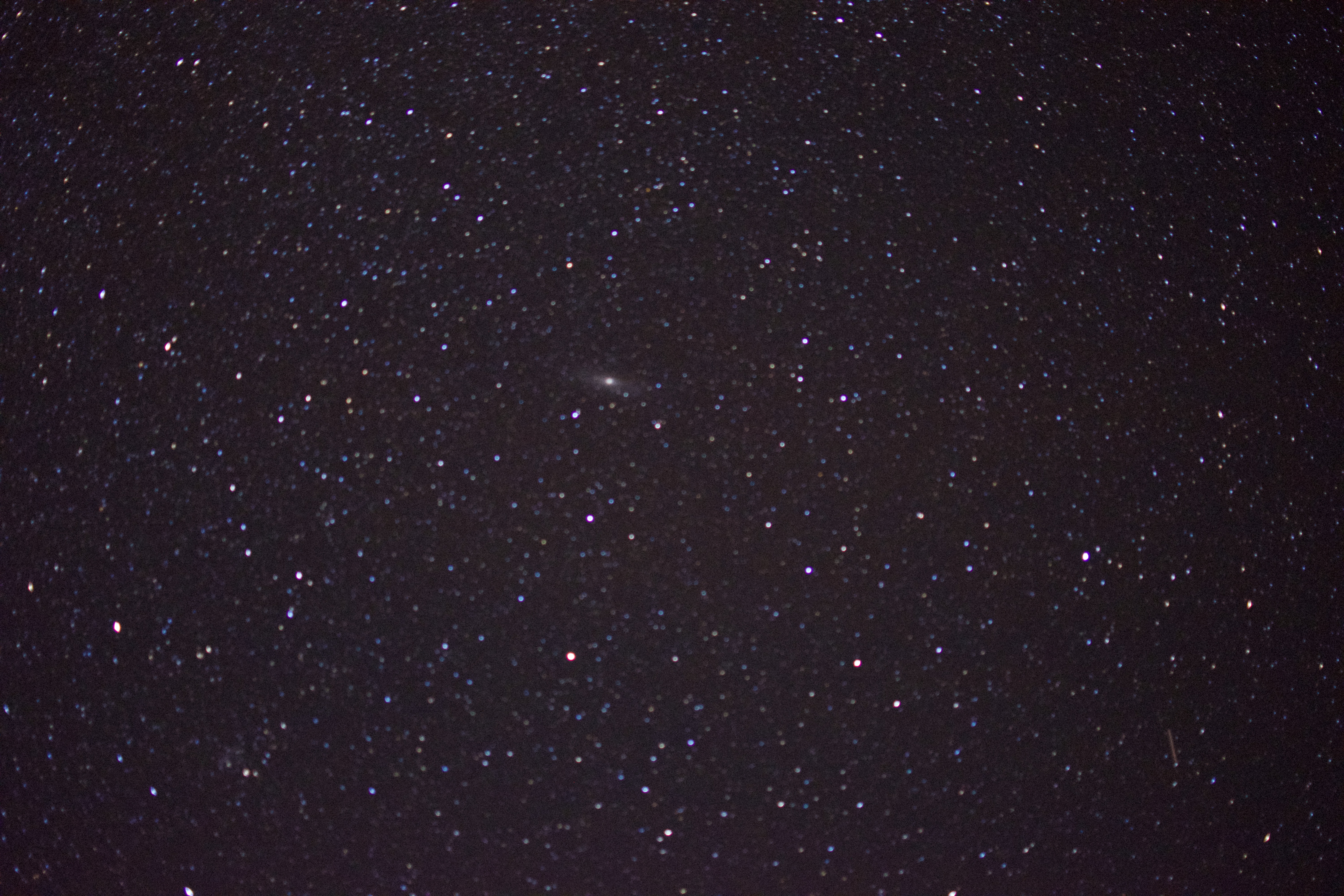
I was sorting out some of my recent images from the west coast and spotted the Andromeda galaxy. That’s my camper van at the bottom looking west over the sea near Arasaig. Sky glow is from the recently set Sun.

That fuzzy elongated smudge I’ve highlighted is the combined light from over 400 billion stars. A completely separate island universe over 2.5 million light years away.

Here’s a few other pictures from this excursion posted below.


Stargazing at Roseisle

55924259_2273889659514640_3969822139795636224_o.jpg

Starry skies over the Moray coast

Amidst a very busy schedule last month I managed to head out to Roseisle (along the Moray coast) for some observing and a wild camp.  My original mission was to try and catch a geomagnetic storm predicted by the MET office space weather forecasts.  As it happened the promised aurora didn’t arrive but I did manage to get some photos of the starry skies that opened up on Saturday night, starting with the International Space Station.

55615864_2277317779171828_3913720705744633856_n.jpg

Not the most fantastic ISS shot but I only had about 20 seconds to set up after running down the dunes to capture the pass!.  The station is actually travelling from west to east here, towards Sirius (bright star on left)

From there I took a number of pictures hoping to capture some aurora, but instead imaging the crisp starry skies.  I’ll let the photos do the talking from here – please read the caption notes.

55575693_2273889382848001_4589512154545127424_o.jpg

This image of the Plough (minus Alkaid) was snapped while I was still under the trees, on my approach to the beach.  You can clearly see the naked eye double star Mizar-Alcor at the bottom of the image.  The main stars in the Plough are roughly 100 lights years away.  Our Sun would not be visible naked eye if placed this far away which tells us something about the scale and luminosity of these titan stars.

54798041_2273889622847977_7869519356412035072_o.jpg

Looking north towards Burghead where I hoped to capture some aurora.  Instead I picked up the rich star fields within the Milky Way near Cassiopeia.

55551339_2273889702847969_369990786642608128_o.jpg

One of many passing satellites.

54524758_2273889786181294_1681336390505201664_o.jpg

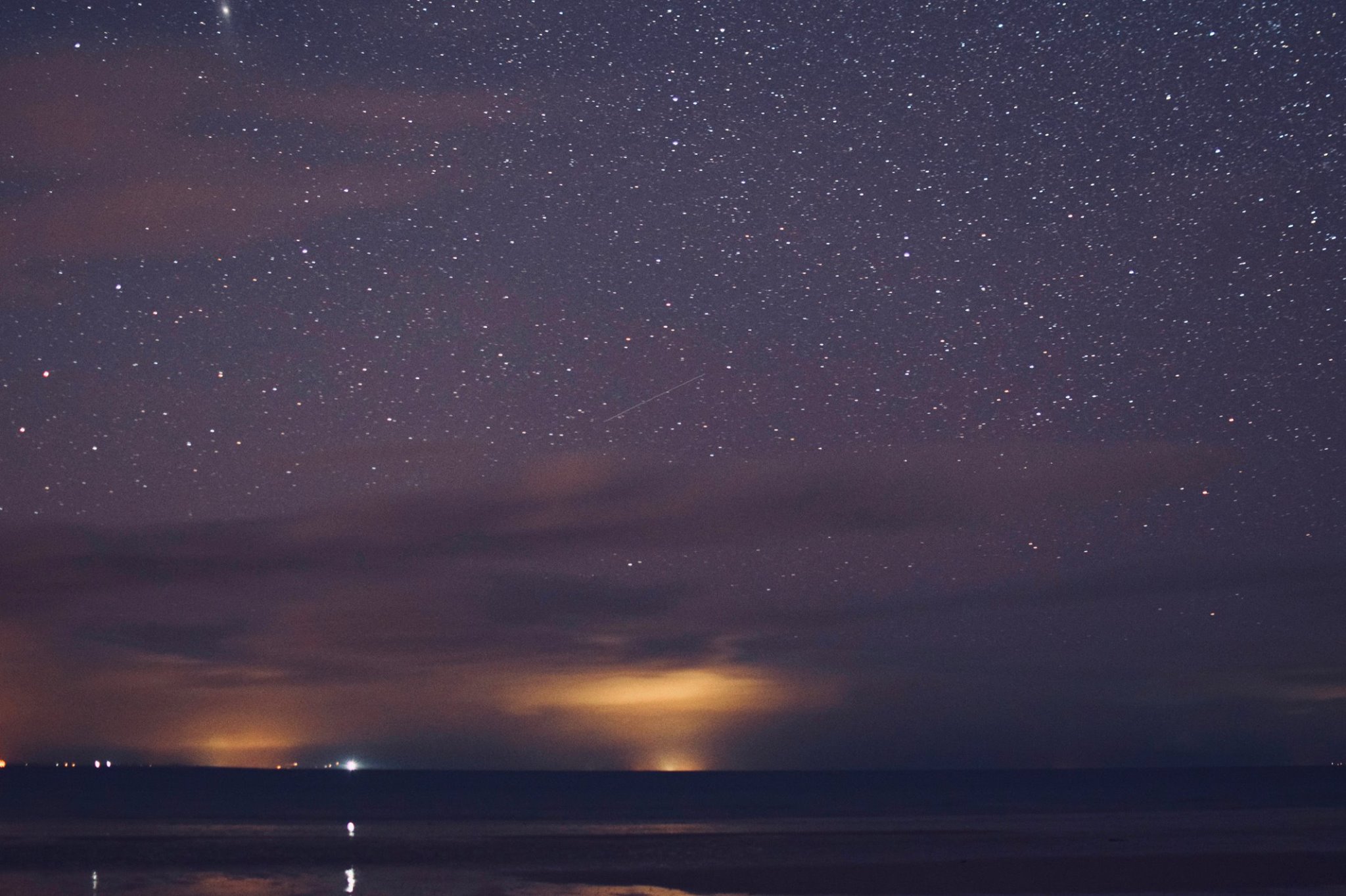
An interesting shot looking north west.  The bright white light is the Portmahomack lighthouse and the orange light pollution on the right is likely from Helmsdale.  Perhaps the most interesting feature in this photo is the faint smudge of light in the top left.  That’s the Andromeda galaxy – a separate spiral galaxy (larger than our Milky Way) over 2.5 million light years away.

Dark Sky Observing at Abriachan

DSC_0093

A lovely crescent Moon hung in the West for most of the evening

We enjoyed another superb evening of stargazing and storytelling up at Abriachan Forest last Saturday – the last dark sky session until stargazing returns in October 2019.

There were beautiful crisp skies all evening long, allowing me to guide both groups outside for views of the Milky Way and numerous open star clusters like the Hyades, Pleiades, Beehive and the stunning double cluster in Perseus.

DSC_0107

Orion…of course

We also studied the Orion star forming nebula, the great spiral galaxy in Andromeda and some fainter galaxies in Ursa Major (M81 and M82), and even had a go at sighting the triplet of galaxies in Leo, which some of the keen eyed youngsters successfully glimpsed in the 8×40 binoculars.

Clelland was also back in action with the story of Arden and the birth of Merlin in the roundhouse.

Thanks to everyone who came along.  Please check my Facebook site for details of future summer events.

DSC_0108 2

Perseus and the double cluster