The Torridon is a location with exceptional darkness in the remote western Highlands of Scotland. You can see a preview of my stargazing experience on the BBC’s Amazing Hotels. Near the end I take Giles and Monica out for an excursion under the stars.
Fingers crossed both my community based stargazing programmes will be up and running again by October (at Abriachan Forest and the Merkinch Nature Reserve).
Join me tomorrow evening for the launch event of the 2021 Hebridean Dark Skies Festival, where I’ll be offering some tips on what to see in February’s night skies. You can pick up your free tickets to the online stream from An Lanntair here.
I’ll also be featuring in a live discussion about the festival and Scotland’s dark skies this Sunday morning on the BBC’s Good Morning Scotland Radio show. Tune in from about 9.30am.
“Hebridean Dark Skies Festival online launch event is tomorrow night at 7pm! If you’ve already booked a free ticket we’ll be sending you a weblink shortly. If you haven’t, reserve your place now for a guided virtual tour of our Lumen exhibition, Highland Astronomy on what to see in the night sky in February, musician Renzo Spiteri on his festival commission, and more.” – An Lanntair
I’m very much looking forward to partnering with Callanish Stones & Visitor Centre, Gallan Head Community Trust and An Lanntair to deliver a live stargazing talk from the famous Callanish stones on the Isle of Lewis. This event is part of the 2021 Hebridean Dark Sky Festival
Join us from the comfort of your own home – or outdoors – for a fascinating insight into the night sky.
Stephen Mackintosh (Highland Astronomy) is a freelance astronomer, night sky photographer and STEM educator based in the Highlands of Scotland. He delivers public outreach astronomy talks, tours, and private stargazing events at select dark sky locations around the Inverness area and wider Highlands.
Stephen will be on hand to answer any questions you have, from ancient astronomy to what you can see in the night sky right now.
As part of this year’s festival, Highland Astronomy is also doing live events at Scaladale Centre and Grinneabhat in Bragar.”
I’m very much looking forward to a return to the inky dark skies over the Isle of Lewis next February for the Hebridean Dark Sky Festival. The full lineup and details are available from organisers An Lanntair.
I’ve been reminiscing about last year’s festival, when I toured Lewis delivering outreach to a collection of remote communities under some of the best dark skies you’ll find anywhere. You can read my short account from last February on my blog page here. I look forward to more of the same in 2021, travelling to some new locations on the island.
“Thou lingering star, with less’ning ray,
That lov’st to greet the early morn…”
After last night I’m convinced Rabbie Burns did all his stargazing with a delicious wrap of haggis in hand.
Haggis hand warmers and Clelland’s address from last night’s sellout Dark Sky Burns event. Big thanks to the Abriachan team for the Burn’s supper fare.
Due to inclement skies the astronomy moved indoors I got to talk in some detail about the planet Venus and its harsh environment. A fascinating place that surely deserves more attention in the future, not least for its potential to harbour microbial life in its more clement upper atmosphere.
Why not try looking at Venus through a telescope or a pair of stabalised binoculars? You should be able to make out its phase, just as Galileo did when he first gazed up at it back in 1610.
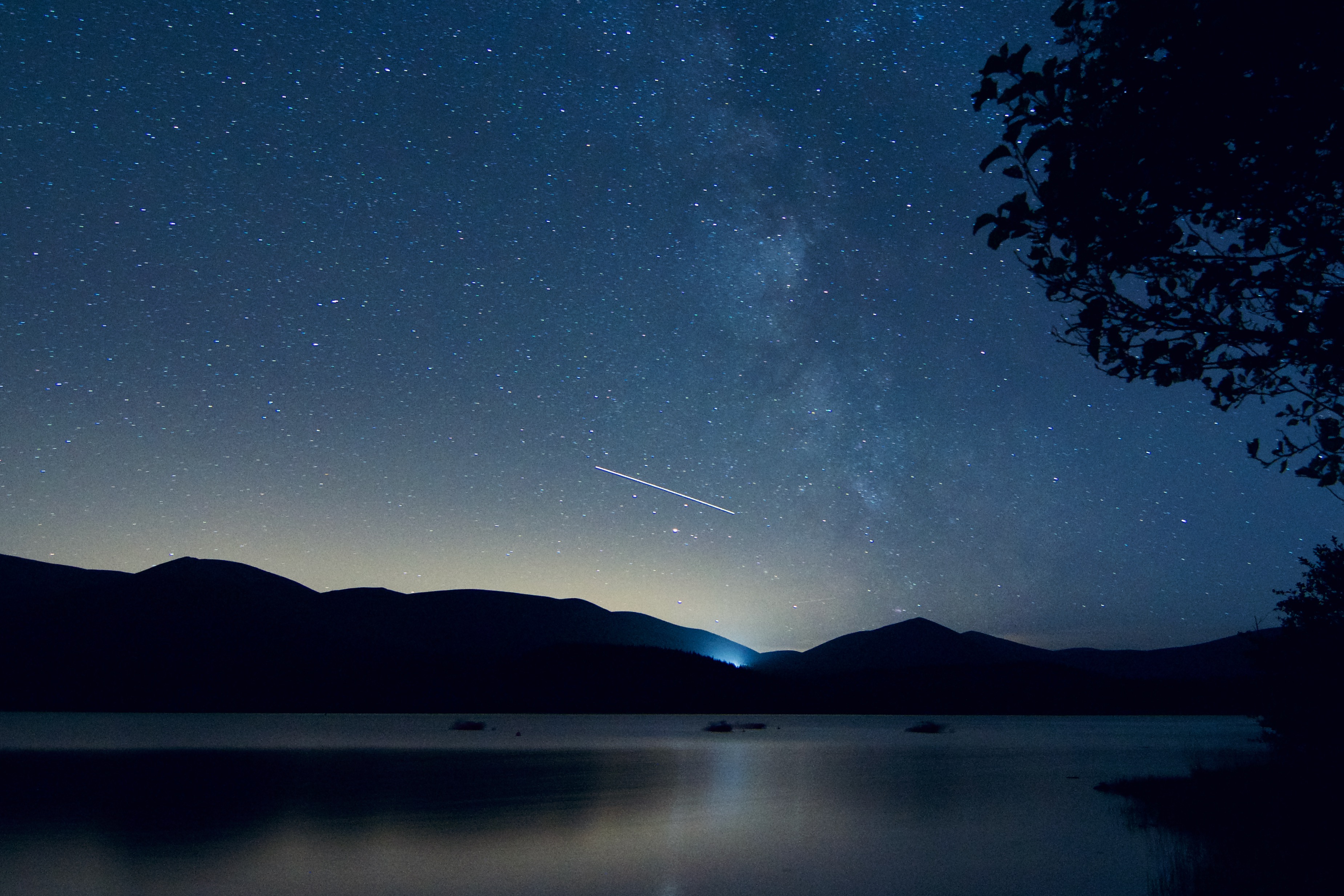
ISS cuts through the glowing band of the Milky Way, reflected in the waters of Loch Morlich in the Scottish Cairngorms
I enjoyed a pre equinox wild camp beside Loch Morlich last night. Amazing dark skies with the Milky Way bright enough to be faintly reflected on the loch’s surface.
Saturn and Jupiter shone in the early twilight before ISS made an appearance after 9pm, cutting through the bright band of the Milky Way.
Later still the Moon rose spectrally above the hills looking east, lighting up the loch like a beacon.
Happy equinox when it comes. Official time is Monday 23rd September at 8.50am. Click below for more pictures.
Milky Way – Cairngorms
Saturn and Jupiter
The Moon rose after 10.30pm lighting up the loch and surrounding hills
I had the privilege of visiting Snowdonia this summer for a family camp in a beautiful river valley near Maentwrog. During the evenings I managed a bit of stargazing before moonrise and captured a few bright constellations over the Welsh hills.
Cassiopeia over the Welsh hills
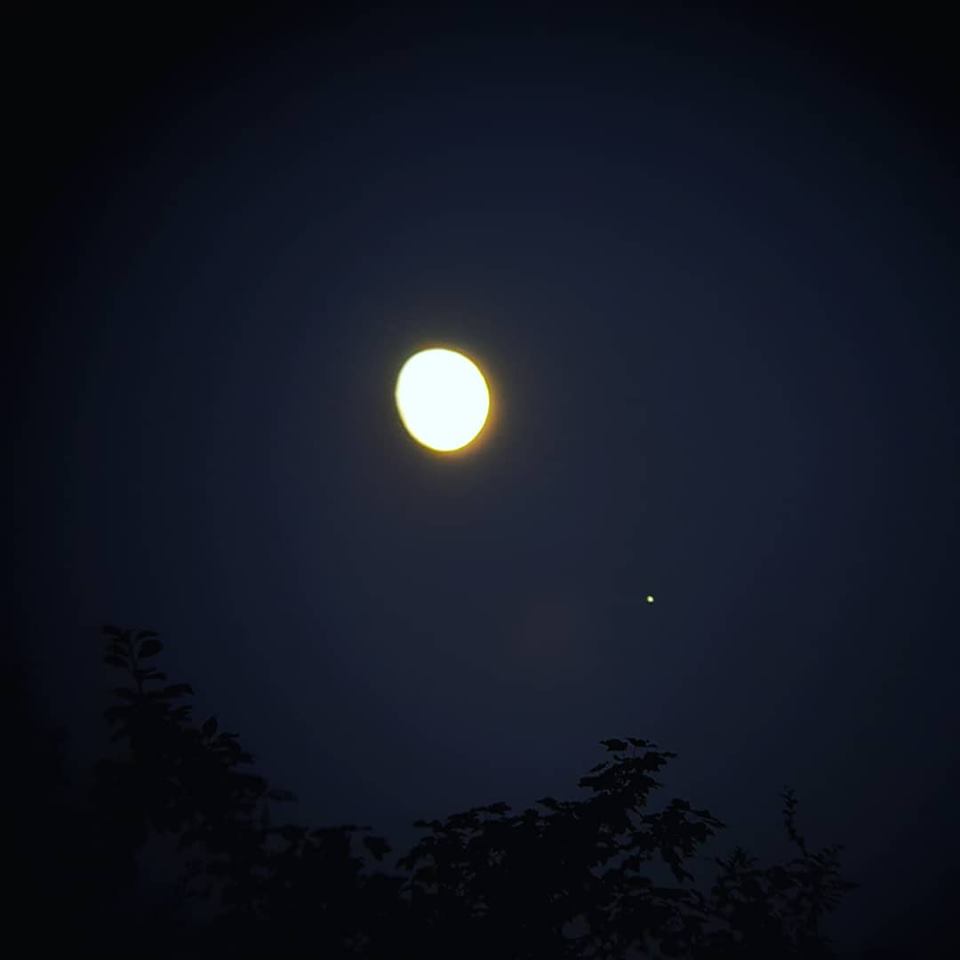
I also captured a lovely close pairing between the Moon and the planet Jupiter.
Jupiter sits serenely below the waxing gibbous Moon
The highlight, however, was witnessing a beautiful partial eclipse of the Moon on Tuesday evening at around 11pm.
I took these pictures and a short video using my smartphone anchored to a simple pair of 8×40 binoculars (mounted for stability). The eclipse was already underway when the Moon rose into view and continued until well after midnight.