
Comet A3 spotted and photographed naked eye from Sicily.
I’ve recently posted guides on observing the bright comet A3 Tsuchinshan–ATLAS from northern latitudes in mid October. As it happened I was travelling in Sicily during the initial (evening) observation window but wasn’t holding out much hope of seeing it given likely sky brightness and the comet’s relatively low elevation above the western horizon
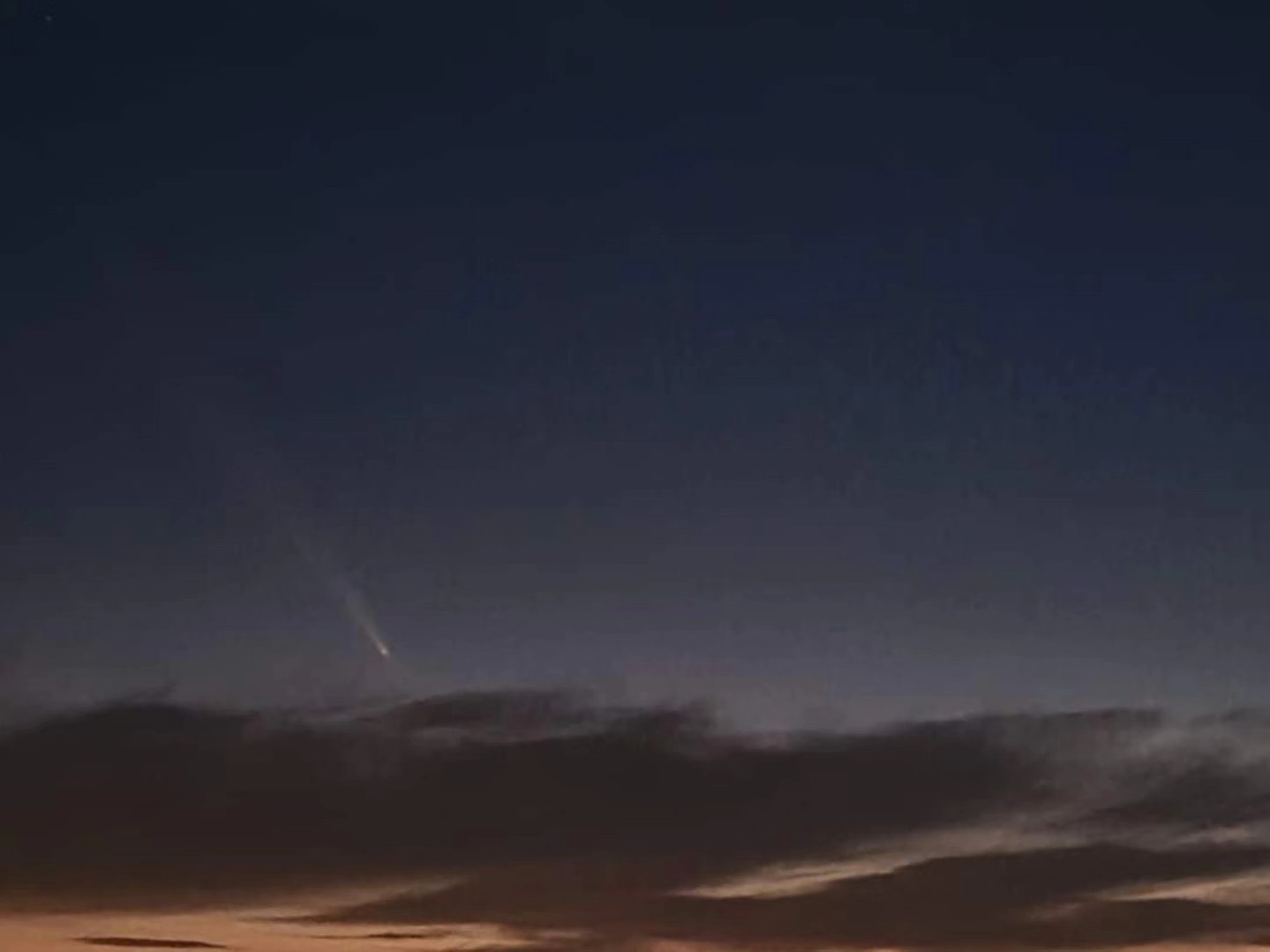
I was however delighted to see and photograph it during very clear naked eye visibility on the evening of October 13th, near Noto in southern Sicily. The comet was so bright I could actually see it through the front windscreen of my car when travelling along a quiet farm road, and promptly pulled over for better views, capturing these images with my mobile phone.

In the first image Venus is the bright planet to the left and comet A3 is clearly visible with nucleus and tail extending in a pronounced vector away from the location of the Sun (below the western horizon).
The tail of a typical comet is absolutely enormous (sometimes stretching tens of millions of miles back from the nucleus), and comprises an ionic dust cloud of diffuse material blasted away from the comet by the intense solar radiation of the Sun.
Meanwhile, back home in Scotland, some followers also spotted and photographed the Comet. Below are two such samples captured by Howard Taylor in Dumfries & Galloway (1st image below) and Caroline Hay outside Carluke (2nd image below).
To see the comet for yourself look towards the western horizon after sunset, as skies darken to an azure blue. The comet will rise higher in altitude going into late October but may unfortunately lose brightness as it recedes back whence it came to the still and dark fringes of the Oort cloud.
If you miss A3 this time you’ll need to be cryogenically frozen for a good 80,000 years before it makes a repeat return to Earth’s night sky.


 | Modulo | Universe