January 2022 Star Stories at Abriachan Forest

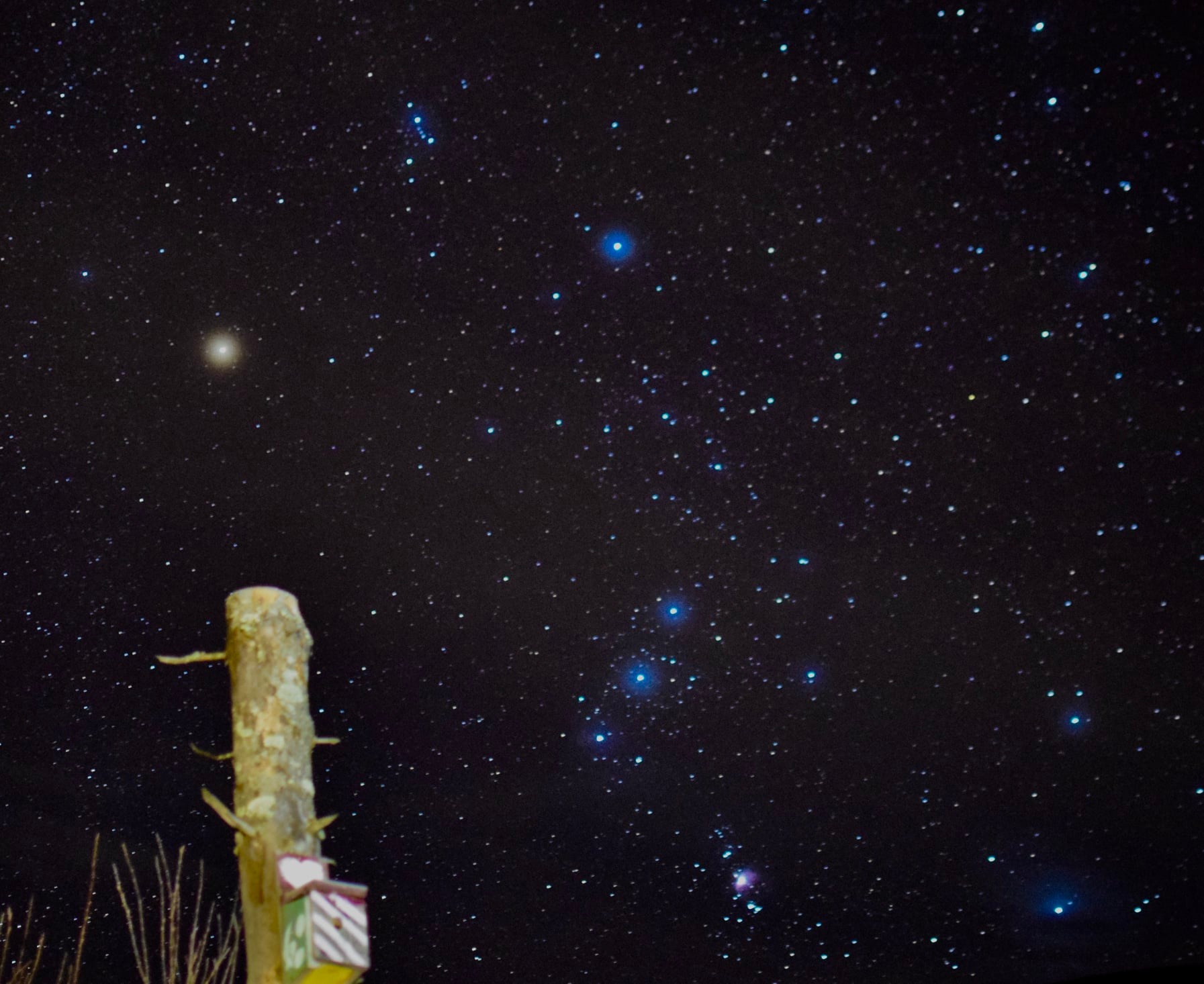
The brilliant stars of Orion shining down over Abriachan Forest.

Many thanks to everyone who made it up to Abriachan Forest for our Burns stargazing event on Saturday. Big thanks to Jim for his excellent Haggis address and the Abriachan team for the delicious Burns supper fare.

Skies were a little patchy but we did see good naked eye views towards the south and the main focus of the evening talk – the mighty Orion constellation.

After observing Orion we headed inside to explore some of the amazing deep sky objects hidden within this giant of the night sky, like the beautiful Horsehead and Flame nebulae, part of the enormous star forming Orion Molecular Cloud Complex.

This region contains areas of dark, emissive and reflection nebulosity, with hot young stars blasting intense radiation into the hydrogen clouds producing the distinctive red areas due to ionisation.

At this scale the extent of our solar system (out to Neptune) would be one 10,000th of the width of the picture you see below on the right – less than a single pixel element within the image!
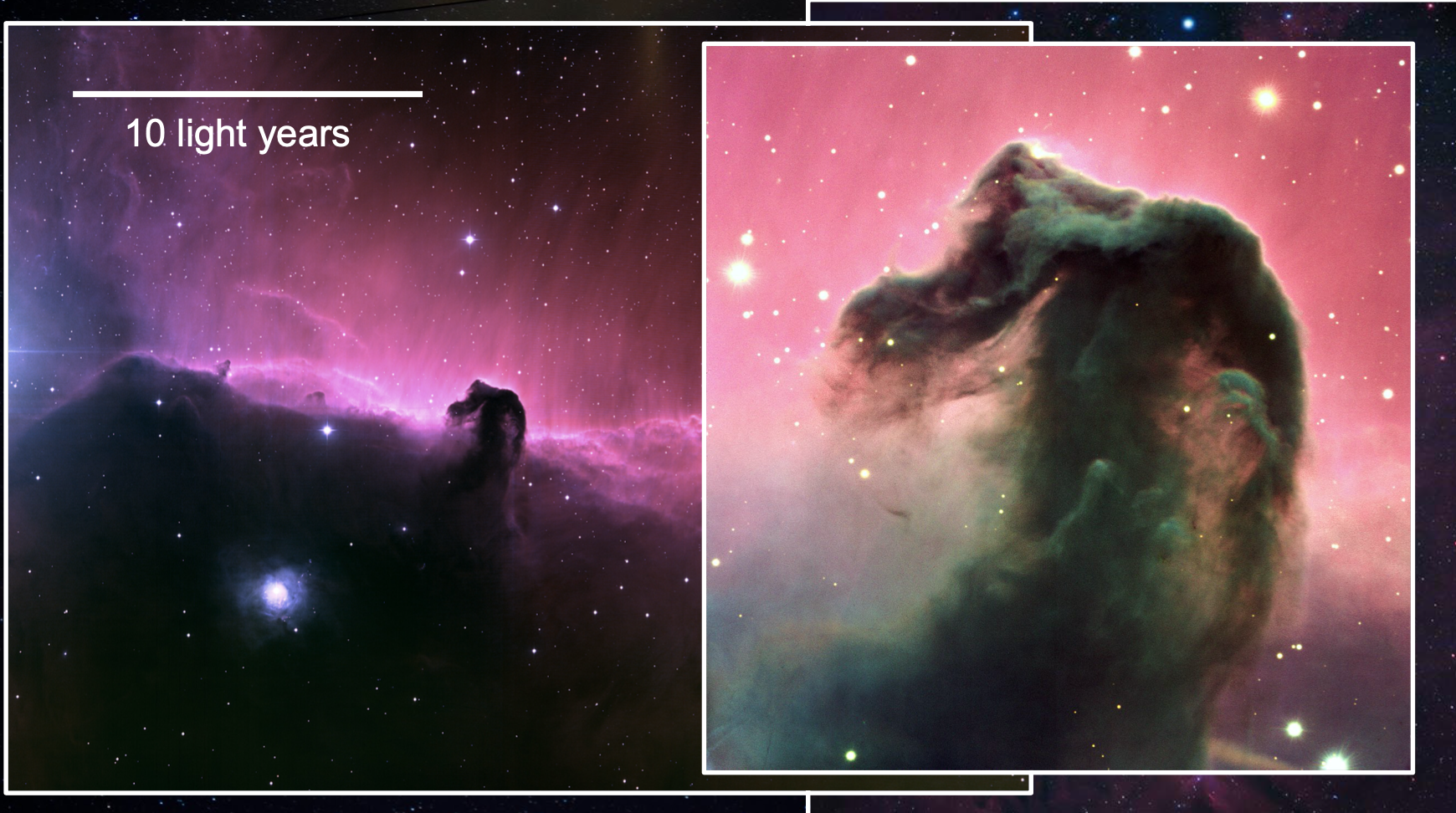
The Horsehead nebula sits close to the left most belt star in Orion, Almitak

Ticket links will go up very shortly for our February and March guest speaker Star Stories events with Martin Hendry and Catherine Heymans. I hope to see you all there.
Urban Astronomy Inverness

54437195_2276939069209699_6614522172989767680_o

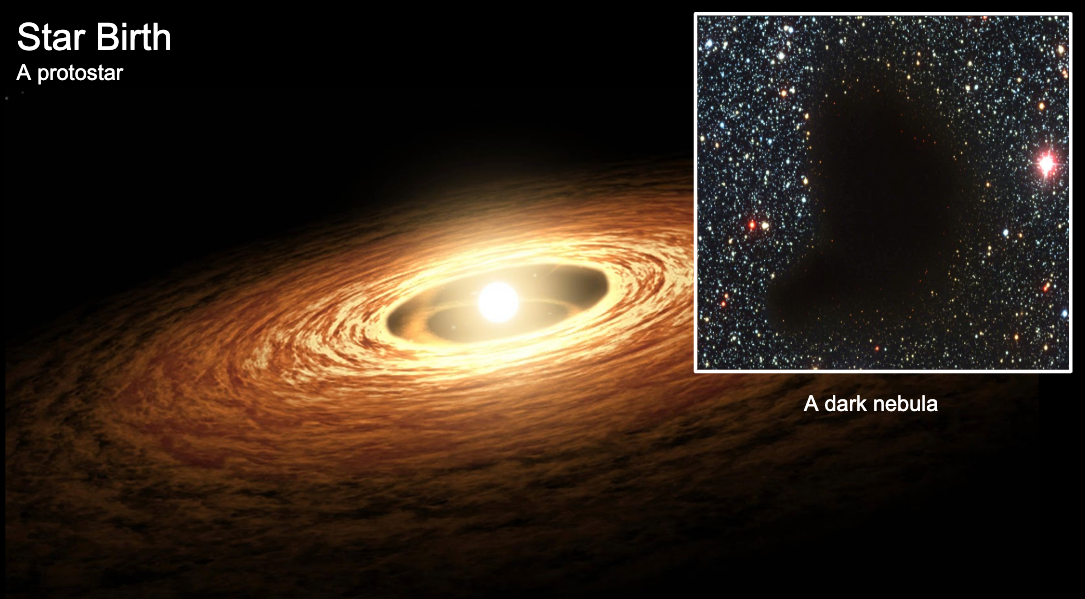
The formation of a young protostar following the collapse of a previously inert dust cloud

We had a great turnout for March’s Urban Astronomy session last week at the Sea Cadet’s Hall in Inverness.  The indoor presentation massively benefited from our new giant screen, expertly erected by Robbie (pictured below).  Here’s a selection of slides from my presentation on naked eye observing and the life of giant stars.

56158389_2274505439453062_5578800387336437760_n

Robbie putting the final touches to our new giant screen for indoor astronomy presentations and virtual sky guiding

Topics covered:

– Naked eye and binocular observing
– Satellites: Iridium Flares and ISS
– Colour, temperature and mass of stars
– The Hertzsprung-Russell diagram
– Protostar formation from dark nebulae
– Main sequence burning and final fate of stars
– White dwarfs, supernovae, neutron stars and black holes.

As ever there were some superb questions during and after the talk.  Stay tuned for upcoming events as myself and Caroline roll out the program.

54728919_2276939039209702_2126944281166872576_o

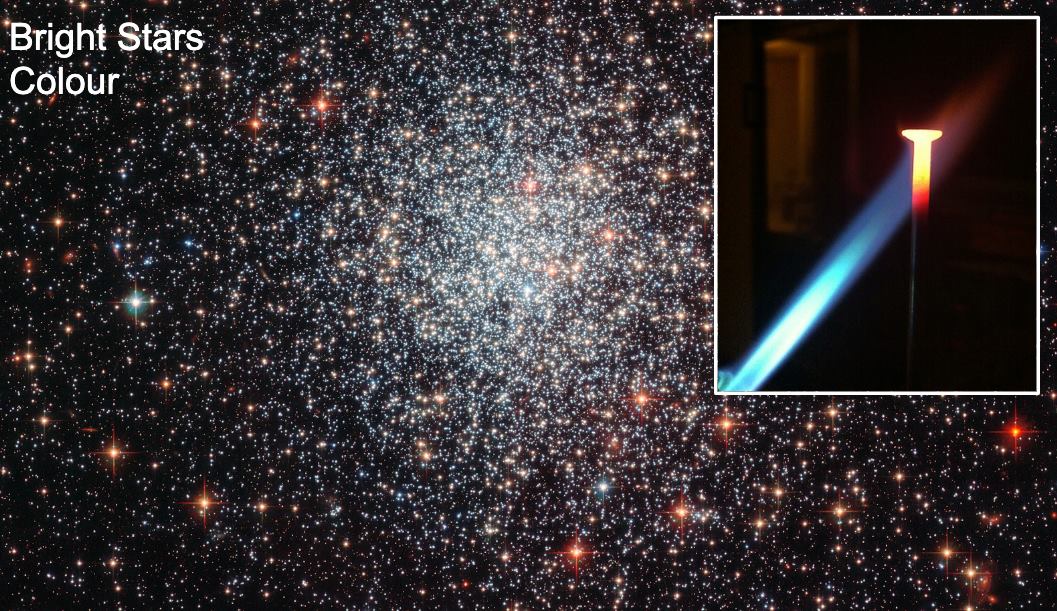
In the simplest terms stars behave like black body radiators with colour linked to their surface temperatures.

55713652_2276943135875959_380502345437413376_o

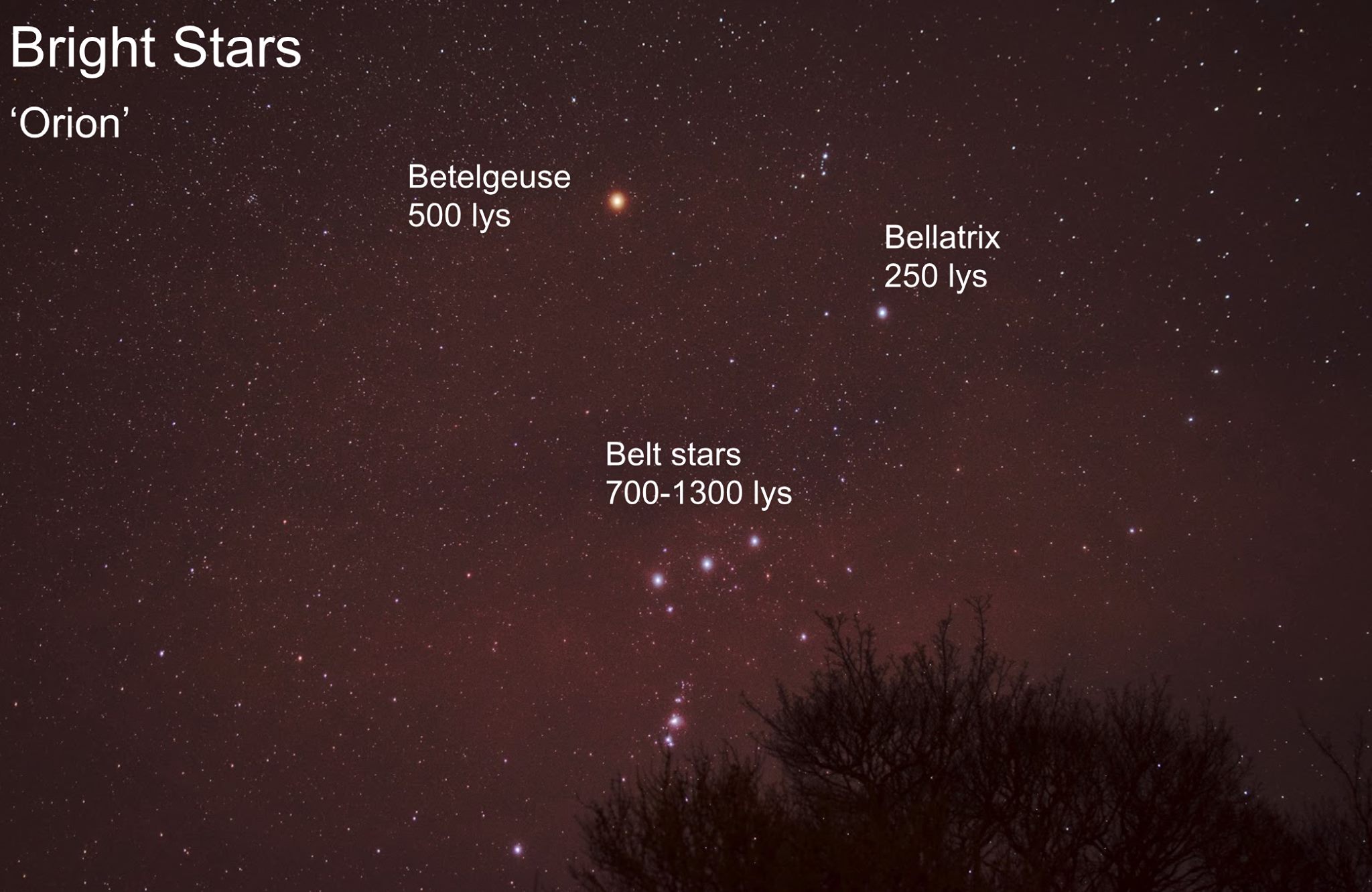
The brightest stars in the night sky can be close – like Sirius – or giant stars very far away (eg. Betelgeuse, Rigel, Deneb).

56201097_2276943045875968_2619181665393573888_o

The HR diagram.  An elegant and reliable tool for describing the evolution of stars from main sequence burning into their final stages of life