It’s been a while since I updated my Youtube channel with a review. Bringing you my impressions of the Seestar S50 after a whole winter using it both personally and for public outreach. I hope you enjoy and find it useful.
outreach
Inverness Nature Reserve Astronomy Evenings
Nature Reserve Astronomy evenings will resume online this year, starting end of November with an Introduction to Buying a Telescope + short talk on the planet Mars.
Please follow this page for event links going up over the winter. Some of these events could be broadcast live if weather permits so please keep your page notifications on.
There will also be an Abriachan Forest event on the winter solstice, promoted separately.
Future Astronomy Outreach

A human henge – mid summer at Abriachan
Some good news regarding future face to face astronomy programs, delivered up in the Scottish Highlands. All of this is caveated on the assumption that live gatherings are legal and safe at the end of this year.
Next season (from November) I’ll be continuing to work with Caroline Snow to deliver our Urban Astronomy programme based out of the Friends Of Merkinch Local Nature Reserve in Inverness (with the Sea Scouts hall as our indoor base of operations). These events have been growing in popularity and we’re really glad they’re going to continue.

Merkinch Moon gazing
Star Stories will also continue from Abriachan Forest (Dark Sky Discovery Site) with Suzann, Clelland, Ronnie and the rest of Abriachan Communityteam. The STFC spark award funding is due to end this season, but the programme will continue on a sustainable footing with events (hopefully) starting in November. This whole programme has been a massive success and I look forward to completing my research report for STFC with dissemination for various astronomy publications.

Clelland in action
I’ll also continue my hotel based outreach work for the likes of The Torridon and appearances at various festivals, whenever it’s safe and practical to do so.
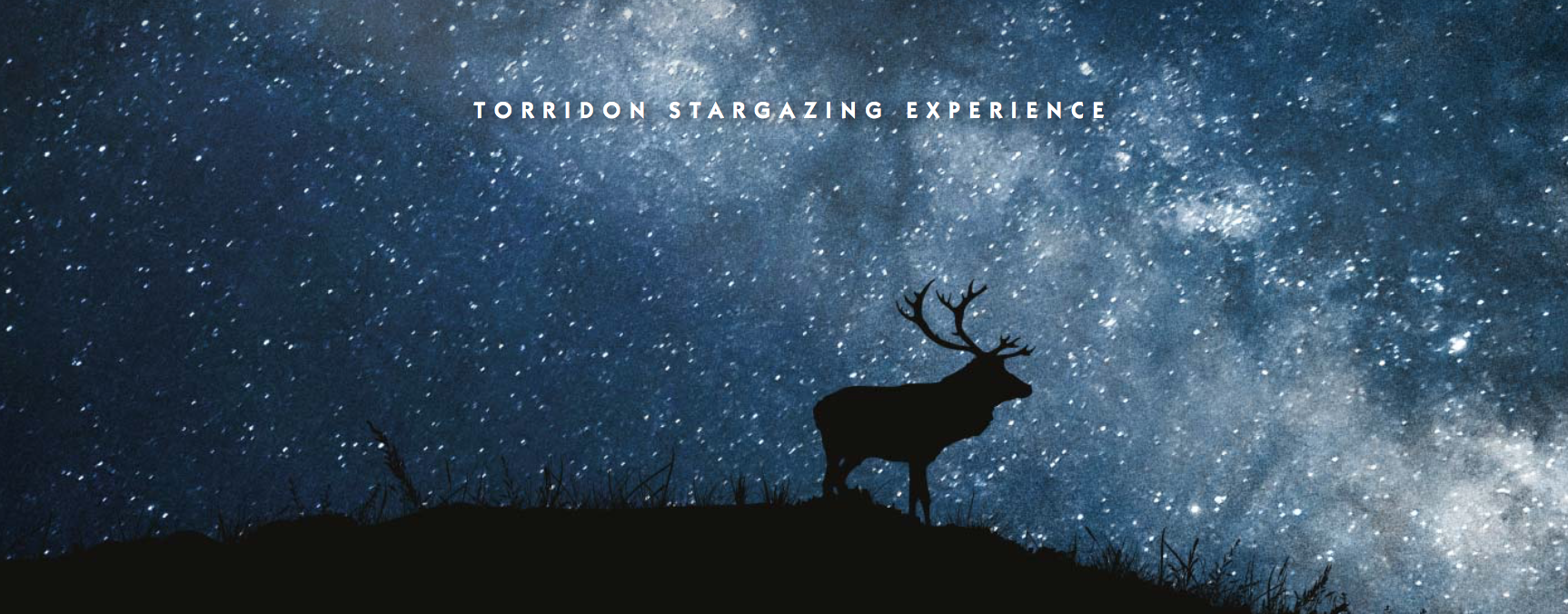
Some future plans are also underway, including an outreach programme with much bigger scope that will involve various partners and potentially some innovative new technology.
Urban Astronomy Aurora Special
Many thanks to Graham Bradshaw of Graham Bradshaw Photography for tonight’s fascinating guest talk on hunting down and photographing the Aurora. Here’s one of the beautiful time lapses Graham shared with us during his presentation.
Graham also provided a lovely selection of his images (see below) along with camera settings to help budding night sky and aurora photographers.
We also took advantage of some clear breaks in the sky after the talk and walked up to the Nature Reserve to view some bright constellations and star clusters.
Thanks to everyone who came along. The next Urban Astronomy event is our Venus special on March 12th. Booking link here.


Aldourie Primary Astronomy Outreach
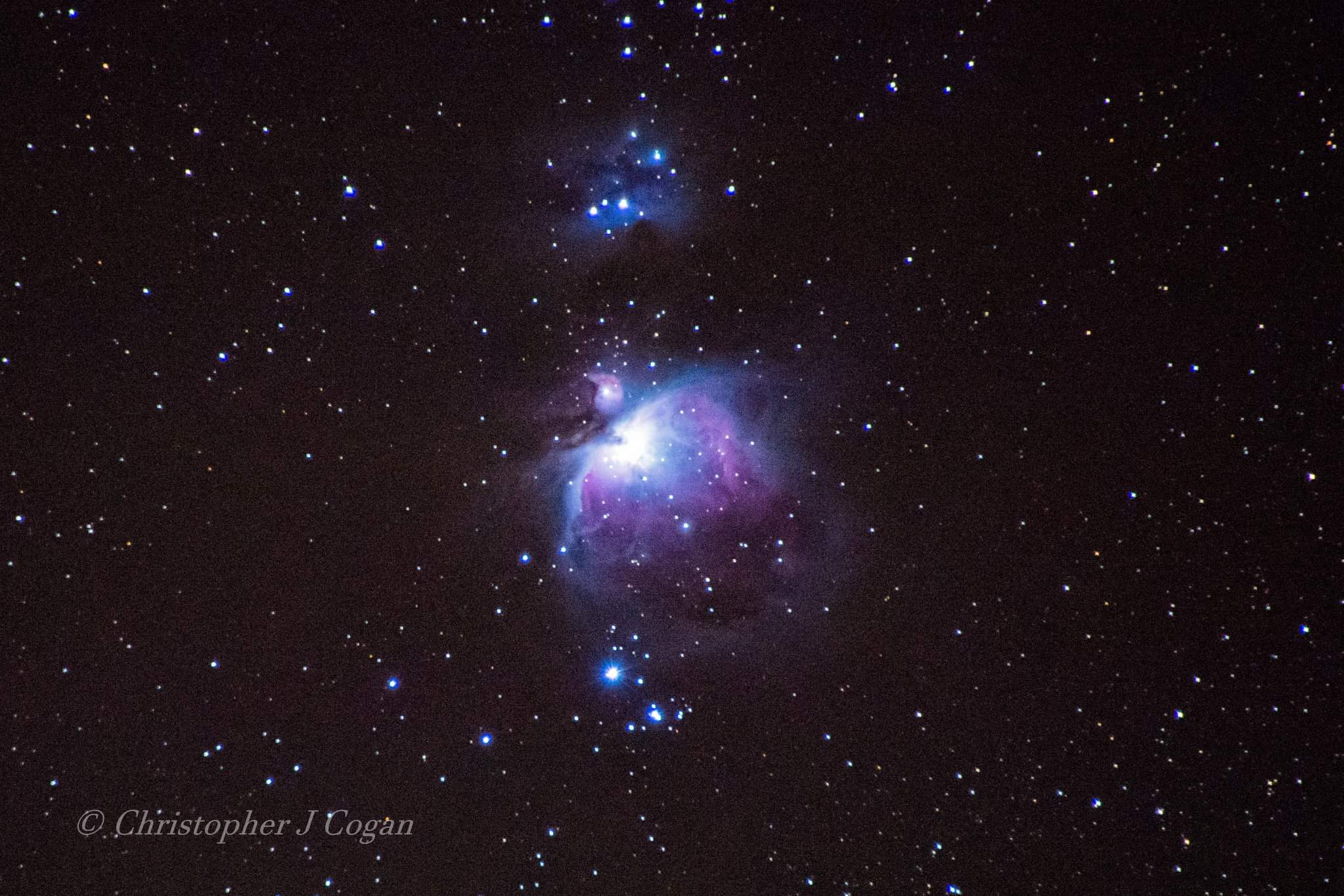
One of the objects we observed was the star forming nebula in Orion’s sword, imaged here by local aurora hunter and photographer Chris Cogan.
I had a fun astronomy outreach session with pupils and parents from Aldourie Primary near Loch Ness on Friday evening. At 6pm kick off we saw some captivating glimpses of dazzling Venus before it set below the tree line.
Due to initially changeable weather we moved between my indoor presentation and outdoor stargazing, but ended up getting a brilliant spell under the stars mid session.
Despite its relative closeness to Inverness skies are dark enough out here to see the Milky Way very clearly.
Lots of the youngsters (and parents) tried their hand at binocular stargazing for the first time, peering at open star clusters, double stars, the Orion nebula and Andromeda galaxy.
If you’d like to book an outreach session for your school please message me on my facebook site, Highland Astronomy.
Stargazing at Belladrum Festival

Going to Belladrum Tartan Heart Festival this year? I’ll be delivering stargazing sessions from 11pm on Friday and Saturday night. Backup for cloudy skies will be an interactive stargazing talk with planetarium software.
I’ll post up full session details and festival meeting points soon.
Festival details: https://tartanheartfestival.co.uk
ISF Talks – Island Universes
I’ve recently finished delivering two public lectures on Galaxies at this year’s Inverness Science Festival.
The theme of my talks was ‘Island Universes’, telling the tale of when and how we discovered our Milky Way isn’t the only galaxy, and how the teeming multitudes of spiral nebulae, hitherto believed to be collapsing dust clouds, were in fact individual galaxies.
The talk started with some observational astronomy, before discussing the great debate of 1920 between Harlow Shapley and Heber Curtis. The main unresolved issue here was the distance to the spiral nebulae, particularly Andromeda, which was unknown. This lead us into pulsating stars and the work of Henrietta Swan Leavitt, who systematically analysed and determined the period luminosity law for cepheid variable stars.
Finally we discussed Edwin Hubble and the ramifications of his observations on the red shift of distance galaxies, and how this has informed our current understanding of the history and future dynamics of the universe.
I’ll let some choice slides do the talking from here on.
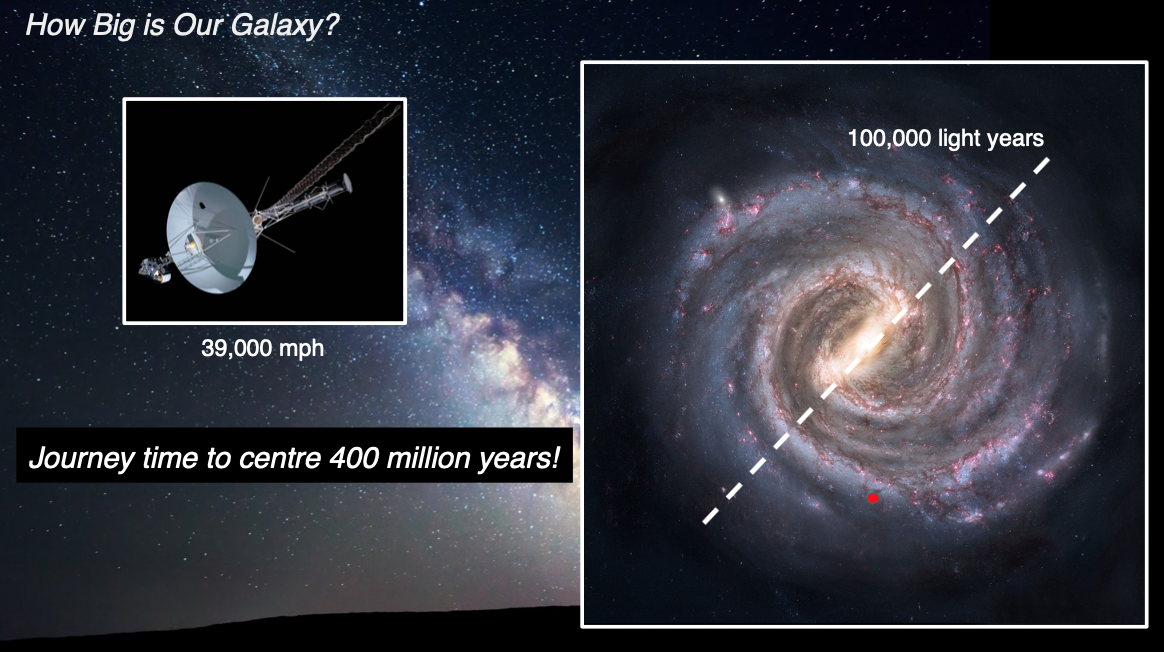
Our own galaxy ‘The Milky Way’ is big. If you tried to travel from our position to the galactic nucleus at the speed of the Voyager spacecraft it would take you over 400 million years.

A 1900s image of the Andromeda nebula. Back then the consensus was these spirals were large collapsing dust clouds, a bit like the star forming Orion nebula. The idea that they could be separate galaxies like our Milky Way seemed inconceivable, yet that’s where the evidence eventually lead in the 1920s.
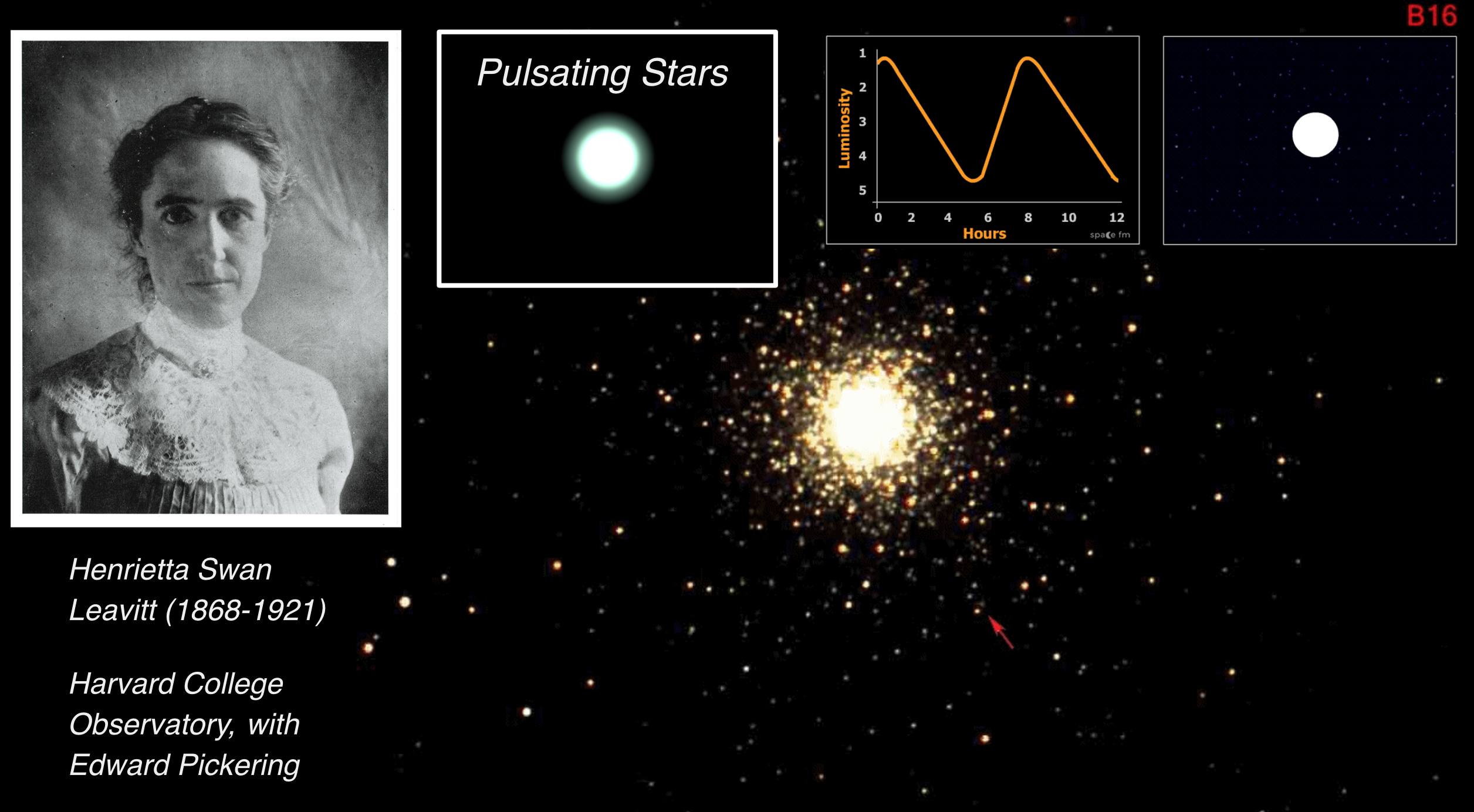
Determining the distance to spiral nebulae (as they were known pre 1900) required a new way of determining distance from so-called ‘standard candles’. Leavitt’s law was invaluable when Hubble turned his attention to Andromeda in 1922.
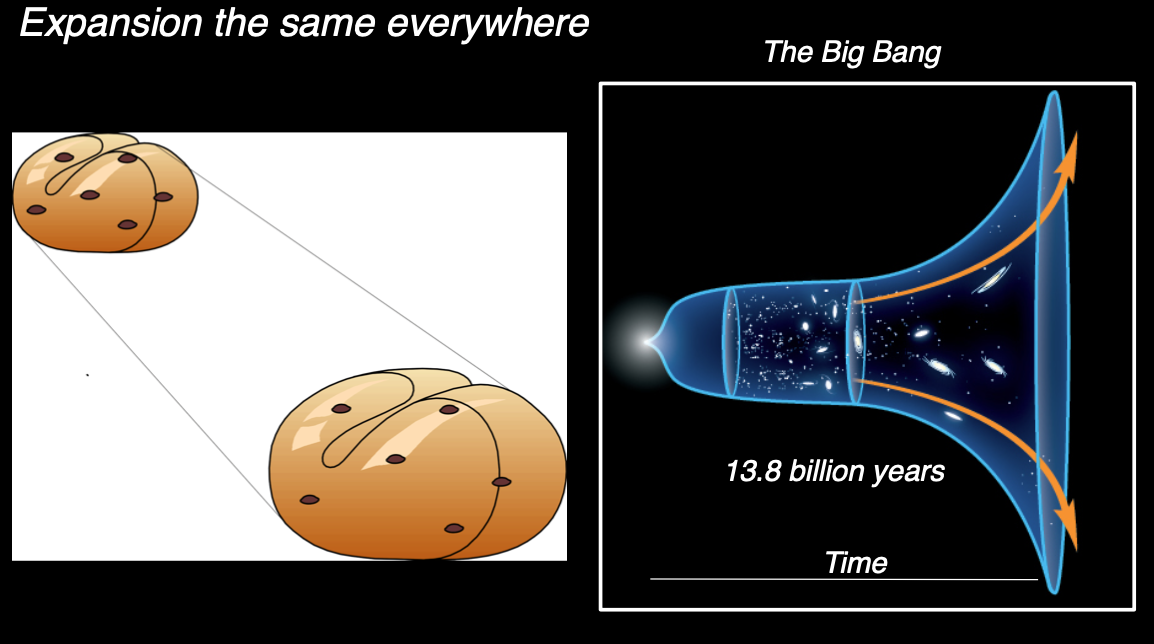
Hubble discovered the galaxies were all rushing away from us. However this phenomena is actually a metric expansion of space itself, and therefore has no intrinsic centre. Some of the most distant galaxies are receding away at faster than the speed of light – again due to the expansion of space itself, which has no speed limit imposed.

There were lots of questions on M87, the giant elliptical galaxy whose black hole was recently imaged by the Event Horizon telescope.
Q&As are always lively after astronomy and space talks, and the younger audience members always surprise me with their amazing knowledge and frank curiosity. Some choice sample from the two evenings below. Answers on a postcard please .
1. Is the singularity at the end of a black hole the size of the Planck length?
2. If a giant hole suddenly appeared in the Earth how many Pluto’s could you fit inside it?
3. Do supermassive black holes continue to grow until they devour the host galaxy?


 | Modulo | Universe