Stargazing at Abriachan – Scotland’s Night Sky Special

Feb 22nd – Stargazing at Abriachan – Scotland’s Night Sky Special

Join us up at Abriachan Forest (a Dark Sky Discovery site) for a stargazing and night sky photography special as we welcome guest astrophotographer Andrew Allan from Perthshire.

Andrew runs the widely followed community page Scotland’s Night Sky and is a prolific aurora chaser and Milky Way photographer. Andrew’s talk will include tips and tricks on how to photograph a wide range of celestial events, how to forecast the Northern Lights plus images and stories from Andrew’s adventures abroad to Iceland, Norway and Tenerife.

If conditions are clear astronomer Stephen Mackintosh will also be guiding you under the Milky Way class dark skies of Abriachan Forest (with a backup astronomy presentation if clouds roll in).

Due to site and classroom capacity, booking via Eventbrite is essential. Admission is free for under 16s with accompanying adults but please inform Abriachan of any large booking requests.

Eventbrite ticket links are here.

Capturing the Northern Lights on your Mobile Phone

Modern mobiles are now able to take quite striking images of the night sky.

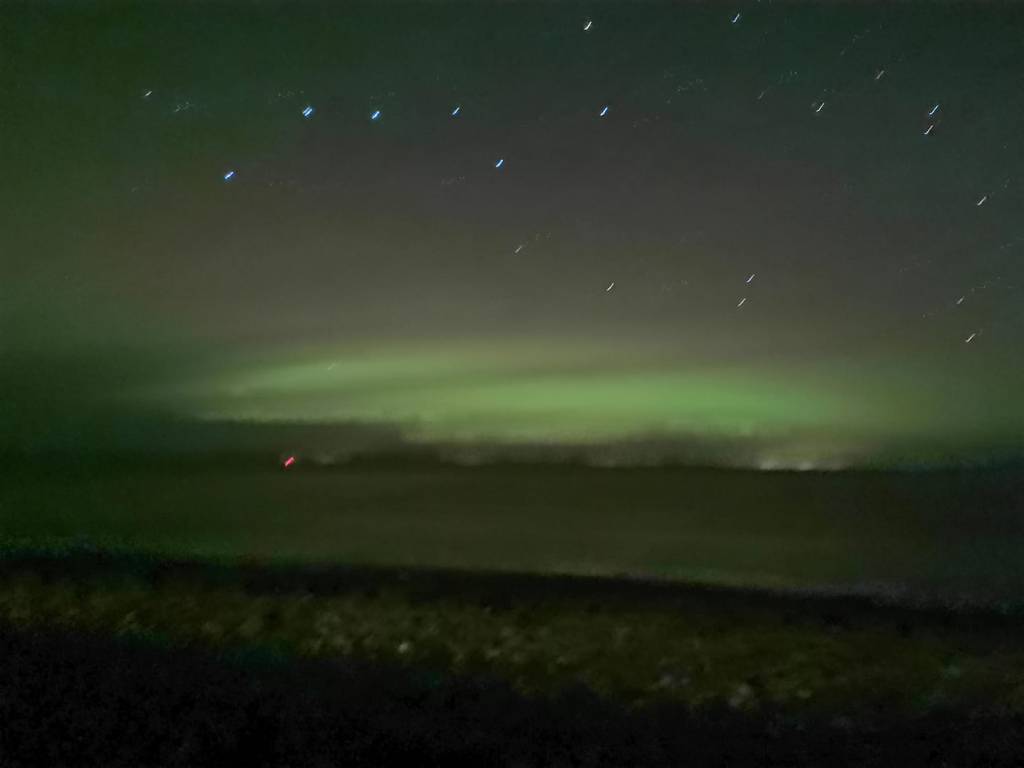
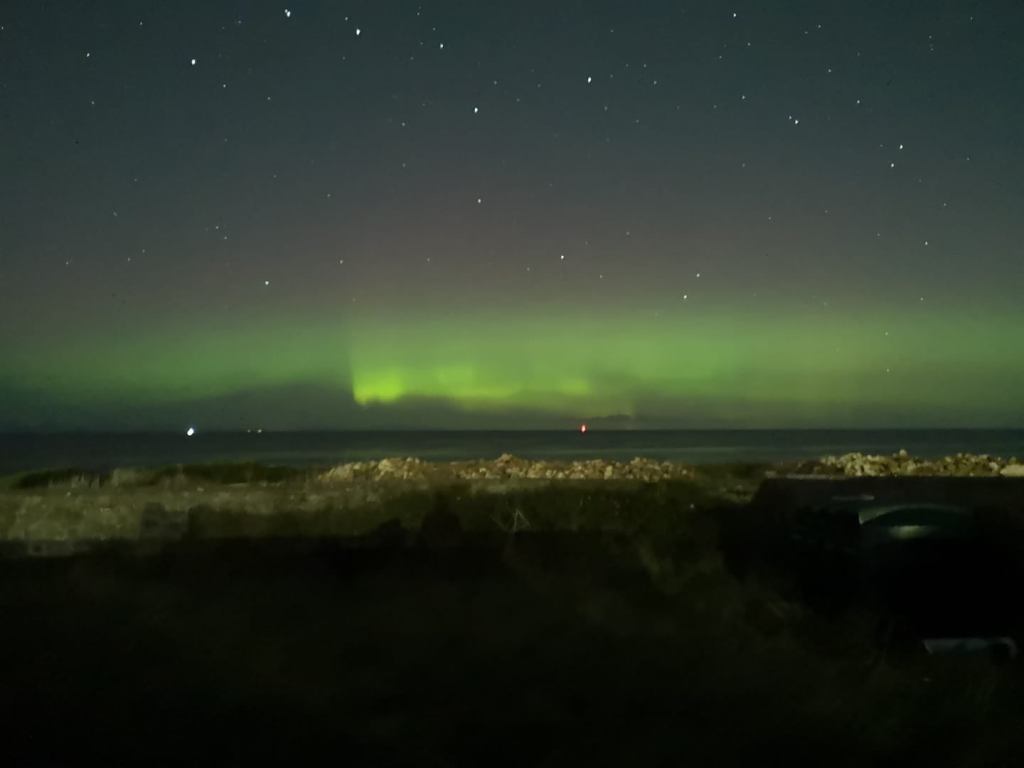
Here’s a few examples people shared from last night’s aurora activity in the north of Scotland.

If you’d like to try it yourself I’ve outlined a few pointers below and some apps you could try.

Settings:

1. Find the ‘manual’ or ‘pro’ setting on your mobile phone, this should let you alter ISO, focus and exposure settings.

2. Boost the ISO to around 800 or higher if you mobile is a more recent model.

3. Alter the exposure time to between 3 seconds – 30 seconds and experiment with a few shots.

4. WIth a short exposure time (a few seconds) you might get away with a handheld shot assuming you can keep you phone still during the picture. Any longer and you’ll need a tripod mount.

5. Good luck.

Phone Apps:

If you’re looking for some apps specifically designed to take astronomy images you could try NightCap (iPhone only) or ProCamX (Android). And if you want to get really experimental there’s also DeepSkyCamera which attempts to stack images for deep sky images (tripod essential).

Good luck and have fun.

Star Stories Photography and Aurora Special

51318417_2157195130985255_3820891528876785664_n

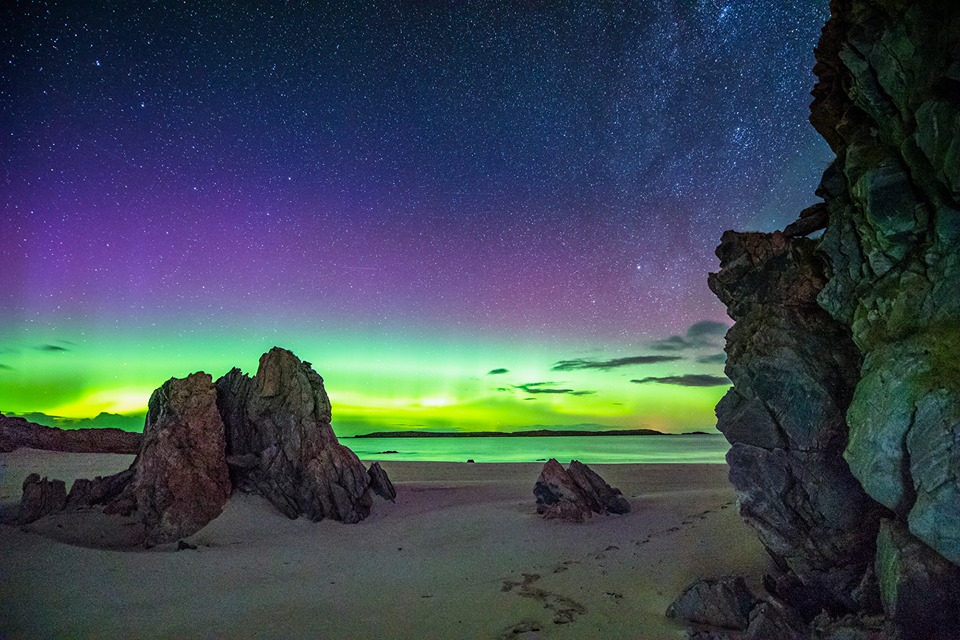
The aurora over Ceannabeinne Beach on the north coast by photographer Graham Bradshaw

Despite the stormy conditions earlier in the evening, skies cleared up beautifully at Abriachan on Saturday night for Star Stories.

Graham Bradshaw of Graham Bradshaw Photography was our guest speaker, talking about his fascinating experiences hunting and photographing aurora in some of the wildest and remotest parts of the Scottish highlands.  His talk included practical advice on seeking out aurora in the north of Scotland (which is much more prevalent than you might think), as well as showing many beautiful still images and stunning time lapses captured all over the highlands and further afield.

14089139_10209206672577386_5106191967053620437_n

Photographer Graham Bradshaw

Meanwhile I took two groups out stargazing and managed about 20 minutes of clear skies during the first outing until we were rained off by a very brief shower.  After heading back inside I switched to my backup slide deck on the science of aurora, talking about how the differential rotation of stars causes kinks in their magnetic fields, ultimately leading to the coronal mass ejections that produce the aurora.

DSC_0115 3

I got a nice capture of the Andromeda galaxy over the forest classroom (left), and a passing satellite.  This giant galaxy is over 2.5 million lights years away just visible naked eye.  It looks even more impressive in binoculars.

By the time Graham had finished his first talk, skies had cleared again and my second group had a much longer excursion under the stars.

As usual we took in broad sweeps of the night sky with the wonderful agility of binocular observing, hitting targets like the Orion nebula, Hyades and Pleiades star clusters, the Andromeda galaxy, Beehive cluster as well as numerous bright and massive red and blue giant stars.  The Milky Way was also clearly on display, even with the presence of an enchanting crescent Moon hanging in the South West.  We also saw Mars sitting above the Moon and had a go at finding Uranus (currently observable in the same binocular field as Mars).

During both streams Suzann Barr did some video interviews with some of the younger stargazers who’ve become regulars at the events, and captured feedback on our Star Stories wall chart.  Overall it was another great evening with good feedback from participants.

Our next event in March will be the last dark sky observing session for this season as skies begin to brighten.  The theme for this event will be galaxies, and I’ll have a backup presentation prepared on this topic should skies prove unfavourable.  There’s only a few tickets left available on Eventbrite here.

DSC_0120 2

Another good catch in my camera, this time the Milky Way in the region of Perseus, with the double cluster clearly visible on the left.



Christmas Wirtanen Sighting

DSC_0007.jpg

Comet Wirtanen to the left of bright Capella, above Bunchrew, Inverness

I’m almost always rewarded in some form when I head out to observe, even in less than perfect conditions.  As it happened I knew comet Wirtanen was in a favourable position over Christmas and close to the 6th brightest star Capella.  I posted about it on Facebook here.

Despite the unfavourable early rising of the Moon and some patchy skies on Christmas eve I decided to take a short walk in the woods over Bunchrew, in the off chance I might catch the comet.

When I was sufficiently well away from the western lights of Inverness I looked up, and there was the comet faintly visible in binoculars.  Not the clearest I’ve seen it this year, but probably under the darkest conditions.

The took the picture above before I continued my walk, with the comet and Capella sitting above the trees.

Happy comet hunting!