I’m delighted to announce dates for the 2026/2027 season of astronomy and stargazing up at Abriachan Forest.
Abriachan Forest is a certified Dark Sky Discovery Site, making it a fantastic place close to Inverness for observing the night sky, and especially the Milky Way.
Over the season we’ll explore stars, planets, clusters, nebulae, galaxies and the amazing science behind the cosmos – with home bakes and supporting activities from the Abriachan team.
2026/27 Stargazing & Astronony Dates:
Saturday 7 November 2026
Saturday 19 December 2026
Saturday 23 January 2027
Saturday 27 February 2027
Saturday 13 March 2027
Tickets for the first event, on 7 November, will go on sale in early October. Please follow my Facebook page for updates.
Feb 22nd – Stargazing at Abriachan – Scotland’s Night Sky Special
Join us up at Abriachan Forest (a Dark Sky Discovery site) for a stargazing and night sky photography special as we welcome guest astrophotographer Andrew Allan from Perthshire.
Andrew runs the widely followed community page Scotland’s Night Sky and is a prolific aurora chaser and Milky Way photographer. Andrew’s talk will include tips and tricks on how to photograph a wide range of celestial events, how to forecast the Northern Lights plus images and stories from Andrew’s adventures abroad to Iceland, Norway and Tenerife.
If conditions are clear astronomer Stephen Mackintosh will also be guiding you under the Milky Way class dark skies of Abriachan Forest (with a backup astronomy presentation if clouds roll in).
Due to site and classroom capacity, booking via Eventbrite is essential. Admission is free for under 16s with accompanying adults but please inform Abriachan of any large booking requests.
Comet A3 spotted and photographed naked eye from Sicily.
I’ve recently posted guides on observing the bright comet A3 Tsuchinshan–ATLAS from northern latitudes in mid October. As it happened I was travelling in Sicily during the initial (evening) observation window but wasn’t holding out much hope of seeing it given likely sky brightness and the comet’s relatively low elevation above the western horizon
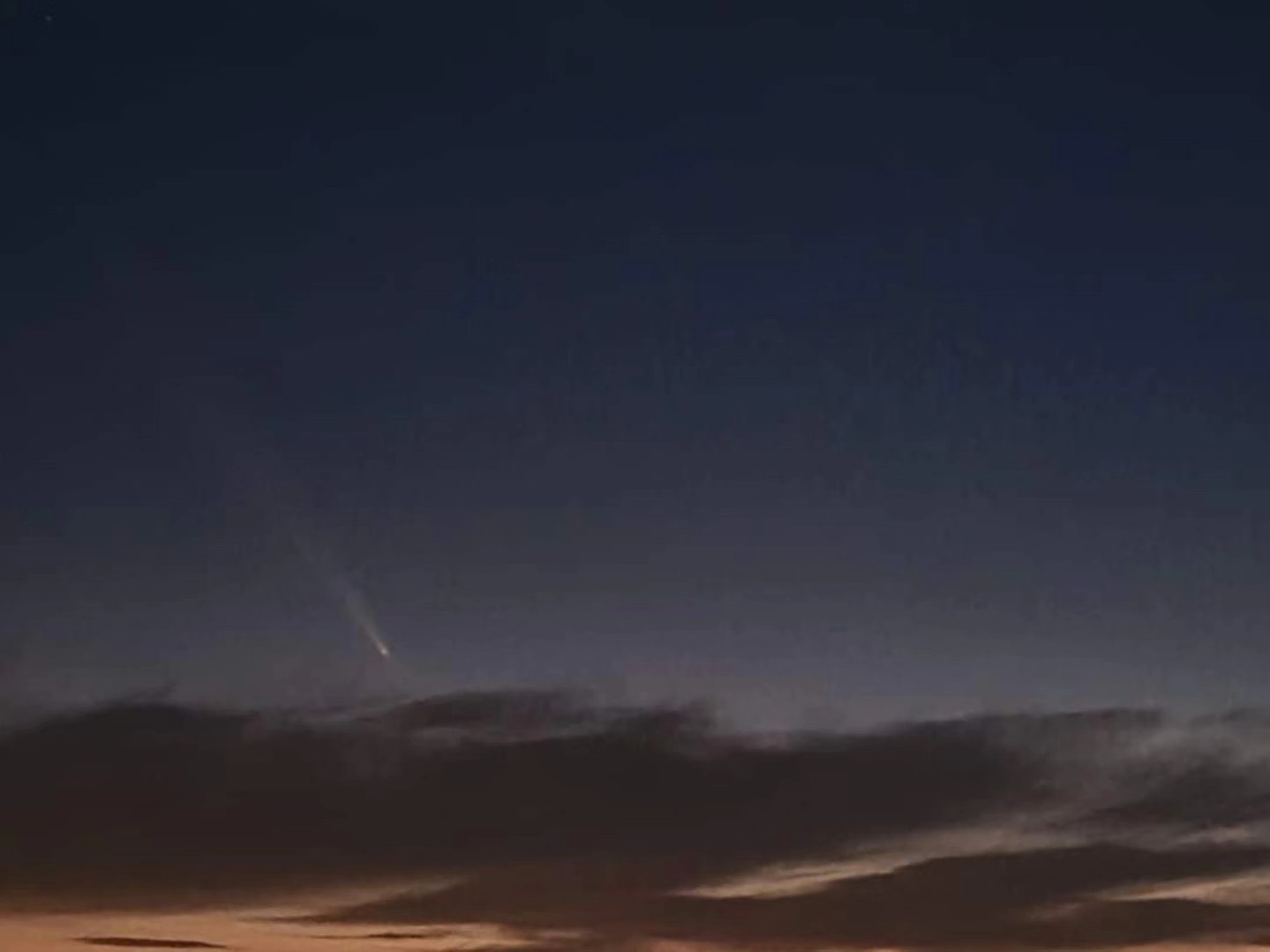
I was however delighted to see and photograph it during very clear naked eye visibility on the evening of October 13th, near Noto in southern Sicily. The comet was so bright I could actually see it through the front windscreen of my car when travelling along a quiet farm road, and promptly pulled over for better views, capturing these images with my mobile phone.
In the first image Venus is the bright planet to the left and comet A3 is clearly visible with nucleus and tail extending in a pronounced vector away from the location of the Sun (below the western horizon).
The tail of a typical comet is absolutely enormous (sometimes stretching tens of millions of miles back from the nucleus), and comprises an ionic dust cloud of diffuse material blasted away from the comet by the intense solar radiation of the Sun.
Meanwhile, back home in Scotland, some followers also spotted and photographed the Comet. Below are two such samples captured by Howard Taylor in Dumfries & Galloway (1st image below) and Caroline Hay outside Carluke (2nd image below).
To see the comet for yourself look towards the western horizon after sunset, as skies darken to an azure blue. The comet will rise higher in altitude going into late October but may unfortunately lose brightness as it recedes back whence it came to the still and dark fringes of the Oort cloud.
If you miss A3 this time you’ll need to be cryogenically frozen for a good 80,000 years before it makes a repeat return to Earth’s night sky.
Tickets are now up for the launch event of 2024 Astronomy season at Abriachan Forest. A special live synthesiser set from QRM will accompany the usual stargazing and astronomy.
“The new stargazing season at Abriachan Forest (a Dark Sky Discovery site) gets underway on November 2nd with a special musical themed event featuring local analogue synthesiser group QRM. In addition to the usual stargazing and astronomy, QRM will play a fully live synthesiser set against a backdrop of space and astronomy themed cosmic visuals.
Event format is weather proofed so please book with confidence. As well as our indoor synthesiser set from QRM we’ll have outdoor (or indoor) night sky guiding with astronomer Stephen Mackintosh plus possible telescopic views of visible planets.
Refreshments and home bakes available. Due to site and classroom capacity, booking via Eventbrite is essential. Admission is free for under 16s with accompanying adults but please inform Abriachan of any large booking requests.“
You can final all details and book your tickets here.
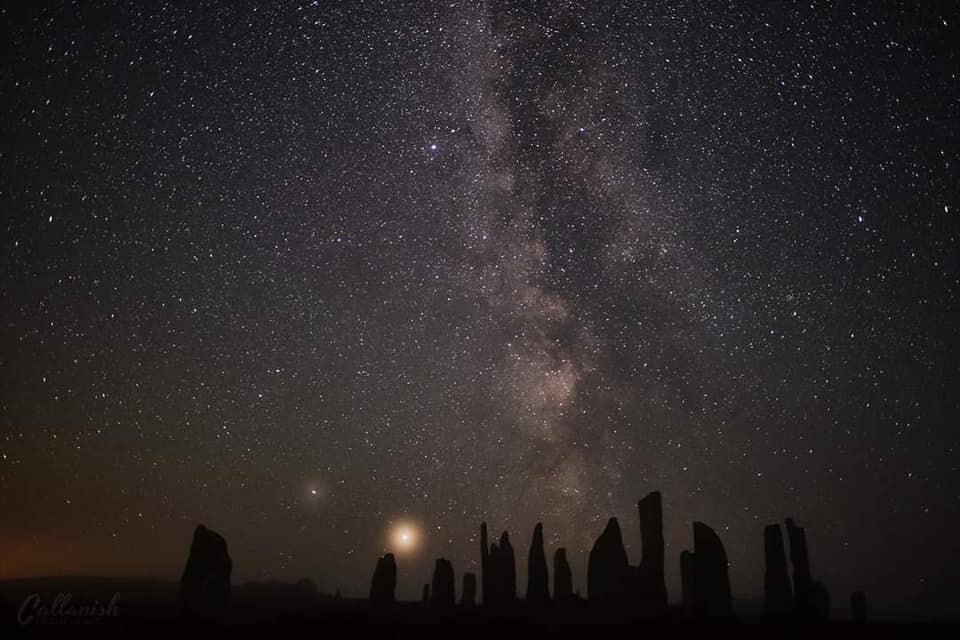
The Milky Way over the Callanish Stones on the Isle of Lewis. Jupiter and Saturn can be seen in this shot low above the horizon. By Emma Rennie of Callanish Digital Design. www.callanishdigitaldesign.com
Another stunning Milky Way shot by Christopher Cogan taken from Muie in Sutherland in the far north of Scotland.
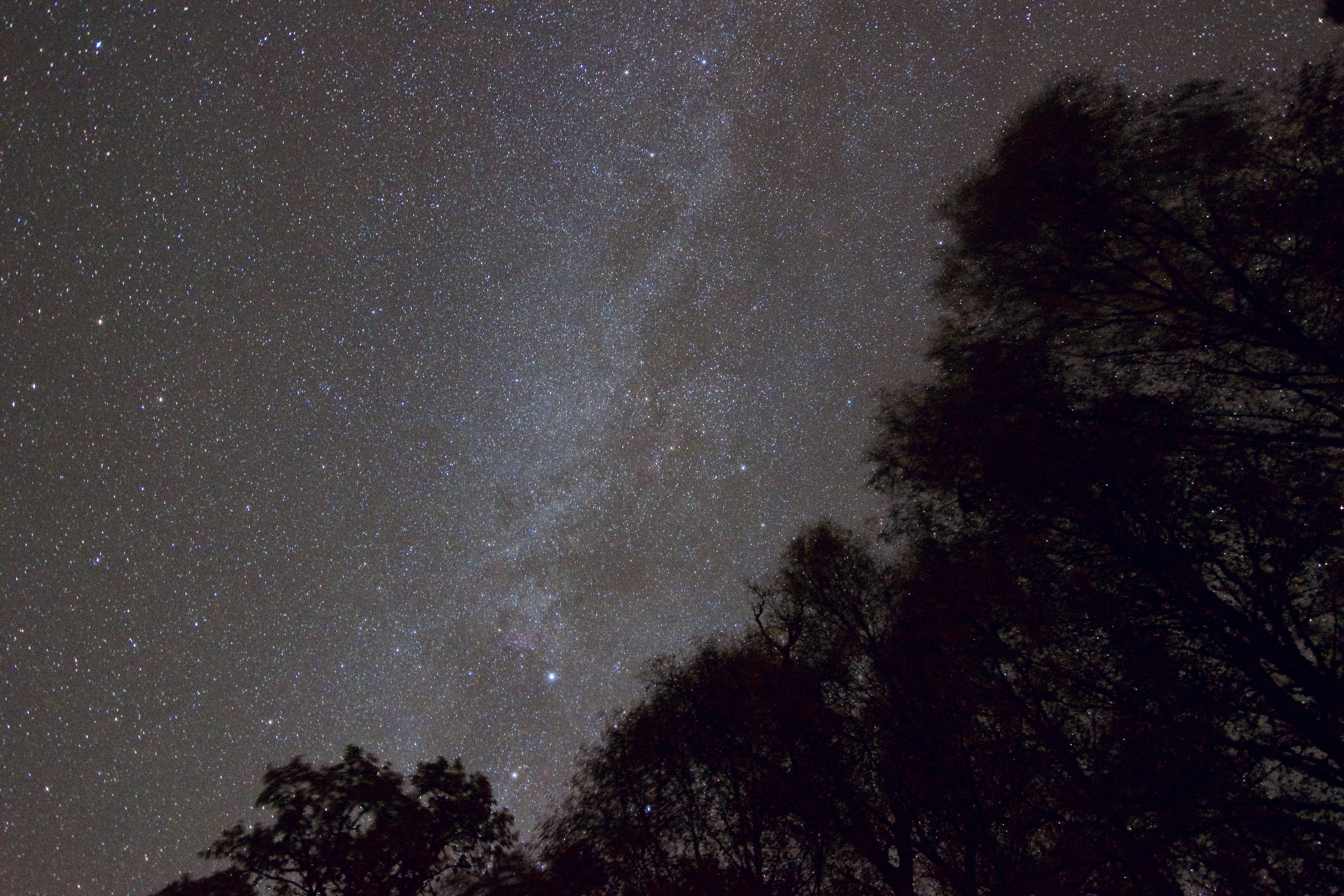
Two stunning Milky Way images taken last night from the Scottish Highlands (and Islands). Both show the bright region of the Milky Way in the vicinity of the Summer Triangle, looking south.
If you imagine our Milky Way as a vast disk of stars, these views are peering further ‘into’ the disk, where the density of stars and stellar matter is greater, and hence brighter. Contrast this with the fainter regions we see in Winter near Orion, when we peer ‘out’ of the galactic disk.
The dark lanes you can see are part of the Cygnus Rift – a region containing vast clouds of dust that obscure some of the light from the billions of stars in the background.
With the Moon well out of the way and proper darkness returning late at night, now is a great time to go out and see the Milky Way for yourself.
Some good news regarding future face to face astronomy programs, delivered up in the Scottish Highlands. All of this is caveated on the assumption that live gatherings are legal and safe at the end of this year.
Next season (from November) I’ll be continuing to work with Caroline Snow to deliver our Urban Astronomy programme based out of the Friends Of Merkinch Local Nature Reserve in Inverness (with the Sea Scouts hall as our indoor base of operations). These events have been growing in popularity and we’re really glad they’re going to continue.
Merkinch Moon gazing
Star Stories will also continue from Abriachan Forest (Dark Sky Discovery Site) with Suzann, Clelland, Ronnie and the rest of Abriachan Communityteam. The STFC spark award funding is due to end this season, but the programme will continue on a sustainable footing with events (hopefully) starting in November. This whole programme has been a massive success and I look forward to completing my research report for STFC with dissemination for various astronomy publications.
Clelland in action
I’ll also continue my hotel based outreach work for the likes of The Torridon and appearances at various festivals, whenever it’s safe and practical to do so.
Some future plans are also underway, including an outreach programme with much bigger scope that will involve various partners and potentially some innovative new technology.
Stage all set for my stargazing show Belladrum Tartan Heart Festival. On both evenings sky conditions were good enough for the show to move outdoors under clearing skies,
The stars were out at Belladrum Tartan Heart Festival last weekend. Not those on stage, but the more distant and ancient ones up in the sky. I had loads of fun sky guiding outdoors with all the late night merrymaking around us – a markedly different experience to the stillness of SCAPA festival but none the worse for it. My portable PA came to the rescue and managed to win out against one of the louder music tents across the way and questions and answers were easily fielded.
On both evenings skies started cloudy but partially cleared by about 11.30pm, allowing me to take the show outside for a laser pointer assisted tour of the heavens.
Skies to the north were sufficiently clear to tour the rich pickings around Ursa Major, with its famous double star Mizar and its abundance of celestial pointers, leading to Polaris and many of the other bright stars in the sky
Amidst opening and closing patches of sky we saw red giant Arcturus, Vega, distant Deneb, the stars of Ursa Major, Cassiopeia (both pictured), Cygnus, Lyra and Aquila.
With binoculars folk were able to easily split some well known double stars including Mizar and Alcor in the handle of the dipper and the Double Double next to brilliant Vega.
The highlight, close to midnight, was viewing the Andromeda galaxy, which was just visible despite the very challenging conditions. A few people had never seen another galaxy before and amazed binoculars could produce such excellent views.
Thanks to everyone who came along, a safe homeward journey and clear skies! I look forward to returning next year.