Belladrum Boffinarium

Bella-Boffinarium-372x372

Catch me at Belladrum Tartan Heart Festival this week.  On Thursday at 8pm I’ll present a Beginner’s Guide to Stargazing and the Night Sky in the Boffinarium.

Then on Friday and Saturday night from 11pm I’ll take groups out for binocular and naked eye stargazing (weather permitting). Fallback for cloudy skies will be a repeat of Thursday’s stargazing talk and planetarium software guiding.

Practical group sizes for stargazing will be about 25 people so outdoor guiding will be on a fist come first served basis.

Clear skies 🌟

Stargazing and Partial Lunar Eclipse over Snowdonia

66636261_2349016558668616_892797141037088768_n

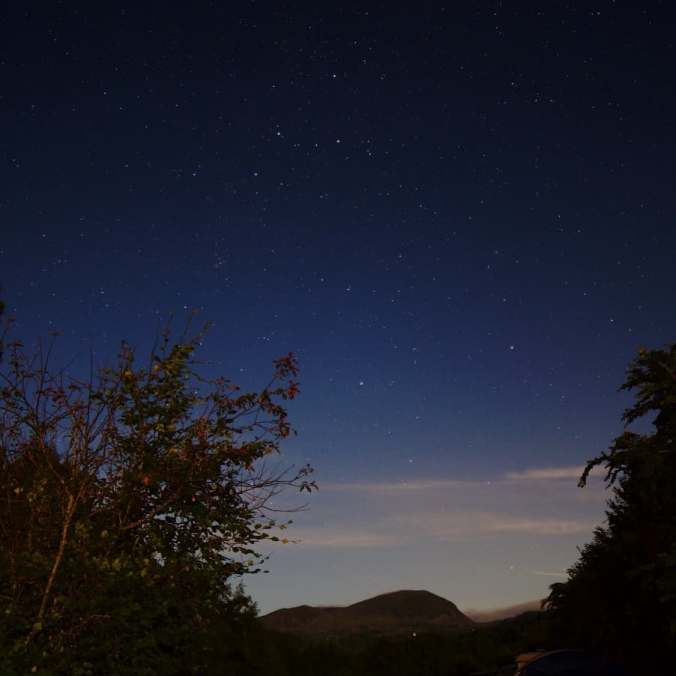
The Plough asterism, part of Ursa Major

I had the privilege of visiting Snowdonia this summer for a family camp in a beautiful river valley near Maentwrog.  During the evenings I managed a bit of stargazing before moonrise and captured a few bright constellations over the Welsh hills.

66618316_2349016528668619_5507654206833557504_n

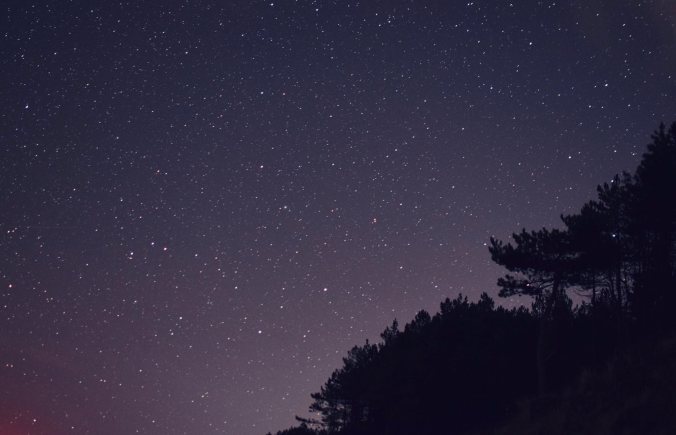
Cassiopeia over the Welsh hills

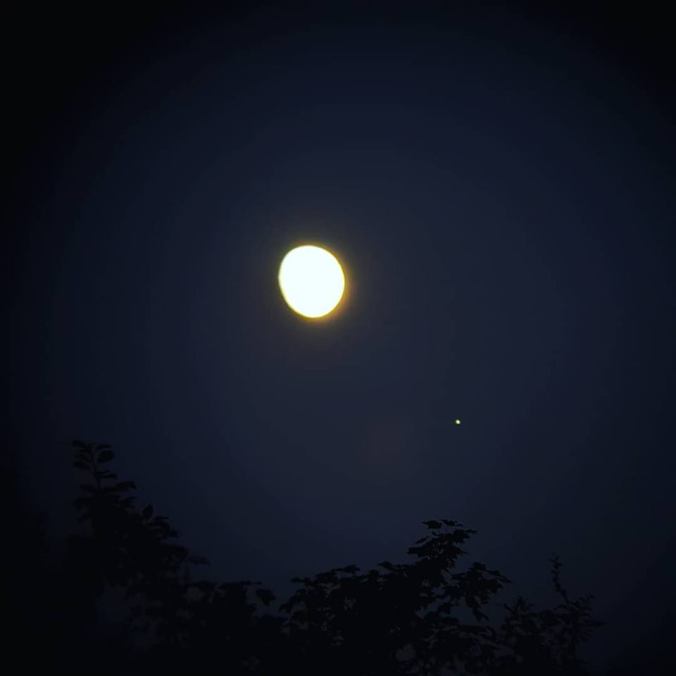
I also captured a lovely close pairing between the Moon and the planet Jupiter.

66357097_2348932338677038_1638252942198833152_n

Jupiter sits serenely below the waxing gibbous Moon

The highlight, however, was witnessing a beautiful partial eclipse of the Moon on Tuesday evening at around 11pm.

I took these pictures and a short video using my smartphone anchored to a simple pair of 8×40 binoculars (mounted for stability).  The eclipse was already underway when the Moon rose into view and continued until well after midnight.


Agile Observing

66425052_2349563911947214_3159317830575325184_n

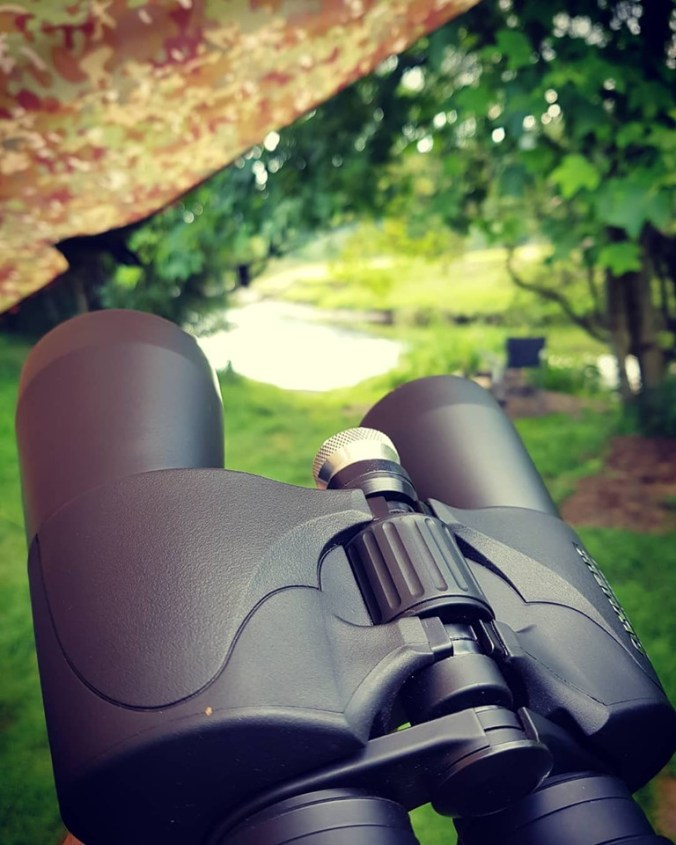
A basic pair of 8x40mm binoculars lets you access around 500,000 stars

Many people think astronomy is a complicated or technical activity. While it can be, it very definitely doesn’t need to be. Over 90% of my observing is done with a simple pair of binoculars, like these light and inexpensive 8x40s, which I try to carry with me wherever I go on local walks or further afield.

With these I can access stunning images of the Moon, resolve the satellites of Jupiter, sweep through over 500,000 stars (most too dim to see naked eye), resolve glittering star clusters like the Pleiades and Hyades, and (under suitably dark skies) view the dim light from galaxies many millions of light years away.

Marry the binoculars with a small tripod and a night sky app on your phone and you have everything your need for agile observing during clear skies or brief opportune breaks in the weather.

Clear skies.

Stargazing at Scapa Festival 2019

DSC_0105

The milky way from the grounds of the Arkinglas Estate, Loch Fyne

I had another great time hosting outdoor astronomy and stargazing workshops at this years Scapa festival, held on 3-5th May near the shores of Loch Fyne at the Arkinglas Estate.

It was very busy, especially Friday evening when clear skies brought many folk streaming down into the gardens in anticipation of stargazing close to the shoreline.

As it happened we hit some cloud just as I was about to kick off, prompting a quick jump over to my backup projector and screen.  I was then able to deliver a 30 minute talk with Q&A, discussing things like the colour, temperature, distance of stars, the Milky Way, other galaxies, shooting stars and large impactors.  As ever the questions were fascinating.
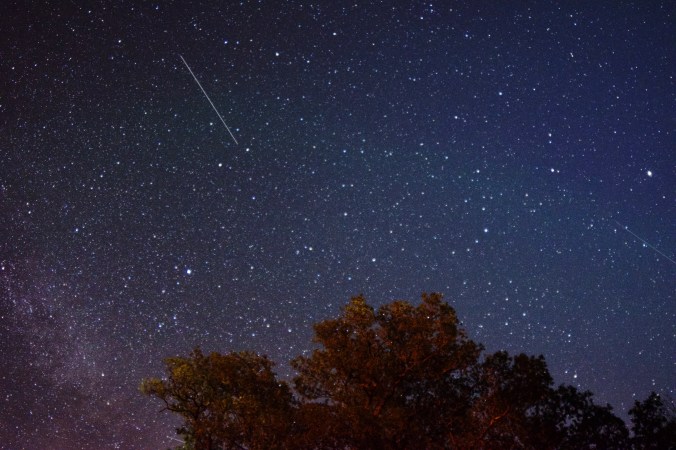
DSC_0114

A passing satellite

Just as the talk wrapped up skies cleared and we were stargazing from the estate grounds.  Plenty of constellations and bright stars began appearing, and conditions improved further when a second group arrived to join in.

Similar conditions prevailed on the Saturday, when skies once again cleared up after my talk, allowing us to observe with the large case of binoculars I always bring to star parties.

Later on I was able to photograph some lovely shots of the Milky Way from the estate grounds, with the band of our galaxy sitting low and clear on the northern horizon.

Feedback has been great on the guiding so far, and I’m looking forward to getting involved again next year.
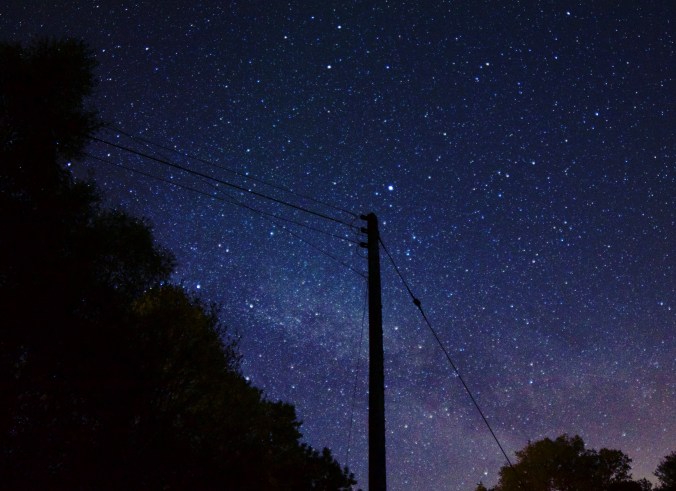
DSC_0103.jpeg

Galaxy Photobomb

DSC_0208 2.jpeg

When an entire galaxy (faintly) photobombs your night sky picture!

I was sorting out some of my recent images from the west coast and spotted the Andromeda galaxy. That’s my camper van at the bottom looking west over the sea near Arasaig. Sky glow is from the recently set Sun.

That fuzzy elongated smudge I’ve highlighted is the combined light from over 400 billion stars. A completely separate island universe over 2.5 million light years away.

Here’s a few other pictures from this excursion posted below.


Stargazing at Roseisle

55924259_2273889659514640_3969822139795636224_o.jpg

Starry skies over the Moray coast

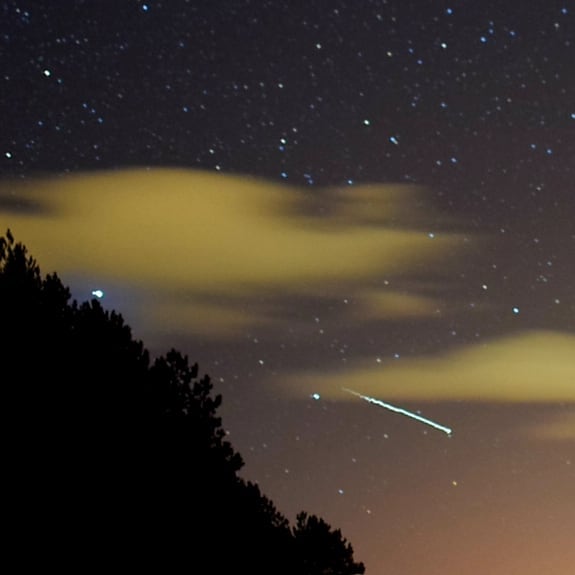
Amidst a very busy schedule last month I managed to head out to Roseisle (along the Moray coast) for some observing and a wild camp.  My original mission was to try and catch a geomagnetic storm predicted by the MET office space weather forecasts.  As it happened the promised aurora didn’t arrive but I did manage to get some photos of the starry skies that opened up on Saturday night, starting with the International Space Station.

55615864_2277317779171828_3913720705744633856_n.jpg

Not the most fantastic ISS shot but I only had about 20 seconds to set up after running down the dunes to capture the pass!.  The station is actually travelling from west to east here, towards Sirius (bright star on left)

From there I took a number of pictures hoping to capture some aurora, but instead imaging the crisp starry skies.  I’ll let the photos do the talking from here – please read the caption notes.

55575693_2273889382848001_4589512154545127424_o.jpg

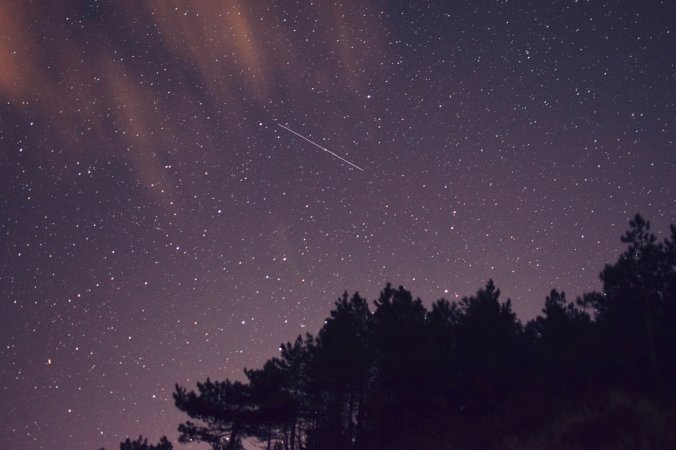
This image of the Plough (minus Alkaid) was snapped while I was still under the trees, on my approach to the beach.  You can clearly see the naked eye double star Mizar-Alcor at the bottom of the image.  The main stars in the Plough are roughly 100 lights years away.  Our Sun would not be visible naked eye if placed this far away which tells us something about the scale and luminosity of these titan stars.

54798041_2273889622847977_7869519356412035072_o.jpg

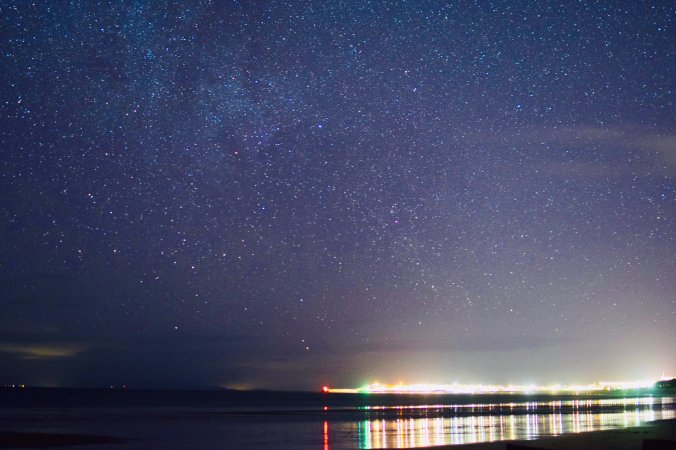
Looking north towards Burghead where I hoped to capture some aurora.  Instead I picked up the rich star fields within the Milky Way near Cassiopeia.

55551339_2273889702847969_369990786642608128_o.jpg

One of many passing satellites.

54524758_2273889786181294_1681336390505201664_o.jpg

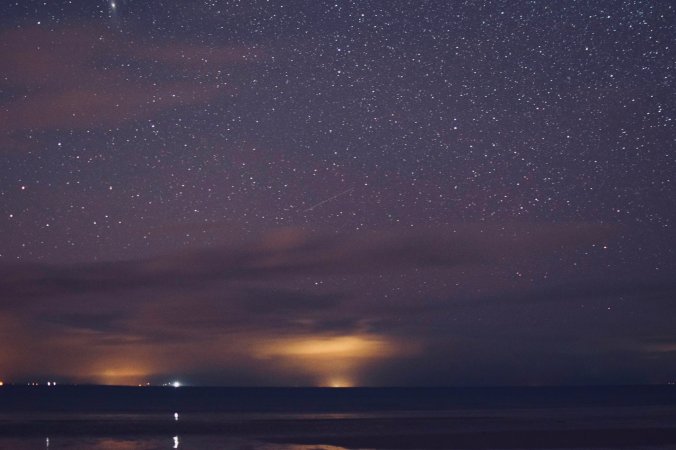
An interesting shot looking north west.  The bright white light is the Portmahomack lighthouse and the orange light pollution on the right is likely from Helmsdale.  Perhaps the most interesting feature in this photo is the faint smudge of light in the top left.  That’s the Andromeda galaxy – a separate spiral galaxy (larger than our Milky Way) over 2.5 million light years away.