Urban Astronomy Inverness

54437195_2276939069209699_6614522172989767680_o

The formation of a young protostar following the collapse of a previously inert dust cloud

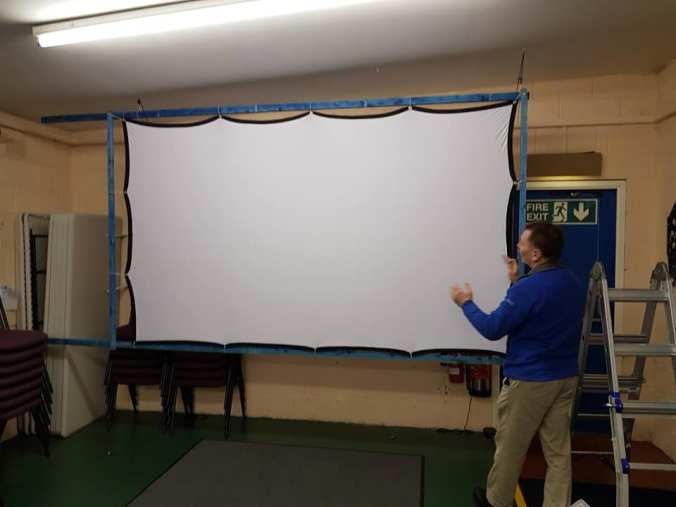
We had a great turnout for March’s Urban Astronomy session last week at the Sea Cadet’s Hall in Inverness.  The indoor presentation massively benefited from our new giant screen, expertly erected by Robbie (pictured below).  Here’s a selection of slides from my presentation on naked eye observing and the life of giant stars.
56158389_2274505439453062_5578800387336437760_n

Robbie putting the final touches to our new giant screen for indoor astronomy presentations and virtual sky guiding

Topics covered:

– Naked eye and binocular observing
– Satellites: Iridium Flares and ISS
– Colour, temperature and mass of stars
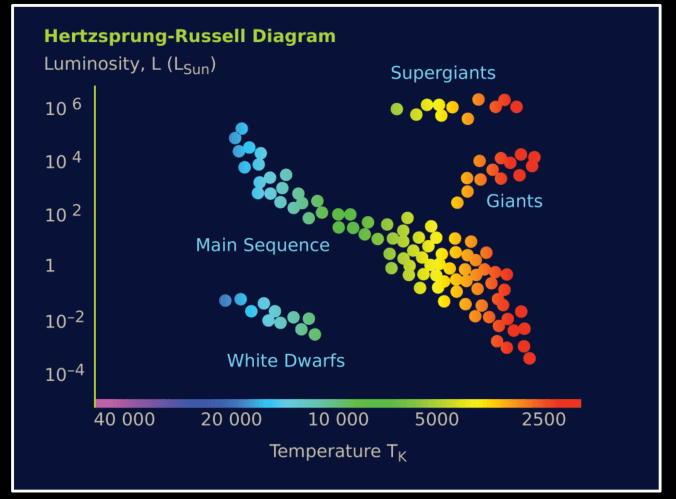
– The Hertzsprung-Russell diagram
– Protostar formation from dark nebulae
– Main sequence burning and final fate of stars
– White dwarfs, supernovae, neutron stars and black holes.

As ever there were some superb questions during and after the talk.  Stay tuned for upcoming events as myself and Caroline roll out the program.

54728919_2276939039209702_2126944281166872576_o

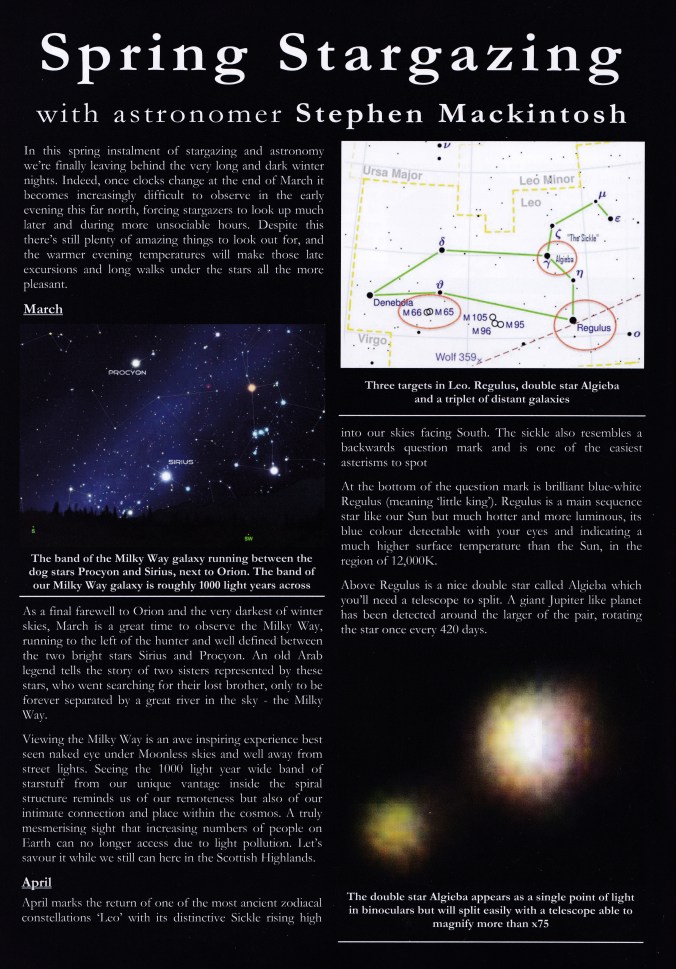
In the simplest terms stars behave like black body radiators with colour linked to their surface temperatures.

55713652_2276943135875959_380502345437413376_o

The brightest stars in the night sky can be close – like Sirius – or giant stars very far away (eg. Betelgeuse, Rigel, Deneb).
56201097_2276943045875968_2619181665393573888_o

The HR diagram.  An elegant and reliable tool for describing the evolution of stars from main sequence burning into their final stages of life
Dark Sky Observing at Abriachan

DSC_0093

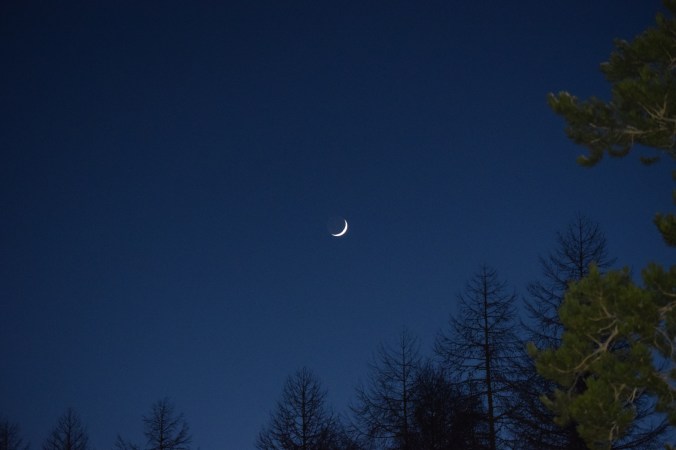
A lovely crescent Moon hung in the West for most of the evening

We enjoyed another superb evening of stargazing and storytelling up at Abriachan Forest last Saturday – the last dark sky session until stargazing returns in October 2019.

There were beautiful crisp skies all evening long, allowing me to guide both groups outside for views of the Milky Way and numerous open star clusters like the Hyades, Pleiades, Beehive and the stunning double cluster in Perseus.

DSC_0107

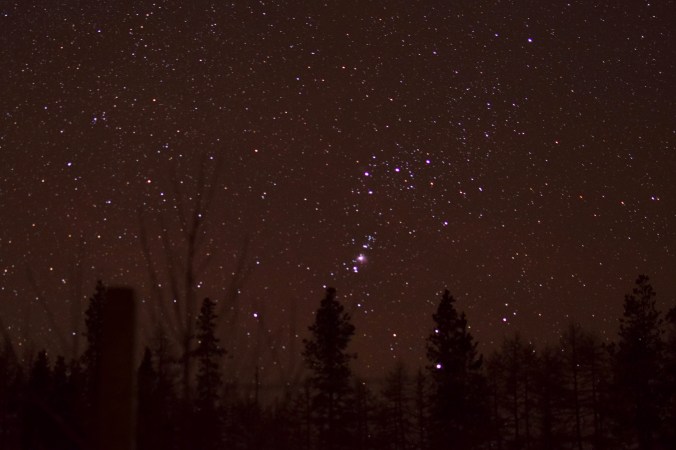
Orion…of course

We also studied the Orion star forming nebula, the great spiral galaxy in Andromeda and some fainter galaxies in Ursa Major (M81 and M82), and even had a go at sighting the triplet of galaxies in Leo, which some of the keen eyed youngsters successfully glimpsed in the 8×40 binoculars.

Clelland was also back in action with the story of Arden and the birth of Merlin in the roundhouse.

Thanks to everyone who came along.  Please check my Facebook site for details of future summer events.

DSC_0108 2

Perseus and the double cluster

Star Stories – Glasgow Science Centre On Tour Special

glasgow-science-centre

As part of the Star Stories programme up at Abriachan Forest we’ve invited the On Tour outreach team at Glasgow Science Centre to kickstart our daytime events on April 27th.

The GSC team will deliver indoor stargazing activities as well as meteorite handling, and comet and crater making. They’ll also be bringing a sample of their interactive science exhibits.

If you’d like to attend please book via the eventbrite link here and also look out for more astronomy events over the brighter months.  We have plans to purchase a Hydrogen alpha telescope in the next few weeks which will form the basis for some outdoor solar events.  Follow this blog or keep tabs on my facebook page for developments.

There’s still a few tickets left for the last dark sky observing session in March available here.

Star Stories Photography and Aurora Special

51318417_2157195130985255_3820891528876785664_n

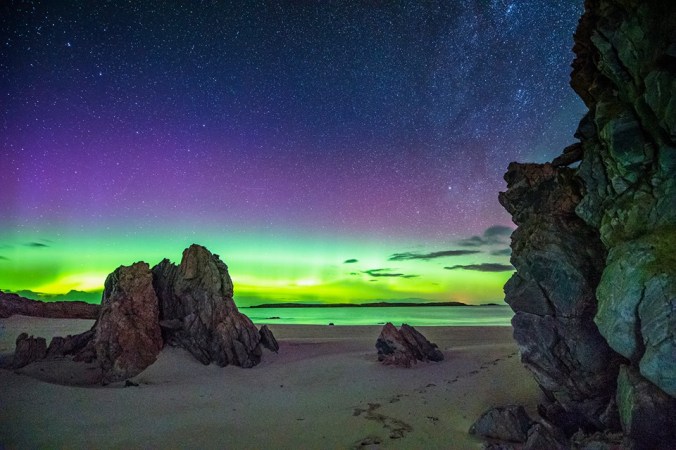
The aurora over Ceannabeinne Beach on the north coast by photographer Graham Bradshaw

Despite the stormy conditions earlier in the evening, skies cleared up beautifully at Abriachan on Saturday night for Star Stories.

Graham Bradshaw of Graham Bradshaw Photography was our guest speaker, talking about his fascinating experiences hunting and photographing aurora in some of the wildest and remotest parts of the Scottish highlands.  His talk included practical advice on seeking out aurora in the north of Scotland (which is much more prevalent than you might think), as well as showing many beautiful still images and stunning time lapses captured all over the highlands and further afield.

14089139_10209206672577386_5106191967053620437_n

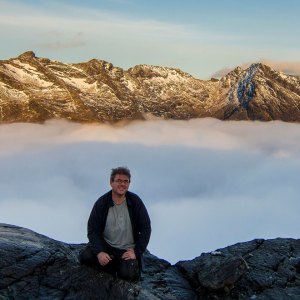
Photographer Graham Bradshaw

Meanwhile I took two groups out stargazing and managed about 20 minutes of clear skies during the first outing until we were rained off by a very brief shower.  After heading back inside I switched to my backup slide deck on the science of aurora, talking about how the differential rotation of stars causes kinks in their magnetic fields, ultimately leading to the coronal mass ejections that produce the aurora.

DSC_0115 3

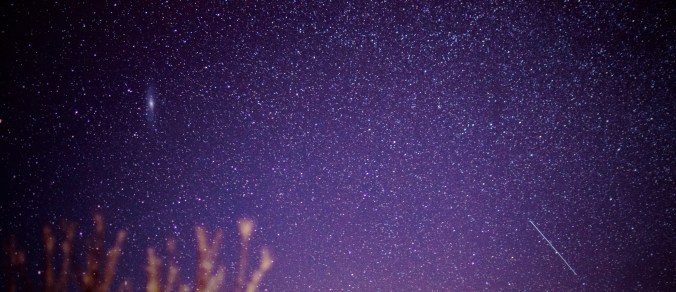
I got a nice capture of the Andromeda galaxy over the forest classroom (left), and a passing satellite.  This giant galaxy is over 2.5 million lights years away just visible naked eye.  It looks even more impressive in binoculars.

By the time Graham had finished his first talk, skies had cleared again and my second group had a much longer excursion under the stars.

As usual we took in broad sweeps of the night sky with the wonderful agility of binocular observing, hitting targets like the Orion nebula, Hyades and Pleiades star clusters, the Andromeda galaxy, Beehive cluster as well as numerous bright and massive red and blue giant stars.  The Milky Way was also clearly on display, even with the presence of an enchanting crescent Moon hanging in the South West.  We also saw Mars sitting above the Moon and had a go at finding Uranus (currently observable in the same binocular field as Mars).

During both streams Suzann Barr did some video interviews with some of the younger stargazers who’ve become regulars at the events, and captured feedback on our Star Stories wall chart.  Overall it was another great evening with good feedback from participants.

Our next event in March will be the last dark sky observing session for this season as skies begin to brighten.  The theme for this event will be galaxies, and I’ll have a backup presentation prepared on this topic should skies prove unfavourable.  There’s only a few tickets left available on Eventbrite here.

DSC_0120 2

Another good catch in my camera, this time the Milky Way in the region of Perseus, with the double cluster clearly visible on the left.


Milky Way

In the Scottish Highlands we’re blessed with many dark locations from which to view the Milky Way, the band of diffuse light revealing our place within a giant spiral galaxy.

Even if you live in a busy city like Inverness, a short drive is all that’s needed to escape to relatively dark skies. Regrettably, in many parts of the UK and central Europe this important connection with our home galaxy has been rubbed out due to light pollution.

Looking up at the Milky Way lets us connect with something vast and far bigger than ourselves – an important check on our own sense of self importance.

More needs to be done to curtail unnecessary outdoor lighting and to educate people on the basics of dark sky preservation.  Retaining access to our night skies needn’t be an economically crippling ideal.  There are simple practical steps people can take that make dramatic differences.  Please see this excellent guide on the International Dark Sky Association website for tips on how you can help.

I’ve made a short video celebrating our views of the Milky Way and how overwhelmed our position is amidst an estimated two trillion other galaxies in the observable universe.