Milky Way Images

117816607_2674469136123355_8845601533957390690_n

The Milky Way over the Callanish Stones on the Isle of Lewis. Β Jupiter and Saturn can be seen in this shot low above the horizon. By Emma Rennie of Callanish Digital Design. Β www.callanishdigitaldesign.com

117707107_2674469192790016_589110737947079557_n

Another stunning Milky Way shot by Christopher Cogan taken from Muie in Sutherland in the far north of Scotland.

Two stunning Milky Way images taken last night from the Scottish Highlands (and Islands). Both show the bright region of the Milky Way in the vicinity of the Summer Triangle, looking south.

If you imagine our Milky Way as a vast disk of stars, these views are peering further ‘into’ the disk, where the density of stars and stellar matter is greater, and hence brighter. Contrast this with the fainter regions we see in Winter near Orion, when we peer ‘out’ of the galactic disk.

The dark lanes you can see are part of the Cygnus Rift – a region containing vast clouds of dust that obscure some of the light from the billions of stars in the background.

With the Moon well out of the way and proper darkness returning late at night, now is a great time to go out and see the Milky Way for yourself.

The Cat’s Eye Halo

catseye2_not_960

Image Credit: R. Corradi, Nordic Optical Telescope

I recently stumbled across this stunning image of the famous Cat’s Eye nebula. It’s a false colour enhancement showing the extended ejecta from the dying star, imaged by the Nordic Optical Telescope on the Canary islands..

The cat’s eye is dubbed a ‘planetary nebula’. An erroneous label as this has nothing to do with planets whatsoever. Rather these nebulae are the beautiful symmetries left behind when stars of similar mass to our Sun enter their final gasps of life. Before collapsing down to a white dwarf (a compact star held in place by electron pressure), the star sheds its atmosphere is great puffs, producing these ghostly but beautiful clouds of ionised gas.

I made a video about Planetary nebulae you can watch here:
https://modulouniverse.com/2019/03/03/planetary-nebulae-video/

The outer gaseous tendrils seen in this image extend almost 3 light years across and probably represent earlier and more transient episodes of stellar influenza, before the star began its collapse in earnest.

Image Credit: R. Corradi, Nordic Optical Telescope

An Alien Solar System

111069325_2656439687926300_5431362390999540603_o

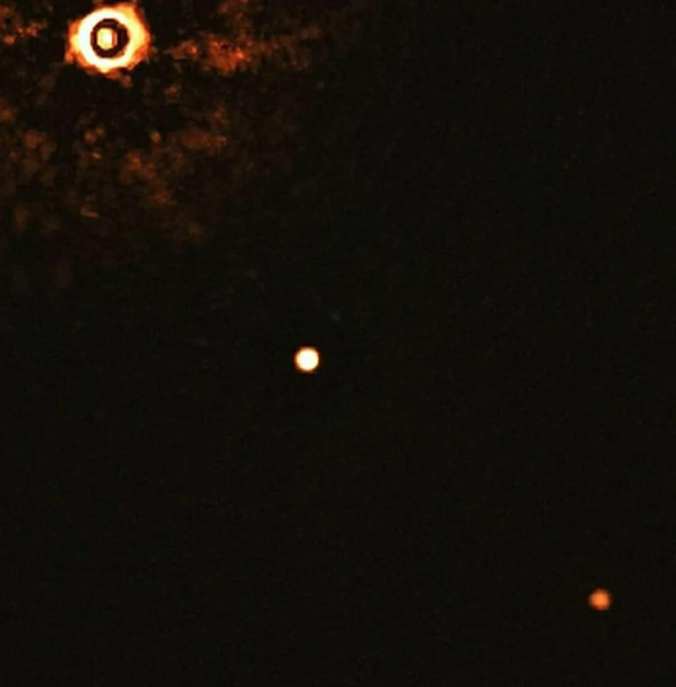
A direct image of an alien solar system orbiting a Sun like star, over 300 light years away!

I remember growing up in the 1980s hearing about the ‘high probability’ that other stars had orbiting planets, but there was very little evidence then, only some tantalising hints from the gravitational wobbles observed from specific stars.

Since then thousands of new exoplanets have been confirmed using the transit and radial velocity detection methods. I wrote a blog article about this a while back.

These methods are indirect ways of determining the existence of planets, and it’s very rare to actually be able to ‘see’ the planets themselves.

This image is therefore pretty incredible and for me suddenly normalises the idea that these star systems are real places we could, theoretically at least, visit in the distant future.

The image was captured by the European Southern Observatories Very Large Telescope and shows a young Sun like star (only 17 million years old) with two clearly defined giant planets in orbit. (The dots of light closer to the star are background stars and therefore not part of this particular planetary system)

These planets orbit the star at 160 and 320AU (1 AU is the Earth to Sun distance) so they’re much further away from the star than any planet in our solar system.

110303223_2656439727926296_2765772827339949410_o

Stargazing at the Torridon with Giles and Monica

Screenshot 2020-07-22 at 16.43.11

Discussing the dark skies in the west of Scotland with Giles and Monica in the hotel lobby

There’s a short section at the end tonight’s Amazing Hotels on BBC 2, where I take Giles Coren and Monica Galetti out into the dark skies near the Torridon to go stargazing. 🌟🌟

DSC_0022

Star fields galore from the grounds of the hotel

The skies that evening were incredibly vibrant with the Milky Way clearly visible. The night time camera footage doesn’t really do the views justice, but I think the BBC team captured the magic of our night under the stars really well.

What you won’t know from the footage is that Giles laced the hot chocolate with a generous dose of single malt whiskey!

Screenshot 2020-07-22 at 16.29.22.png

Venus – Morning Star


DSC_0016

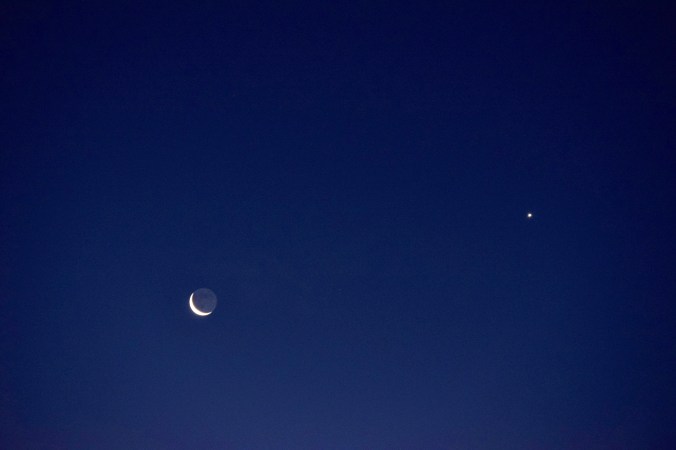
Waing crescent Moon next to Venus – Inverness

After blazing in the NW after sunset during the depths of lockdown, Venus has now completed its passage in front of the Sun (from our perspective) and now slowly emerging as a morning apparition.

At the moment you’ll need to rise very early to catch it due to very bright skies – binoculars or a telescope might be needed.

The morning of the 19th June is particularly special as both Venus and the wafer thin crescent Moon will sit very close to each other. In fact, later the same morning the Moon will occult (hide) Venus for around an hour.

Future Astronomy Outreach

64803835_2273594972756823_2288411197248110592_n

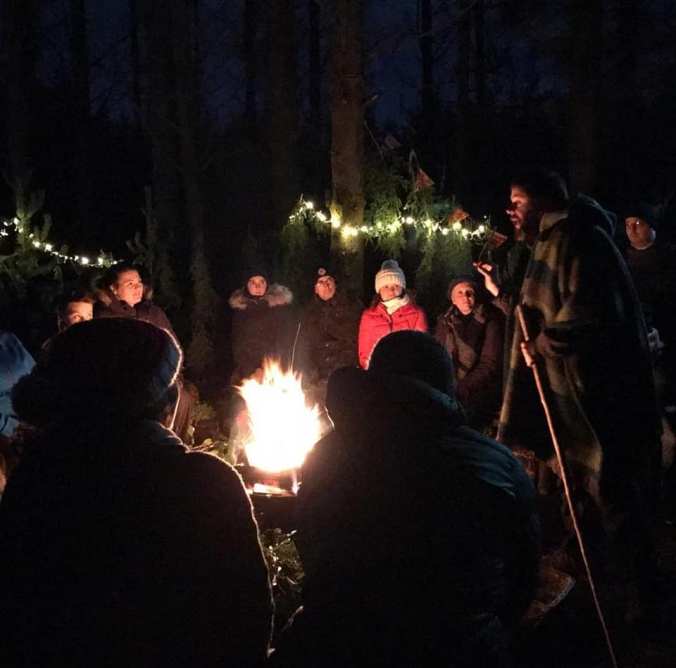
A human henge – mid summer at Abriachan

Some good news regarding future face to face astronomy programs, delivered up in the Scottish Highlands. All of this is caveated on the assumption that live gatherings are legal and safe at the end of this year.

Next season (from November) I’ll be continuing to work with Caroline Snow to deliver our Urban Astronomy programme based out of the Friends Of Merkinch Local Nature Reserve in Inverness (with the Sea Scouts hall as our indoor base of operations). These events have been growing in popularity and we’re really glad they’re going to continue.

50032030_2235072910062982_812443491249422336_o

Merkinch Moon gazing

Star Stories will also continue from Abriachan Forest (Dark Sky Discovery Site) with Suzann, Clelland, Ronnie and the rest of Abriachan Communityteam. The STFC spark award funding is due to end this season, but the programme will continue on a sustainable footing with events (hopefully) starting in November. This whole programme has been a massive success and I look forward to completing my research report for STFC with dissemination for various astronomy publications.

48391432_2218564645047142_1033928692641824768_n

Clelland in action

I’ll also continue my hotel based outreach work for the likes of The Torridon and appearances at various festivals, whenever it’s safe and practical to do so.

Screen Shot 2018-12-16 at 13.02.29

Some future plans are also underway, including an outreach programme with much bigger scope that will involve various partners and potentially some innovative new technology.


Comet SWAN Update

99084782_2604616006442002_1385934557135503360_n

Comet SWAN update! β˜„οΈ Comet SWAN is just starting to become viable for observation at northern European latitudes as it sails through the constellation Perseus. This one will be very tough to see due to its low altitude and lack of darkness πŸŒ… . In fact it may not be visible at all if you live too far north. However, if you’re up for a real challenge, grab your binoculars and read on.

Just like this week’s Venus and Mercury planetary conjunction πŸͺ , SWAN will be visible towards the north 🧭. As the week progresses it will rise higher and higher in the sky so theoretically should become easier and easier to observe (see attached guide images). Unfortunately this will be countered by less and less darkness as May advances.

The absolute best instrument for spotting a comet is a pair of binoculars, or the widest possible eyepiece you have on a telescope. Scan the sky using my pictures and bright stars for reference. Don’t expect a huge streaking object like you’ll see in astronomy magazines (or the front image I’ve attached πŸ˜† ) – If you’re very lucky you might detect a tiny and faint smudge.

The darker your surroundings and more dark adapted your vision the better πŸŒ‘ πŸ‘€ , so stay away from bright street lights and mobile phone screens for at least 15 minutes. If you live under street lights πŸŒƒ your chances of sighting the comet are far lower but don’t let that put you off. Comets can vary in brightness dramatically and can very occasionally brighten enough to be detected naked eye.

What’s great about this challenge is you can also look out for Mercury and Venus at the same time, as all the action takes place towards the same cardinal direction – North.

Good luck and clear skies.