Comet A3 Tsuchinshan–ATLAS

Comet A3 spotted and photographed naked eye from Sicily.

I’ve recently posted guides on observing the bright comet A3 Tsuchinshan–ATLAS from northern latitudes in mid October. As it happened I was travelling in Sicily during the initial (evening) observation window but wasn’t holding out much hope of seeing it given likely sky brightness and the comet’s relatively low elevation above the western horizon

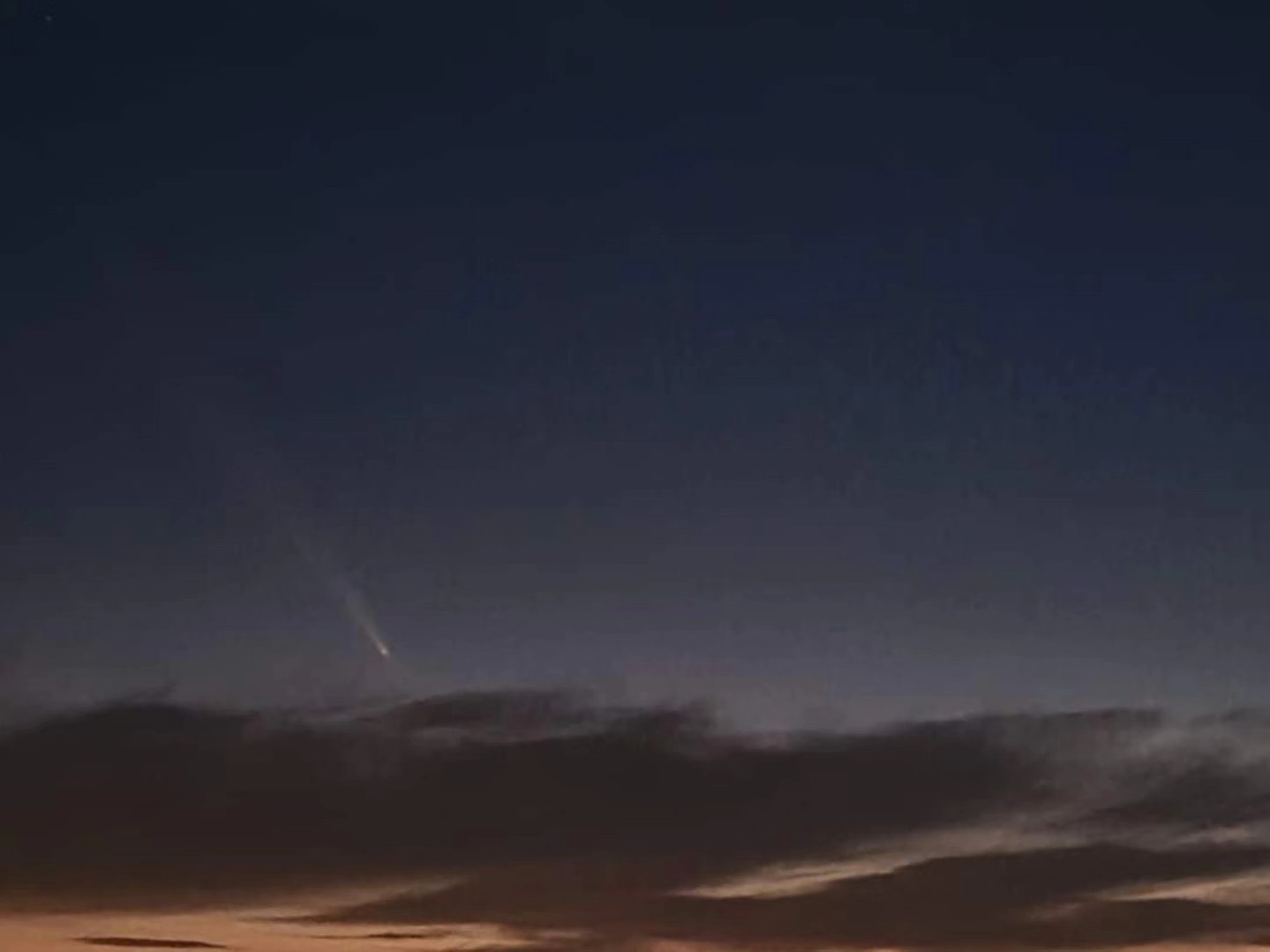
I was however delighted to see and photograph it during very clear naked eye visibility on the evening of October 13th, near Noto in southern Sicily. The comet was so bright I could actually see it through the front windscreen of my car when travelling along a quiet farm road, and promptly pulled over for better views, capturing these images with my mobile phone.

In the first image Venus is the bright planet to the left and comet A3 is clearly visible with nucleus and tail extending in a pronounced vector away from the location of the Sun (below the western horizon).

The tail of a typical comet is absolutely enormous (sometimes stretching tens of millions of miles back from the nucleus), and comprises an ionic dust cloud of diffuse material blasted away from the comet by the intense solar radiation of the Sun.

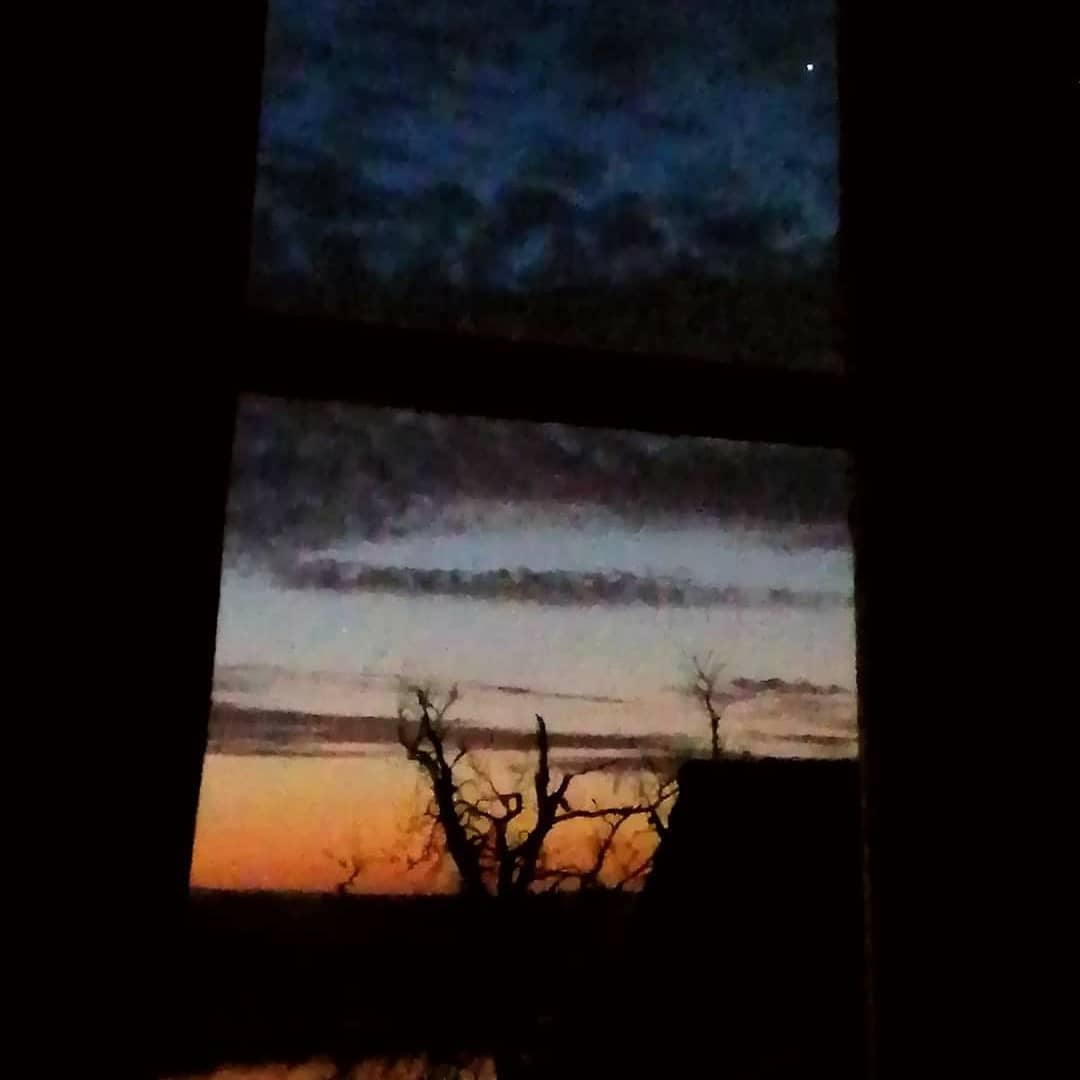
Meanwhile, back home in Scotland, some followers also spotted and photographed the Comet. Below are two such samples captured by Howard Taylor in Dumfries & Galloway (1st image below) and Caroline Hay outside Carluke (2nd image below).

To see the comet for yourself look towards the western horizon after sunset, as skies darken to an azure blue. The comet will rise higher in altitude going into late October but may unfortunately lose brightness as it recedes back whence it came to the still and dark fringes of the Oort cloud.

If you miss A3 this time you’ll need to be cryogenically frozen for a good 80,000 years before it makes a repeat return to Earth’s night sky.
Venus & Mercury

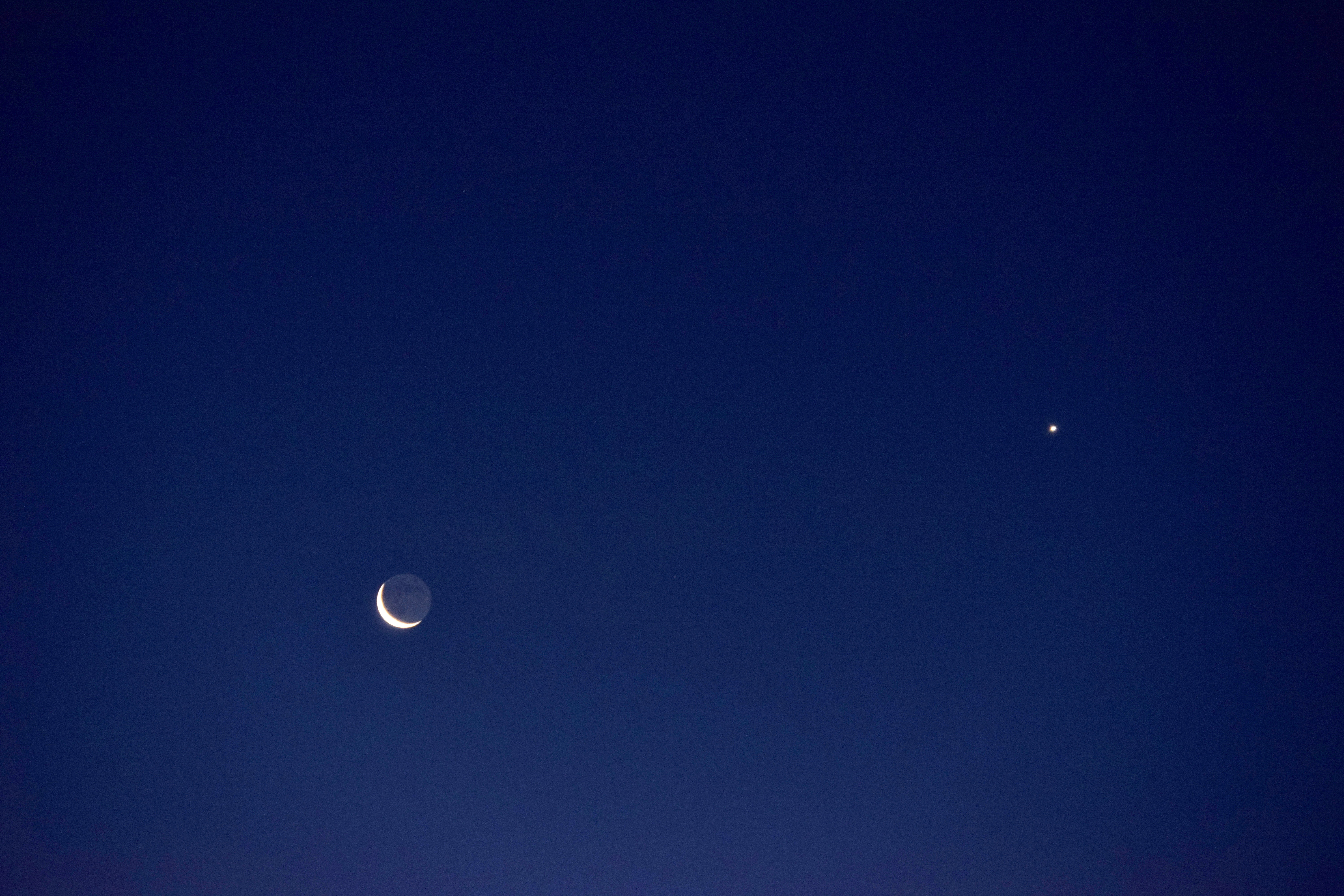
While I shivered this morning trying to find Mercury amidst a blanket of freezing cold mist, Lynsey Gibson fortuitously snapped it from the cozy confines of her bed.

The bright object in the first image is actually the planet Venus, her intended target, but if you zoom in Lynsey’s phone snap has also picked up Mercury. See the second image which I’ve annotated.

This is a great example of how much fainter Mercury is compared to Venus (I usually use binoculars to help locate it) and the power and versatility of smartphone cameras.

Thanks for the share again Lynsey and clear skies everyone.

Signs of Microbial Life on Venus?

All eyes are now on planet Venus, our bright morning and evening star.

In the 1950s Venus was one of the most dreamed of and speculated about planets in the solar system. Science fiction portrayed it as a swampy planet covered in rain forests and abundant with strange alien life. Then, after the Soviet Venera missions discovered the hellish conditions on the surface, interest waned somewhat and attention shifted to Mars.

With recent discoveries of Phosphine gas in the planet’s atmosphere, Venus looks set to recapture all of its human wonder and fascination.

Venus has always had the potential to harbour life high in its atmosphere. While its surface is baking hot with crushing pressures, its upper atmosphere is a relatively warm and clement environment.

So far we can’t imagine a natural process which could produce such high concentrations of phosphine gas in the Venus atmosphere but that doesn’t mean there isn’t an explanation that precludes life. Meanwhile we are left to speculate about the many possibilities, including the most tantalising of all, that some form of ancient anaerobic microbial life exists, or has existed, within Venus’s upper atmosphere.

Venus – Morning Star


DSC_0016

Waing crescent Moon next to Venus – Inverness

After blazing in the NW after sunset during the depths of lockdown, Venus has now completed its passage in front of the Sun (from our perspective) and now slowly emerging as a morning apparition.

At the moment you’ll need to rise very early to catch it due to very bright skies – binoculars or a telescope might be needed.

The morning of the 19th June is particularly special as both Venus and the wafer thin crescent Moon will sit very close to each other. In fact, later the same morning the Moon will occult (hide) Venus for around an hour.

Venus and Mercury Conjunction

A rare opportunity to observe a Venus  and Mercury conjunction over the next few days.

From tonight (Monday) Mercury will appear progressively closer to Venus in the NW sky after sunset, leading to conjunction on Thursday and Friday night. An excellent chance to see Mercury in binoculars or observe the phase of both planets in a garden telescope.

Mercury is much dimmer and more challenging to see than Venus so my advice is to use Venus as a reference for finding Mercury in your binoculars or telescope. Those, like myself, living in the north of Scotland might need to wait a little longer after sunset to see the planets (due to pervading daylight).  This makes it more of a challenge as both planets will be closer to the horizon by then.

Moreover, as both planets will only be around 10 degrees above the horizon at conjunction you’ll need to get away from tall trees or buildings that might obscure your view NW. Hopefully those pesky clouds stay away too.

Clear skies and good luck.

Venus and Mercury

85024035_2842536592490527_233392740522524672_o.jpgThis is how low Mercury grazes the horizon at the moment. A superb shot of Venus and Mercury from Will Cheung this evening.

If you want to sight Mercury for yourself the best chance is right now in the early evenings just after sunset.  Using Venus as a guide, scan the low horizon with binoculars or naked eye.  An unobstructed horizon like the one in the picture above is essential.

Clear skies.

Dark Sky Burns

“Thou lingering star, with less’ning ray,
That lov’st to greet the early morn…”

After last night I’m convinced Rabbie Burns did all his stargazing with a delicious wrap of haggis in hand.

Haggis hand warmers and Clelland’s address from last night’s sellout Dark Sky Burns event. Big thanks to the Abriachan team for the Burn’s supper fare. 

Due to inclement skies the astronomy moved indoors I got to talk in some detail about the planet Venus and its harsh environment.  A fascinating place that surely deserves more attention in the future, not least for its potential to harbour microbial life in its more clement upper atmosphere.

Why not try looking at Venus through a telescope or a pair of stabalised binoculars? You should be able to make out its phase, just as Galileo did when he first gazed up at it back in 1610.