Part 3 of my series of Stargazing articles for the Muir Matters magazine, this time concentrating on the abundance of galaxies observable within the Spring constellations Leo and Virgo.
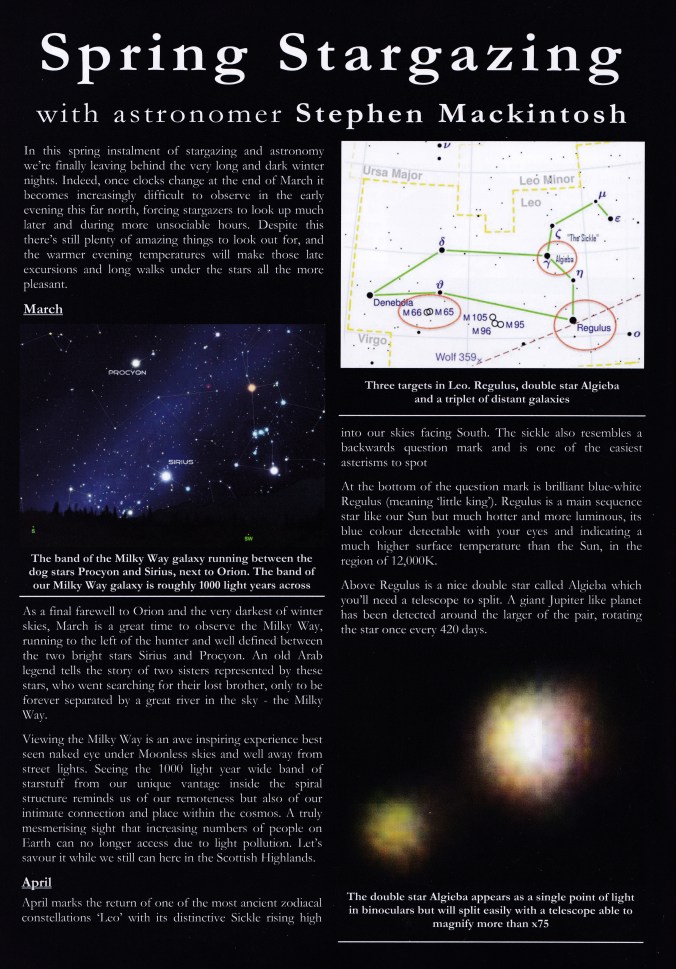

Part 3 of my series of Stargazing articles for the Muir Matters magazine, this time concentrating on the abundance of galaxies observable within the Spring constellations Leo and Virgo.
As the constellation Virgo rises earlier and earlier after darkness we’re entering a time of great opportunity for observing distant galaxies.
Within the upper right hand stretches of Virgo are giant clusters of galaxies strung out in loose bundles. Some of these very distant galaxies can even be see in bioculars if you’re under excellent dark skies. Telescopes will pick them out better and it’s here that aperture rules. Faint galaxies need big objective lenses to see clearly.
More galaxies are scattered to the lower right of the constellation too, including the famous Sombrero galaxy (pictured).
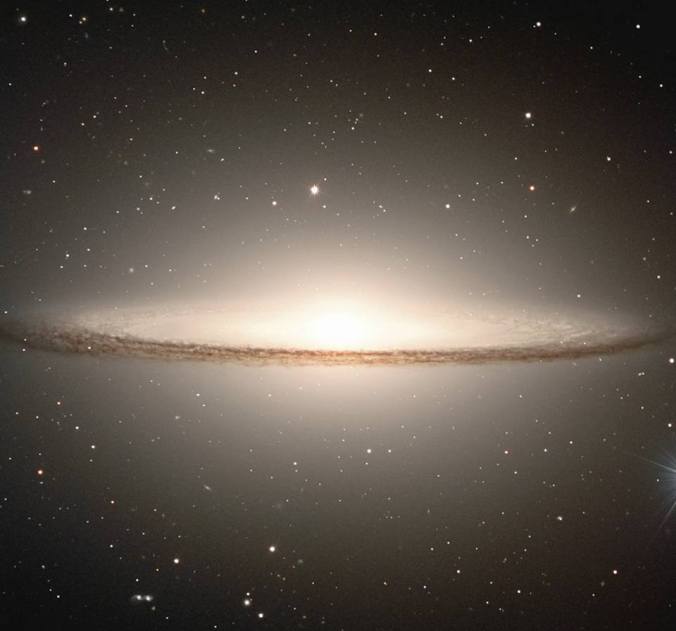
The Sombrero Galaxy
Your fleeting glances will look nothing like Hubble’s post processed images but you will be witnessing the hazy light from billions of ancient stars for yourself. These galaxies are island universes just like our Milky Way, and contain many billions of stars.
Clear skies.

 | Modulo | Universe