Stargazing in the Outer Hebrides

DSC_0056.jpeg

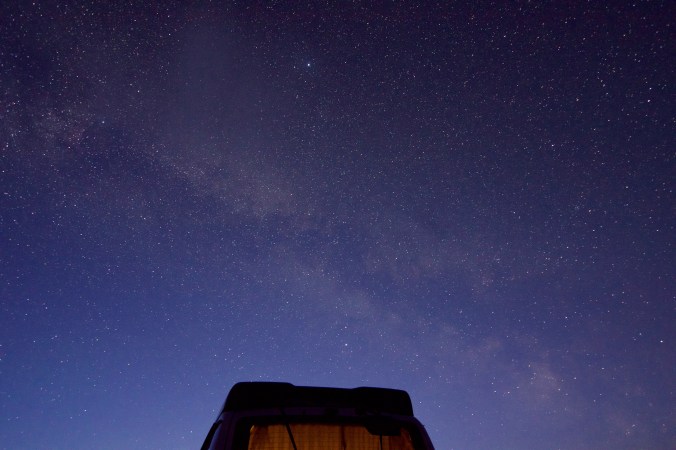
Pre dawn Milky Way on the Isle of Lewis, during the 2020 Hebridean Dark Sky Festival

As a family we’ve visited the Western Isles of Scotland during the warmer summer months, attracted by the wild open spaces, stunning beaches and abundant locations for camping.  Unfortunately the long summer days and short nights are too bright to stargaze, so I’ve never had the opportunity to sample the fantastic dark skies the island has to offer.  I therefore jumped at the opportunity of participating in this year’s Hebridean Dark Sky Festival, organised by An Lanntair and programmed by Andrew Eaton-Lewis.

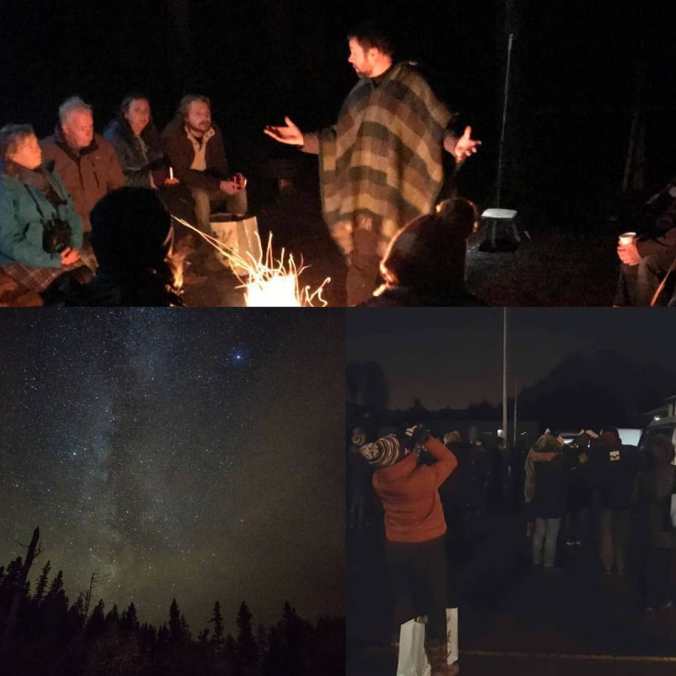
My outreach involved delivering astronomy talks and stargazing events at community hubs across the island of Lewis.  Over three nights on the island I visited communities at Balallan, Comunn Eachdraidh Nis in North Lewis and the aptly named Edge Cafe over in the west at Aird Uig.

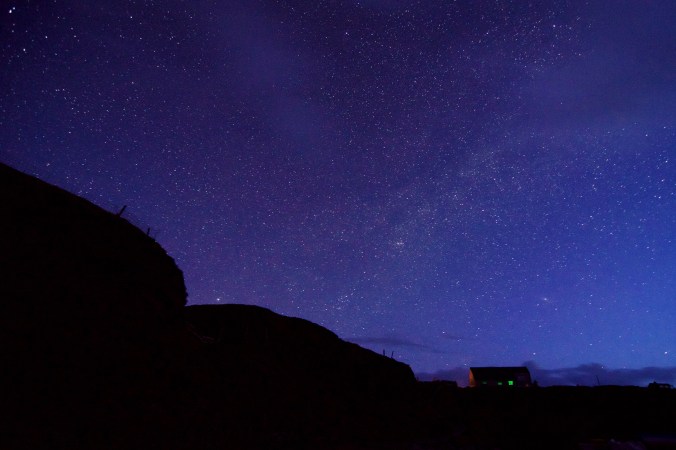
Despite some very wild weather both before and during the festival the three events were a big success, with starry skies materialising in some form at each session.  Skies, when clear, were astonishingly dark, with star clusters and galaxies clearly visible with the naked eye and a glorious sweep of Milky Way evident between the fast moving weather.
DSC_0058.jpeg

Starry skies from Ness Beach

When presenting my stargazing talks in Scotland I always try to persuade people of the merits of binocular and naked eye observing over telescopes when weather conditions are changeable.  This mantra was well demonstrated during these events, with the agility of binocular observing allowing us to quickly head in and out when breaks in the sky presented themselves.

Travelling to each event in my camper van and sleeping out in the wilds was also a memorable experience.  Wind, sleet, rain and hail all assailed me at various points during my wild camps, but I was always rewarded with frequent starry skies opening above me when I headed out for fresh air.

The people of the island are also some of the friendliest folk you could meet, with Highland hospitality well in evidence wherever I went.  Bounteous servings of tea and cake were never far away!

I very much look forward to participating in the festival again and encourage anyone with an interest in stargazing to consider the Outer Hebrides as a viable winter destination, particularly if you’re seeking some of the very best dark skies available.
DSC_0057.jpeg

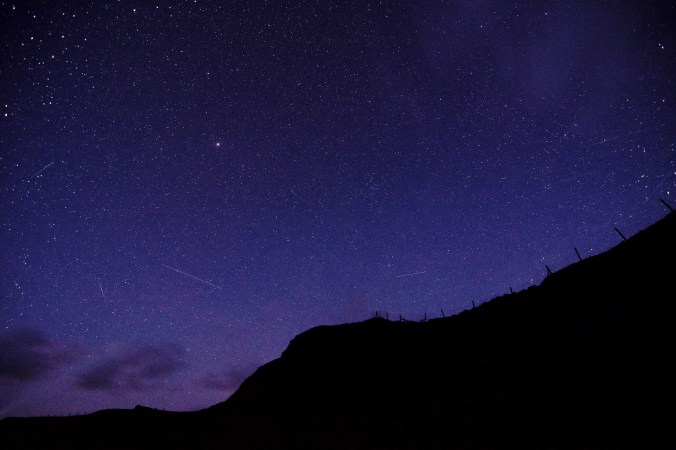
Satellites aplenty

Dark Sky Burns

“Thou lingering star, with less’ning ray,
That lov’st to greet the early morn…”

After last night I’m convinced Rabbie Burns did all his stargazing with a delicious wrap of haggis in hand.

Haggis hand warmers and Clelland’s address from last night’s sellout Dark Sky Burns event. Big thanks to the Abriachan team for the Burn’s supper fare. 

Due to inclement skies the astronomy moved indoors I got to talk in some detail about the planet Venus and its harsh environment.  A fascinating place that surely deserves more attention in the future, not least for its potential to harbour microbial life in its more clement upper atmosphere.

Why not try looking at Venus through a telescope or a pair of stabalised binoculars? You should be able to make out its phase, just as Galileo did when he first gazed up at it back in 1610.

Dark Skies at Torridon

DSC_0022.jpeg

The Milky Way over the grounds of the Torridon Resort

I’ve had some fantastic excursions out to the Torridon Resort recently, where I deliver outreach astronomy and stargazing for guests at the hotel.

Weather can be unpredictable this far west but when conditions open up the skies are undoubtably some of the darkest in Scotland, easily surpassing the darkness levels over the Cairngorms, which are still hindered by skyglow from the populated Moray coast.  This far west there’s almost no skyglow and inky black skies allow amazing views of the Milky Way and deep sky objects like the Andromeda galaxy, open star clusters and faint nebulae.

In addition to hosting several stargazing dinners I was also involved in some filming with the BBC up at the Torridon and look forward to seeing if the starry sky sequences make the final cut.

If you’d like to treat yourself or a loved one to a special stargazing experience please see the details here on the Torridon’s website.  Meanwhile, enjoy some recent pictures I took from the hotel grounds and nearby Achnasheen.

Hebridean Dark Sky Festival

I’ll be touring the outer Hebrides delivering outdoor stargazing as part of the Hebridean Dark Sky Festival 2020. The festival is a fantastic reason to visit the isles during the winter months and appreciate their world class dark skies.  Organisers An Lanntair  have put a fantastic programme together spanning music, art, theatre and stargazing.

Details of my own route and outreach locations for stargazing will be published soon so stay tuned.  For full festival details and some early booking links please visit the festival website.

Screenshot 2019-10-07 at 11.37.29


The Northern Lights

DSC_0055.jpeg

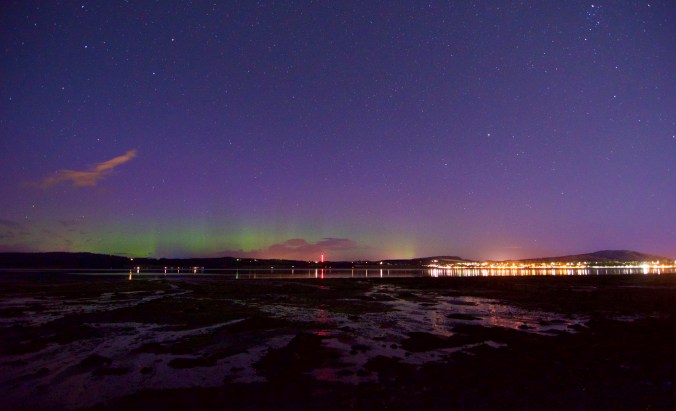
The northern lights looking over the Beauly firth towards the Black Isle, Inverness-shire

After reports of a KP6 geomagnetic storm predicted to strike Scotland over the weekend, and clear skies on Sunday evening, I headed out after sunset to try and catch the northern lights.  This was a very early aurora excursion as nights have only just got dark enough for decent views of the night sky, let alone tracking down the faint and elusive northern lights.

My initial outing took my into the hills above Bunchrew where I bagged some lovely views of the summer Milky Way overhead.  Turning my attention north I noticed a faint arc of light on the horizon,  and sure enough some test shots picked up a vibrant band of purple and green auroral light.  However little structure was evident until I moved to lower elevations, reaching the Bunchrew shoreline just after 10.30pm.

DSC_0022.jpeg

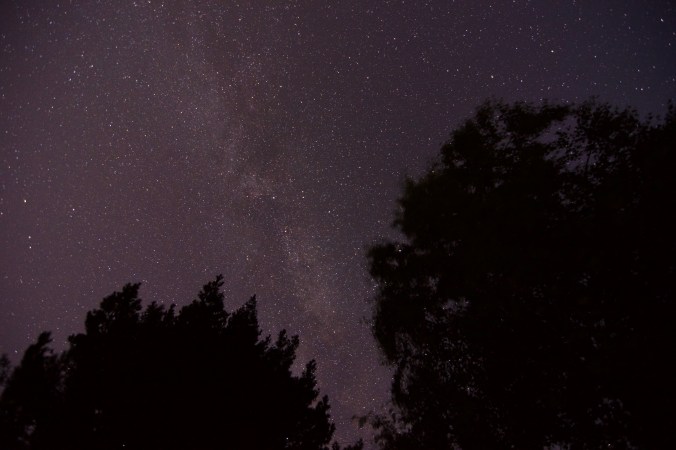
The Milky Way near Cygnus, framed between trees above Bunchrew.

From this new vantage, in the dark looking over the Beauly Firth,  the northern lights stood out much more clearly as distant columns of white light, slowly morphing and scintillating above the horizon.  Some of the images (attached) show nice structure and the suggestion of wave like movement.

As our nights get darker many more opportunities to view the aurora will present themselves.  The best strategy is to simply get out there as often as you can when it’s clear, and try and escape the boundaries of light polluted towns and cities.  Aurora forecasts should only be used as a guide as they’re seldom reliable.  Remember to look north and where possible find some nice low horizons in this direction.

Good luck and clear skies.

DSC_0054.jpeg

The aurora is caused by the solar wind slamming into the earth’s atmosphere near the poles, ionising chemical elements which produce light at very specific quantised frequencies.


The Summer Milky Way

69397509_2377081289195476_2240935573650931712_o

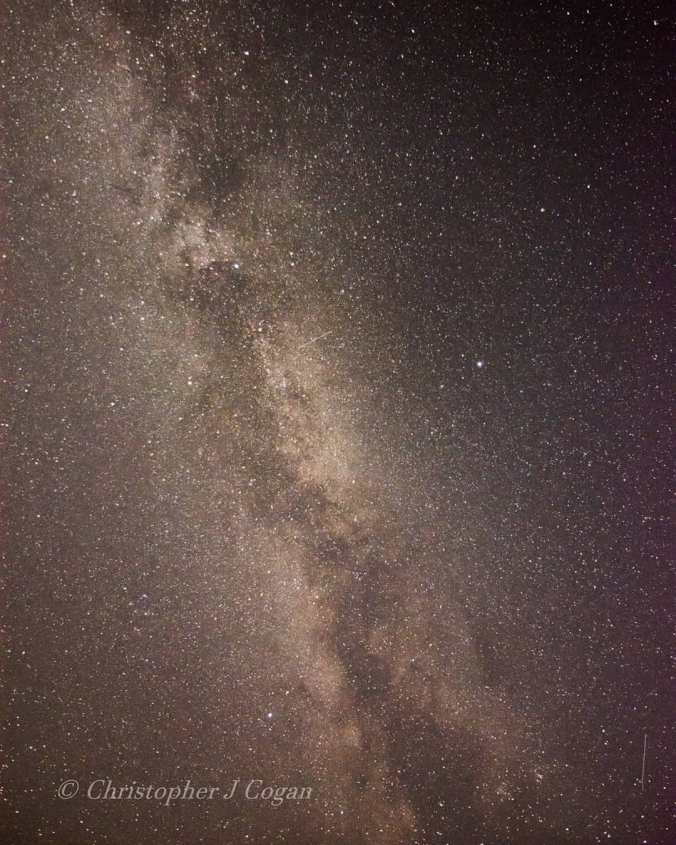
The summer aspect of the Milky Way, the great river of starlight marking our home galaxy.  A giant stellar disk containing 100s of billions of stars.  Photograph by Christopher Cogan, taken near Muie in east Sutherland, Scottish Highlands

Late summer is prime time for observing the Milky Way, and esp. catching the bright core visible near the southern horizon after dark. This bright area marks the central nucleus of our galaxy, some 30,000 light years away..

The Milky Way currently runs between Saturn and Jupiter, both low on the southern horizon, and intersects the three bright stars of the Summer Triangle asterism (Vega, Deneb and Altair). From south It runs overhead and terminates close to the constellation Perseus in the north East.

69450096_2377020719201533_8460905622580232192_o
For the best views you’ll want to get away from urban light pollution, ideally somewhere fairly rural. Let your eyes dark adapt for at least 15 minutes to give yourself the best possible views.

Clear skies.

2019 & 2020 Astronomy Programmes

68282818_2369405269963078_1857616837768904704_o.jpg

Exciting 2019/2020 astronomy programmes are coming together for Star Stories at Abriachan Forest and the Urban Astronomy evenings at the Merkinch Nature Reserve.

Both programmes kick off from 3rd and 5th October.  This year we’re aiming to invite both guest astronomers and storytellers to Abriachan, with author John Burns standing in for Clelland during a special dark sky Solstice event on the 21st December, for example.

Look out for a full list of event dates going up soon, with booking links for the first few.

First Urban Astronomy gathering:  Thursday 3rd October, Inverness

First Star Stories at Abriachan Forest:  Saturday 5th October, in collaboration with Highland Archaeology Festival.

Star Stories is in collaboration with Abriachan Forest Trust (A Dark Sky Discovery Site) with funding support from the Science and Technology Facilities Council.

The Urban Astronomy Evenings are in collaboration with Friends of Merkinch Nature Reserve.