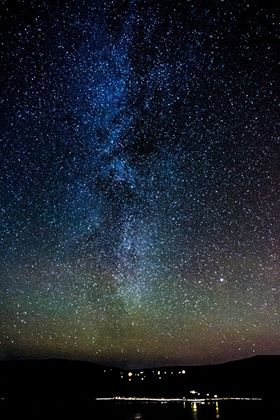
The Perseids 2018

22853366_1990781601158782_2571278860771252483_n

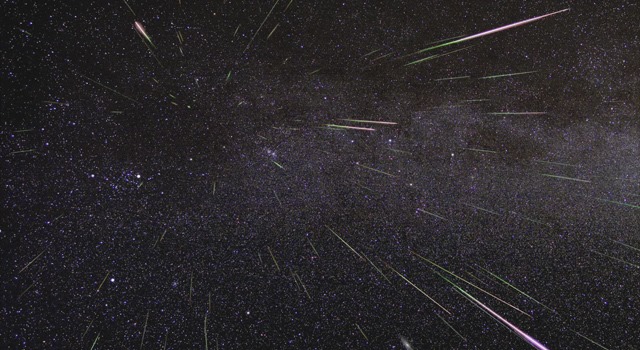
The period between August 11th -13th will mark peak activity for the annual Perseid meteor shower.  Like all annual meteor showers the Perseids occurs due to the Earth ploughing through the fine debris left behind by a short period comet, in this case Comet Swift-Tuttle.  Rates of shooting stars could be as high as 60-70 per hour at peak although this figure is under the most favourable of conditions and you’ll likely see less.

This year’s Perseids looks set to be the best shower of the year due to favourable Moon conditions.  A thin crescent Moon will set before the shower gets properly underway providing excellent sky conditions if you’re sufficiently away from urban lighting and (of course) have clear skies.

Even if you don’t see any shooting stars you can always look out for Saturn and Mars in the south, both setting between 2 – 4am in the morning, and appreciate the increasing number of stars popping into view as our subarctic skies gradually darken.

The radiant for the shower is within the constellation Perseus the hero, although you don’t need to look in this direction to see them.  In fact some of the longest fireballs and streaks caught on camera will be picked up looking away from the radiant.

Due to the brightness of skies this far north you’ll want to wait for the Sun to dip as far below the horizon as possible to achieve the most favourable darkness, this means you’ll want to observe as late as possible, ideally close to or after midnight if you can.

Shooting stars and meteor showers are one and the same phenomena – fine lumps of material impacting the earth’s atmosphere about 40-60 miles overhead.  These tiny pieces of debris are travelling so fast they superheat when entering the atmosphere and burn up rapidly.  Occasionally a larger piece will impact resembling a spectacular fireball.

Screen Shot 2018-08-02 at 15.47.44.png

Remember, you don’t have to look directly at the radiant to see a meteor shower, this is just the area of space they’ll originate from.

Observing Meteor Showers

You don’t need any special equipment to view a meteor shower, in fact binoculars or telescopes will just narrow your field of view. Grab a deck chair or a warm blanket, prepare a hot drink, wrap up warm and lay out under the darkest conditions you can find. It’s an excellent activity to do alone or if you have children they’ll love an excuse to get outside for some after dark play.

Put away any lights or bright mobile phones and simply look up and wait. Remember it takes up to 30 minutes for your eyes to fully dark adapt and any exposure to bright lights will start the process all over again. If you need a light red touches are best for preserving your night vision.

Clear skies!
Astronomy Guiding at Scapa Festival

31894544_832835000237043_995368678121799680_o

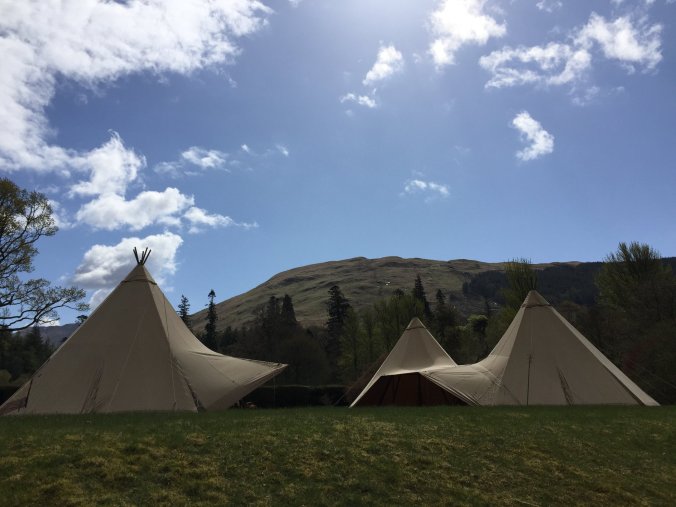
I had a fun two days of astronomy guiding at the newly launched Scapa yoga festival near Loch Fyne.  One of the perks for the job was a family ticket for the festival so I decided to take the camper van and family along too.

The drive from Inverness was pretty arduous, but when we arrived it was a lovely setting and ended up being one of the most peaceful and chilled out festivals we’ve been to.  Numbers were kept at reasonable levels so that toilets and open spaces were jostle free and relaxing.

The astronomy work ran for two days late in the evening and was in partnership with the Wild Things! group.  The original plan was for a late night constellation walk to the beach but as the clouds rolled in we instead elected for an atmospheric campfire, with a general discussion about the stars.

This format worked out very well with lots of interested folk dropping in to participate in what became a very vibrant Q & A, covering topics as far reaching as star navigation, astrology, shooting stars, black holes and stellar evolution.  On the Saturday evening some people stayed for the whole two hours, transfixed by the discussions.  Astronomy is a subject with the power to transport people back into a state of childhood wonder!  It’s undoubtably the most accessible and mind-blowing of all the sciences.

By all accounts the festival was a great success and I wish the organisers lots of luck with Scapa 2019.

Solar Day at Abriachan

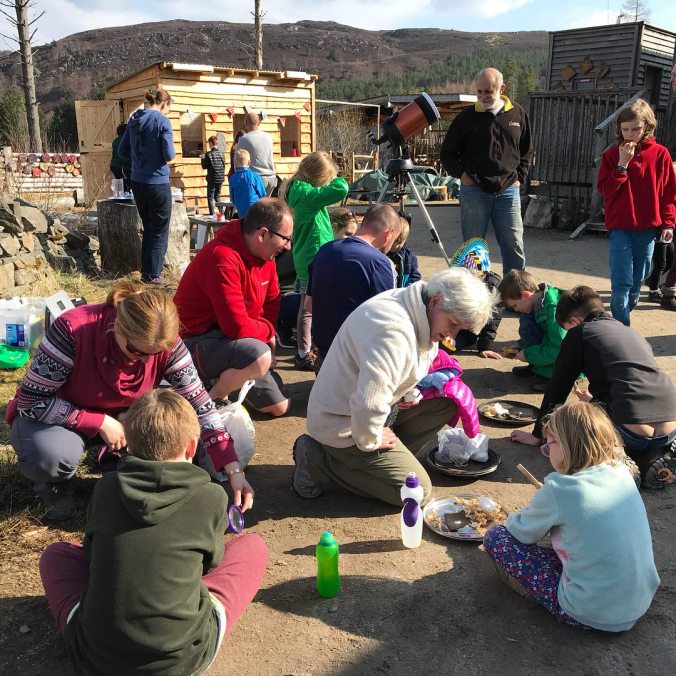
We were blessed with a lovely sunny day on Saturday for our day of Solar learning up at Abriachan.  We were fully prepared for indoor activities as forecasts were looking pretty grey.  But as the weekend swung around skies cleared and we ended up seeing plenty of Sun all day.

30171873_1638005529588556_6419296626281205776_o

A day of fun solar learning

Since conditions were so good we moved everything outside, including the talk I’d prepared which was originally put together on powerpoint.  I demonstrated basic shadow time keeping and direction finding, and how solar eclipses take place using a scale model of the Moon and Earth (with the moon’s orbit inclined at 5 degrees).

Based on our model the Earth and Moon were around 3 meters apart with the former about the size of a large orange.  At this scale the Sun would be 10 meters in diameter and over a mile away!  With this model the relative rarity of total solar eclipses becomes clear (on average one every 18 months).

During the talk we also touched upon:

  • Sun gods and how our ancestors perceived the Sun as a perfect orb with no imperfections
  • The human fear of eclipses
  • The discovery of Sun spots and how they revealed that the Sun is spinning
  • How spectroscopy revealed that our Sun is in fact a star (at very close proximity)
  • Why the Sun is loosing mass – over 600 million tons of hydrogen per second
  • The ultimate fate of our Sun – how it will eventually flare up as a red giant star before cooling and shrinking down to a white dwarf

After the talk Clelland took over for some fun outdoor activities including a scale walk of the solar system, DIY spectroscopes and solar lasers using big magnifiers.  We also did a fun experiment simulating the colour of the sky and sunsets using milk in water bottles.

In terms of solar viewing, I setup the 200mm with a full objective white light filter, and we also had a Sunspotter, kindly on load from Glasgow Science centre.  Both setups produced clear views of the Sun’s photosphere, but unfortunately there were no sunspots to see.  This isn’t entirely surprising given we’re bang in the middle of the 11 year solar cycle minimum, although large spots can appear suddenly at any time.  We hope to one day invest in a good quality hydrogen alpha filter for these events, as these reveal many more interesting features, like edge prominences and coronal loops.

Overall a fun day of learning with great interaction and questions from the adults and little ones alike.

Distant Galaxies in Virgo

As the constellation Virgo rises earlier and earlier after darkness we’re entering a time of great opportunity for observing distant galaxies.

Within the upper right hand stretches of Virgo are giant clusters of galaxies strung out in loose bundles. Some of these very distant galaxies can even be see in bioculars if you’re under excellent dark skies.  Telescopes will pick them out better and it’s here that aperture rules.  Faint galaxies need big objective lenses to see clearly.

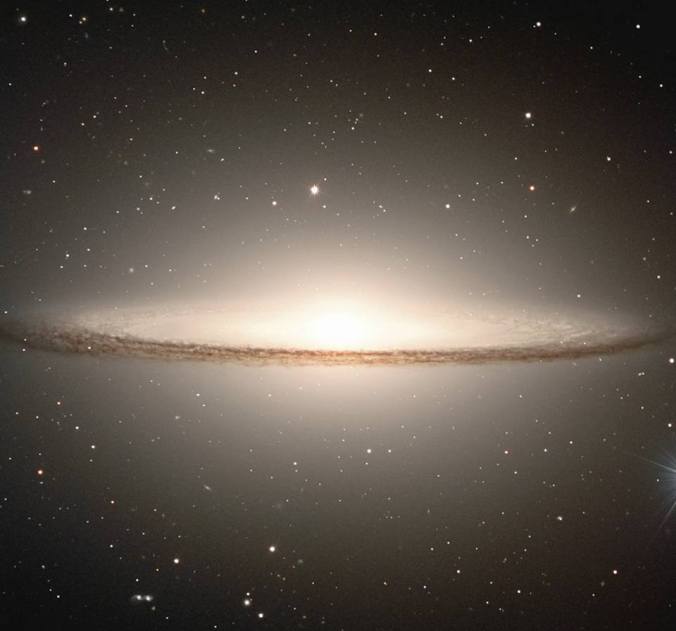
More galaxies are scattered to the lower right of the constellation too, including the famous Sombrero galaxy (pictured).

29694820_2046635758906699_786504064794359757_n

The Sombrero Galaxy

Your fleeting glances will look nothing like Hubble’s post processed images but you will be witnessing the hazy light from billions of ancient stars for yourself.  These galaxies are island universes just like our Milky Way, and contain many billions of stars.

Clear skies.


29683473_2046635782240030_4186644273116556291_n

Wild Astronomy – Inverness Science Festival

milky way

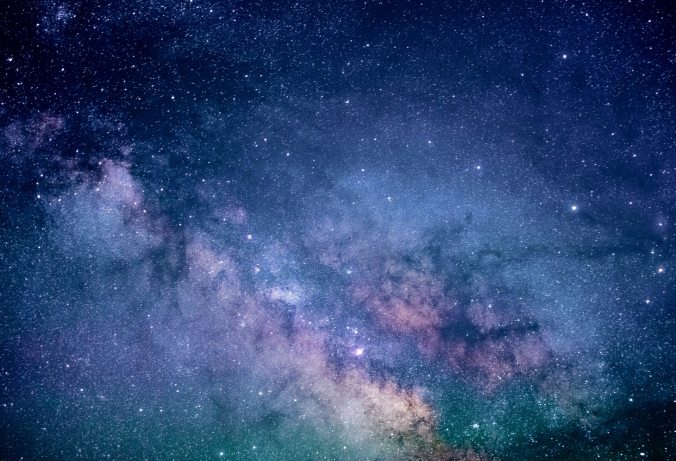
I’ll be giving a public lecture at the Inverness Science Festival on May 11th 2018.  I’d love to use some images from local astro photographers, particularly night sky photos taken in the Highlands or north of Scotland.  If you’d like your images used I’ll fully credit you in the talk.  Please PM me for details.

Talk Title: Wild Astronomy

Description: The Highlands of Scotland have some of the darkest skies in Europe but how often do we escape our back gardens and ‘get out there’ to appreciate the night sky?

In this talk astronomer Stephen Mackintosh discusses what makes our Highland skies so special, the sights and objects we should look for, and how a backpack and a pair of binoculars is all you really need to open up the wonders of the night sky.

Time and Location:  May 11th, 7-8pm at University of the Highlands and Islands STEM Hub, An Lòchran, Inverness Campus, Inverness

The Crab Nebula

crab

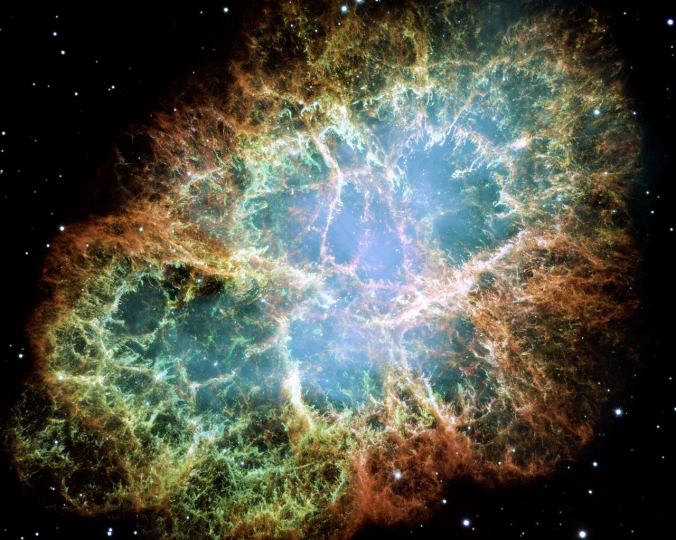
In 1054AD Chinese astronomers recorded a bright new star suddenly appear in the constellation Taurus the bull. It brilliantly out shone all other stars and was visible in broad daylight. After a year or so its light faded and it vanished.

The event was a supernova explosion – the dramatic explosion of a massive star. Today we can see the remnants left behind from this violent event – the Crab Nebula. An expanding shockwave of recycled stellar material. The above amazing image is from the Hubble space telescope.

You can see the Crab Nebula in a modestly sized amateur telescope, and as always the darker the skies the more detail you’ll see.  With a 150mm scope or larger you should be able to trace out the overall mottled shape of the nebula.  Use averted vision and see if you can pick out extra detail and structure.

Finding the Crab is relatively straightforward as it sits just beside the lowest horn of the constellation Taurus the bull, which sits above and right of Orion during evening skies at the moment.


Locate Crab.png

South Loch Ness Tourist Guide

28052742_2023393321230943_1175060706_n

Starry Skies over Loch Ness by Claire Rehr

Here’s a small piece I wrote for the South Loch Ness tourist website on stargazing in the Highlands.

South Loch Ness Tourist Site – Night Sky

Excerpts:

“For me stargazing is about reconnecting people with the night sky, not just the raw science which is fascinating enough, but also the star lore, mythology and human connections with it.  That’s something we’ve undoubtedly lost in recent times not only in terms of light pollution but also our tendency to inhabit virtual spaces within our phones and gadgets.  As a people we seem to be increasingly looking down rather than up! 

 ‘In the Highlands we’re still fortunate to have access to some of the darkest skies in Europe, and it’s something I hope we’ll do our best to preserve for future generations.  Visitors from populated areas of England and the central belt of Scotland are always blown away by what they can when they get into the wilds under a moonless sky.  Under the right conditions you can see over 5000 stars out here, compared to just a few hundred from urban areas. ”

 “For visitors to the South Loch Ness area I recommend just heading out to some high vantage points, killing your lights and letting your eyes dark adapt.  You’ll be amazed when you look up.  You can also head up to Abriachan where there’s good access and parking for larger groups of stargazers”.  “When the moon is new you can see breathtaking views of the Milky Way galaxy soaring overhead – a humbling reminder that we’re just a tiny part of a giant spiral galaxy surrounded by billions of other stellar companions.” 

 “Because of our northerly latitude (57 degrees north) we also have the privilege of witnessing many circumpolar constellations – stars that are always above the horizon.  This lets us become more familiar with specific groupings like the two bears Ursa Major and Ursa Minor and rich constellations like Perseus, Draco, Auriga and Cassiopeia.  During the winter months the shorter days up here also lend themselves to extended opportunities for observing.  It’s a rewarding pastime that makes the cold and long winter nights much more inviting.’

 Screen Shot 2018-03-28 at 10.01.31