It’s been a while since I updated my Youtube channel with a review. Bringing you my impressions of the Seestar S50 after a whole winter using it both personally and for public outreach. I hope you enjoy and find it useful.
telescopes
Buying Your First Telescope Talk
If you missed my facebook live talk on Buying Your First Telescope you can watch it above on my Youtube feed.
In this talk I discuss binocular observing, portability and make recommendations for some good beginner telescopes. There’s also a guide to What’s Up in December skies.
This talk is part of the Merkinch Nature Reserve Astronomy Programme and was organisation in partnership with Go Stargazing.

Saturn and the Moon
Few words are needed to describe this incredible video. It was captured by Jan Koer with a Meade 5000 a 3x Barlow and a ToUcam2 video camera.
Ladd Observatory in Providence, Rhode Island
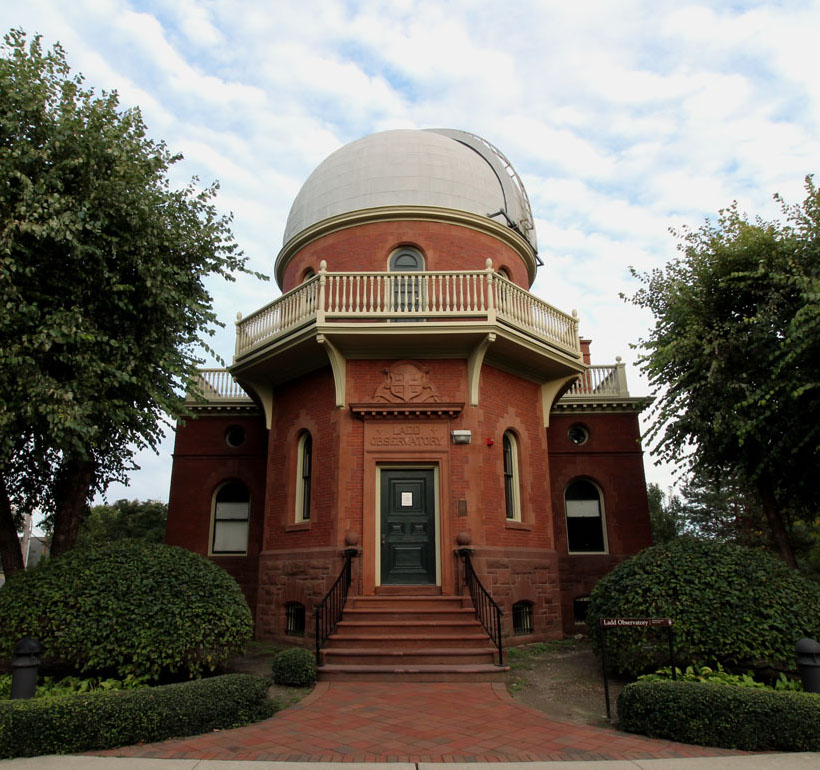
The historic Ladd Observatory situated on College Hill, Providence Rhode Island
During a trip to Rhode Island I had the pleasure of visiting the historic Ladd Observatory on October 16th to look through their 128 year old (12 inch) refracting telescope.
All the optics and gravity driven clock drive are unchanged since the observatory was built in 1891. The same level of preservation applies to the building, which feels like stepping back into the 19th century.
With clear skies during my visit I had the opportunity to gaze at Saturn. The contrast and views of Saturn through this instrument were amazing. An obvious Cassini division with clear shadowing and storm bands on Saturn’s globe, plus several of the brightest moons were clearly visible.
In addition to the main telescope the observatory has several rooms with photographic slides and exhibits preserved from yesteryear. One function of the observatory was that of precise timekeeping and signaling using known transit and occultation times for the Moon, planets and bright stars close to the ecliptic. A fascinating array of transit telescopes, pendulum clocks, and chronometers are testament to this previous function.
The observatory would wire calibration signals to the Providence fire service and several other important businesses, allowing clocks to be fine tuned for accuracy. This practice continued up to the 1970s.
Please enjoy some of the images I snapped from my visit below.


Albireo and Double Stars
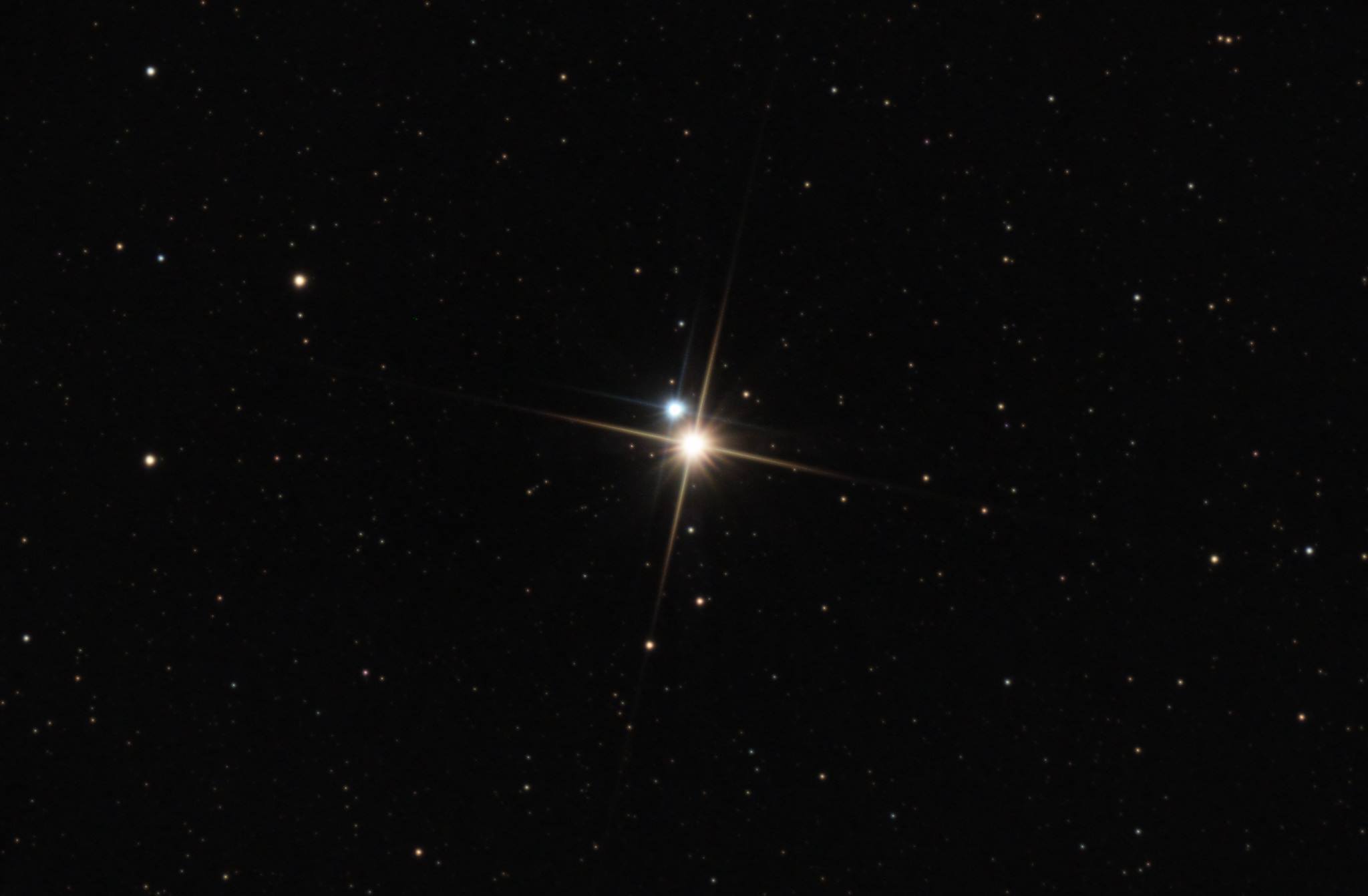
A beautiful exposure of Albireo A and B by astro-photographer Minos Kritikos
One of the best applications of a good telescope is the viewing of a wide range of double stars. While there are many double stars that can be split in a pair of binoculars, some of the most beautiful examples require more magnification, and that’s where telescopes excel with their narrower fields and greater resolving power.
One of the best double stars to view at northern latitudes lies in the head of the constellation Cygnus the swan – Albireo.
This beautiful indigo and gold double star really dazzles in a telescope eyepiece, and is easily resolved in a small telescope with at least 30x magnification.
The contrast between amber Albireo A and sapphire Albireo B is readily apparent in the above striking image, taken by my friend and astro-photographer Minos Kritikos.
There is still some speculation surrounding whether or not the Albireo pair are gravitationally bound – most evidence suggests they are. If so, their orbital period would be around 75,000 years.

There are many interesting double stars you can try observing with even a modestly sized telescope – remember that most stars we can see in our galaxy (over 60%) are either double or multiple star systems. Here’s a list of some other visually pleasing doubles to look out for.
- Epsilon Lyrae – Lyra (binocular friendly)
- Polaris – Ursa Minor (high magnification needed)
- Mitaka – Orion
- Alpha Capricorni – Capricorn (binocular friendly)
- Epsilon Pegasi – Pegasus
- Gamma Delphini – Delphinus
- Eta Cassiopéia – Cassiopeia (high magnification needed)
- Gamma Aries – Aries
 | Modulo | Universe