Ursa Major Video Guide


My video stargazing guide to the constellation Ursa Major, known to stargazers and astronomers in the northern hemisphere by its famous asterism of the Plough or Big Dipper.

Many thanks to Rising Galaxy of Cosmicleaf Records for gifting the background music to this piece. If you like drone ambient or cosmic chill out music please check out their web stores for more of the same.

Clear skies.

The Astronomy of Ancient Places (Livestream talk)

84610105_2901007936645966_7945854819481157632_n.jpg

In view of recent developments my contribution to this years Inverness Science Festival will be a free live streamed talk.  Please visit my Highland Astronomy facebook page for more details:

Astronomer Stephen Mackintosh will take you back in time to discover how our distant ancestors used the Sun, Moon and stars to track the progress of time and the seasons. Looking at ancient monuments connected to the night sky, we’ll go on a tour of Egypt, Central America, southern England and back home to Scotland where some of the finest concentrations of neolithic structures exist anywhere in Europe, not least the wonderful Clava Cairns. Plus advice on sky watching and naked eye observing you can put into practice yourself.

Note: this event is free and will be live streamed online as part of the Inverness Science Festival’s adjusted programme.

Stephen Mackintosh’s blog: modulouniverse.com
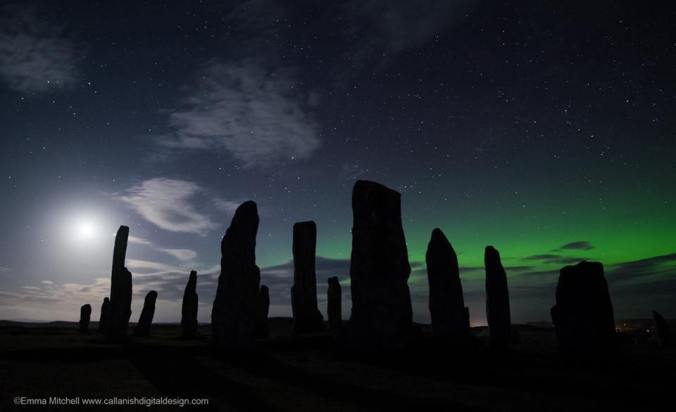
Image by Callanish Digital Design: callanishdigitaldesign.com

‘Not too hot and not too cold’

88177475_2543093119260958_112126439158972416_n.jpg

The Goldilocks zone around three different type of stars

The Goldilocks Zone.  The above image is a great illustration of the relative size of the habitable zone around different types of star, with stars like our Sun at the bottom.

Even very dim M class dwarf stars (pictured top) could harbour planets with liquid water – the planets would just need to be situated much closer in. These stars can have very active magnetic fields however, frequently throwing harmful radiation out towards any orbiting planets.  M class stars are also extremely stable, some destined to burn for over 100 billions years, much longer than our Sun which has around 4 billion years of fuel left.

In the middle we see the K class dwarf stars. These will also out live our Sun (by a factor of 4), have nice wide zones of habitation, and much less magnetic activity than the M class stars.  Potentially these K class stars are the ideal incubators for the slow evolution of life, and there’s plenty of them. Nearly 13% of stars in our galaxy are K class red dwarfs.  That’s approximately 26 billion in our galaxy alone! 

Rocky-Exoplanet-Orbiting-Red-Dwarf-Star.jpg

An artist’s impression of a rocky world orbiting a red dwarf star, like the M and K class stars mentioned above.

Star Stories Astrophotography Special

88174012_2540393609530909_7483019853649936384_o-2

Eric presenting his guest talk up at Abriachan

There were only a few stars up at Abriachan Forest tonight for our Star Stories Astrophotography special, but some nice early views of the waxing crescent Moon and Venus before the weather really turned and a mini snowstorm descended.

Many thanks to our guest speaker Eric Walker from the Highlands Astronomical Society for delivering a fantastic talk on astrophotography.  Eric showcased a ton of amazing images he’s taken over the years demonstrating his passion for astronomy and observing.

Clelland also entertained in the round house with storytelling and we had a nice impromptu discussion about the night sky over the campfire between changeovers.

The next Star Stories is our Vernal Equinox special in March, which will be the last opportunity for dark sky observing this season before the return of longer days.

Eventbrite link here

Urban Astronomy Aurora Special

Many thanks to Graham Bradshaw of Graham Bradshaw Photography for tonight’s fascinating guest talk on hunting down and photographing the Aurora. Here’s one of the beautiful time lapses Graham shared with us during his presentation.


Graham also provided a lovely selection of his images (see below) along with camera settings to help budding night sky and aurora photographers.

We also took advantage of some clear breaks in the sky after the talk and walked up to the Nature Reserve to view some bright constellations and star clusters.

Thanks to everyone who came along. The next Urban Astronomy event is our Venus special on March 12th. Booking link here.

Stargazing in the Outer Hebrides

DSC_0056.jpeg

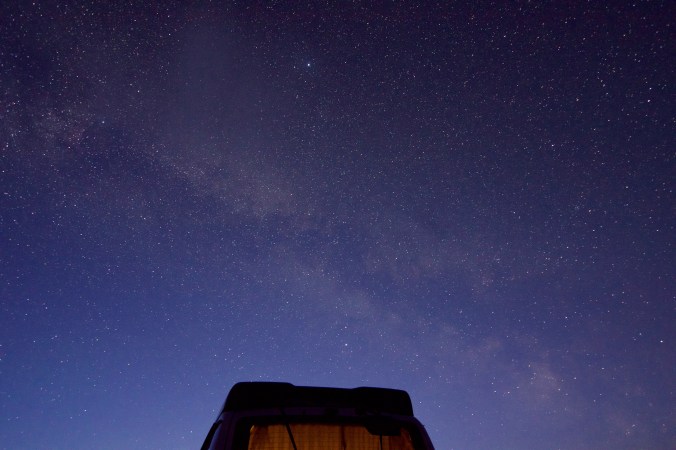
Pre dawn Milky Way on the Isle of Lewis, during the 2020 Hebridean Dark Sky Festival

As a family we’ve visited the Western Isles of Scotland during the warmer summer months, attracted by the wild open spaces, stunning beaches and abundant locations for camping.  Unfortunately the long summer days and short nights are too bright to stargaze, so I’ve never had the opportunity to sample the fantastic dark skies the island has to offer.  I therefore jumped at the opportunity of participating in this year’s Hebridean Dark Sky Festival, organised by An Lanntair and programmed by Andrew Eaton-Lewis.

My outreach involved delivering astronomy talks and stargazing events at community hubs across the island of Lewis.  Over three nights on the island I visited communities at Balallan, Comunn Eachdraidh Nis in North Lewis and the aptly named Edge Cafe over in the west at Aird Uig.

Despite some very wild weather both before and during the festival the three events were a big success, with starry skies materialising in some form at each session.  Skies, when clear, were astonishingly dark, with star clusters and galaxies clearly visible with the naked eye and a glorious sweep of Milky Way evident between the fast moving weather.

DSC_0058.jpeg

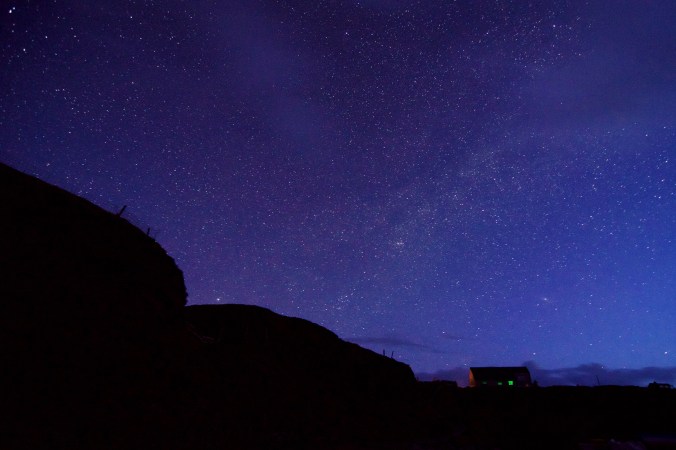
Starry skies from Ness Beach

When presenting my stargazing talks in Scotland I always try to persuade people of the merits of binocular and naked eye observing over telescopes when weather conditions are changeable.  This mantra was well demonstrated during these events, with the agility of binocular observing allowing us to quickly head in and out when breaks in the sky presented themselves.

Travelling to each event in my camper van and sleeping out in the wilds was also a memorable experience.  Wind, sleet, rain and hail all assailed me at various points during my wild camps, but I was always rewarded with frequent starry skies opening above me when I headed out for fresh air.

The people of the island are also some of the friendliest folk you could meet, with Highland hospitality well in evidence wherever I went.  Bounteous servings of tea and cake were never far away!

I very much look forward to participating in the festival again and encourage anyone with an interest in stargazing to consider the Outer Hebrides as a viable winter destination, particularly if you’re seeking some of the very best dark skies available.
DSC_0057.jpeg

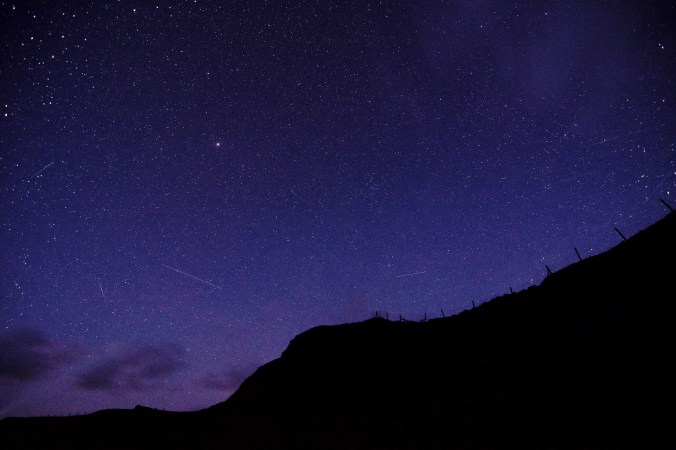
Satellites aplenty