Comet Swan

95665739_2592229984347271_270811388958474240_n.jpg

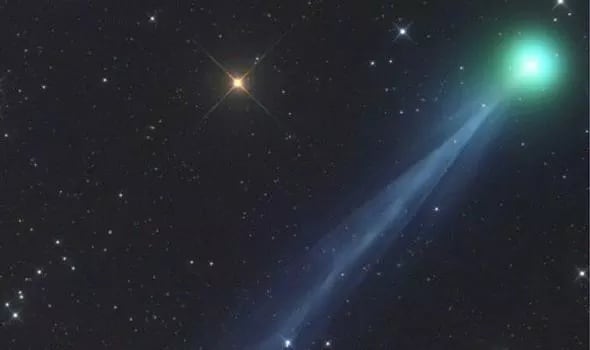
Image of Comet Swan, now a naked eye object at magnitude 5.1. Unfortunately views will be challenging this far north due to sky brightness and low viewing altitudes. Friends further south might have some luck especially near the end of May, but best views will be in the southern hemisphere.  I’ll post more observing details later this month.  Stay tuned to my FB site meanwhile.

Ursa Major Video Guide


My video stargazing guide to the constellation Ursa Major, known to stargazers and astronomers in the northern hemisphere by its famous asterism of the Plough or Big Dipper.

Many thanks to Rising Galaxy of Cosmicleaf Records for gifting the background music to this piece. If you like drone ambient or cosmic chill out music please check out their web stores for more of the same.

Clear skies.

The Astronomy of Ancient Places (Livestream talk)

84610105_2901007936645966_7945854819481157632_n.jpg

In view of recent developments my contribution to this years Inverness Science Festival will be a free live streamed talk.  Please visit my Highland Astronomy facebook page for more details:

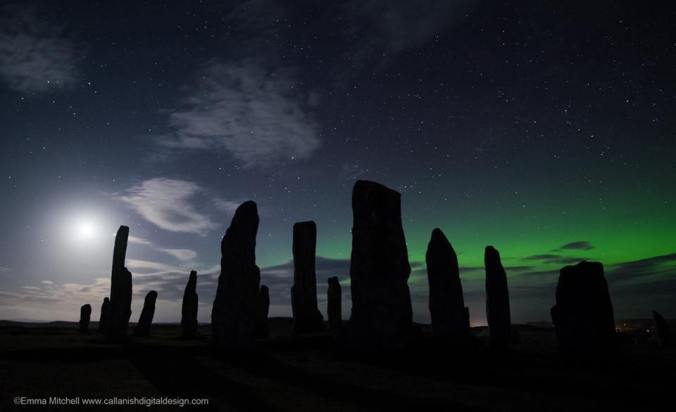
Astronomer Stephen Mackintosh will take you back in time to discover how our distant ancestors used the Sun, Moon and stars to track the progress of time and the seasons. Looking at ancient monuments connected to the night sky, we’ll go on a tour of Egypt, Central America, southern England and back home to Scotland where some of the finest concentrations of neolithic structures exist anywhere in Europe, not least the wonderful Clava Cairns. Plus advice on sky watching and naked eye observing you can put into practice yourself.

Note: this event is free and will be live streamed online as part of the Inverness Science Festival’s adjusted programme.

Stephen Mackintosh’s blog: modulouniverse.com
Image by Callanish Digital Design: callanishdigitaldesign.com

‘Not too hot and not too cold’

88177475_2543093119260958_112126439158972416_n.jpg

The Goldilocks zone around three different type of stars

The Goldilocks Zone.  The above image is a great illustration of the relative size of the habitable zone around different types of star, with stars like our Sun at the bottom.

Even very dim M class dwarf stars (pictured top) could harbour planets with liquid water – the planets would just need to be situated much closer in. These stars can have very active magnetic fields however, frequently throwing harmful radiation out towards any orbiting planets.  M class stars are also extremely stable, some destined to burn for over 100 billions years, much longer than our Sun which has around 4 billion years of fuel left.

In the middle we see the K class dwarf stars. These will also out live our Sun (by a factor of 4), have nice wide zones of habitation, and much less magnetic activity than the M class stars.  Potentially these K class stars are the ideal incubators for the slow evolution of life, and there’s plenty of them. Nearly 13% of stars in our galaxy are K class red dwarfs.  That’s approximately 26 billion in our galaxy alone! 

Rocky-Exoplanet-Orbiting-Red-Dwarf-Star.jpg

An artist’s impression of a rocky world orbiting a red dwarf star, like the M and K class stars mentioned above.
Star Stories Astrophotography Special

88174012_2540393609530909_7483019853649936384_o-2

Eric presenting his guest talk up at Abriachan

There were only a few stars up at Abriachan Forest tonight for our Star Stories Astrophotography special, but some nice early views of the waxing crescent Moon and Venus before the weather really turned and a mini snowstorm descended.

Many thanks to our guest speaker Eric Walker from the Highlands Astronomical Society for delivering a fantastic talk on astrophotography.  Eric showcased a ton of amazing images he’s taken over the years demonstrating his passion for astronomy and observing.

Clelland also entertained in the round house with storytelling and we had a nice impromptu discussion about the night sky over the campfire between changeovers.

The next Star Stories is our Vernal Equinox special in March, which will be the last opportunity for dark sky observing this season before the return of longer days.

Eventbrite link here

Urban Astronomy Aurora Special

Many thanks to Graham Bradshaw of Graham Bradshaw Photography for tonight’s fascinating guest talk on hunting down and photographing the Aurora. Here’s one of the beautiful time lapses Graham shared with us during his presentation.


Graham also provided a lovely selection of his images (see below) along with camera settings to help budding night sky and aurora photographers.

We also took advantage of some clear breaks in the sky after the talk and walked up to the Nature Reserve to view some bright constellations and star clusters.

Thanks to everyone who came along. The next Urban Astronomy event is our Venus special on March 12th. Booking link here.