Next Abriachan Astronomy Dates

I’m excited to be hosting two more astronomy events alongside the Abriachan forest team in March and April 2018.  Details and ticket links below.

Star Cluster Special – March 10th (moved from Feb 10th) 7pm-9pm

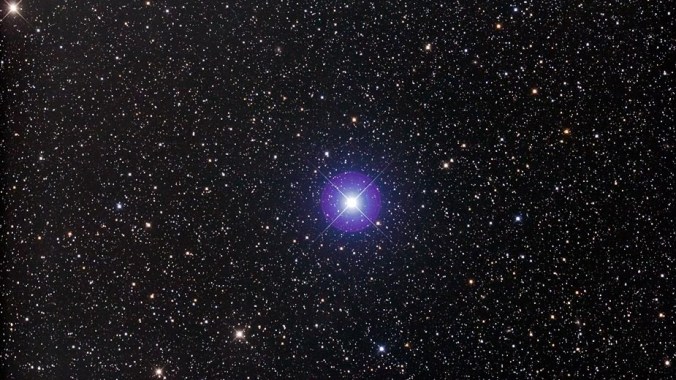
Hyades_and_Pleiades_l

The Hyades and Pleiades Star clusters

Explore the great winter open clusters under moonless dark skies with campfire stories to follow. Outdoor binocular guiding under clear skies. Indoor talk, astronomy activities and virtual guiding in the classroom in the event of poor weather. Refreshments provided.

Ticket link: https://www.eventbrite.co.uk/e/dark-sky-observingwith-a-sta…

Solar Special and the Life of Stars – April 14th 2pm – 4pm

2443850489_145df6ce2f_b

A typical G-type main sequence star – locals have dubbed this one ‘The Sun’

A Sun special exploring our nearest star and the life of giant stars. Outdoor sun projections and activities, with illustrated talk and refreshments. Suzann even has plans for a solar pizza oven!

Ticket link: https://www.eventbrite.co.uk/e/some-sunny-science-and-the-l…

All stargazing events organised in collaboration with the Abriachan team, astronomer Stephen Mackintosh and learning coordinator Suzann Barr. Campfire tales delivered by forest ranger Clelland.

For group bookings please email: abriachanforest@gmail.com

Lunar Burns Night

Moon between clouds

The star of the evening – a waxing gibbous moon

What do you get if you cross a bright gibbous moon, award winning haggis and a celebration of Scotland’s bard?  A Lunar Burns Night!

This was our fourth stargazing event up at Abriachan and despite somewhat blustery conditions, ended up being loads of fun with a good turnout across all ages.

Haggis handwarmers

Haggis and neep hand warmers

After introductions from the Abriachan crew we kicked off outside with the moon high in the south and making dramatic appearances between fast moving clouds.  After a bit of moon gazing and chat I took everyone back inside the forest classroom for an illustrated talk on the moon – its phases, cycles, observational phenomena and even some discussion on manned moon bases (why the obsession with Mars when we could be building a lovely moon base at much lower cost and risk?).

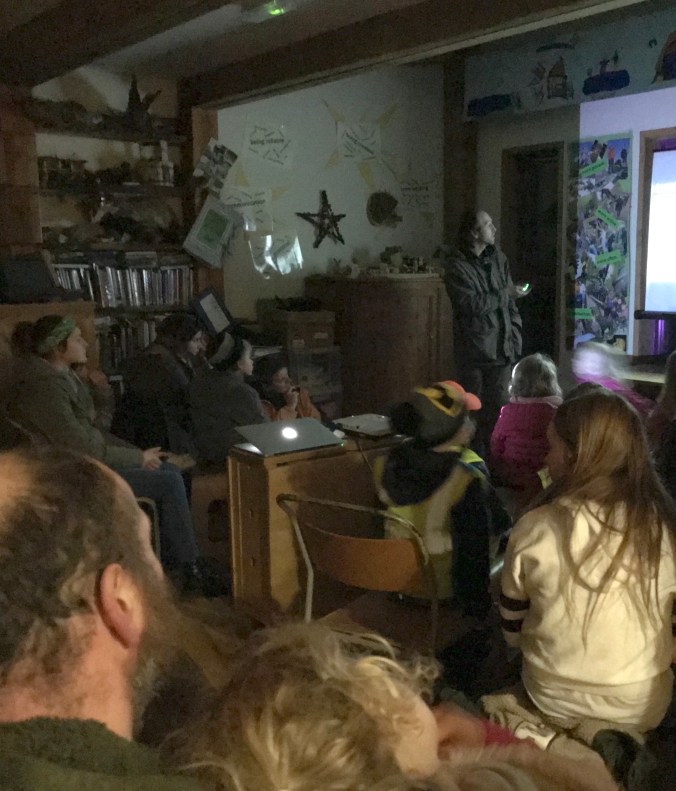
Stephen presenting Lunar Facts

Presenting my moon talk

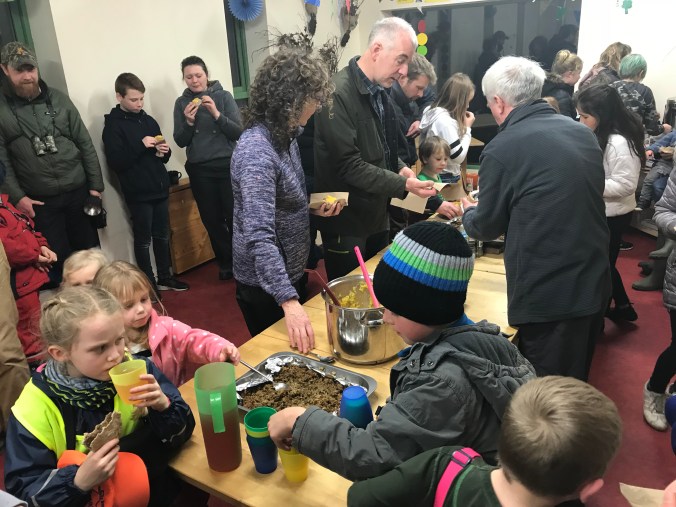
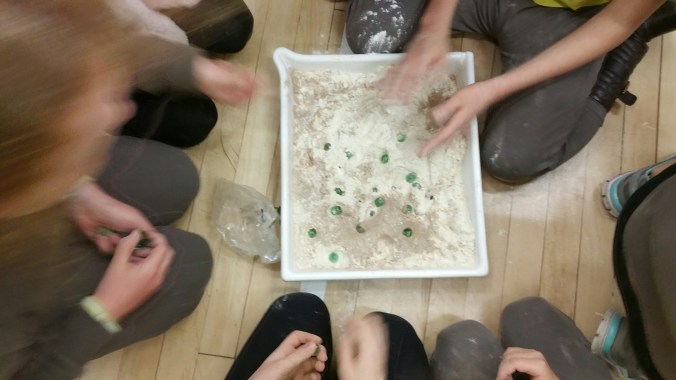
After the talk Roni and Suzann called everyone through for Clelland’s dramatic ‘knife wielding’ address to the Haggis, followed by a tasty spread of haggis and neep wraps.  The younger ones then took centre stage as they expertly simulated millions of years of lunar surface evolution – by dropping (never throwing!) metal balls into giant flour trays.  This was followed by 3D moon phases and a competition to see who could guess the real separation between the Earth and Moon.

Clelland addressing the haggis

Addressing the haggis

The evening was topped off up with a haggis drive and Cottar’s tales from Clelland.  I also took a group out for some final moon gazing, and managed to glimpse a few brighter stars between the cloud breaks.

The only disappointment was being unable to set up the video telescope to show folks closeups of the lunar surface.  The sporadic showers and wind made that too challenging on the night, but I don’t think anyone really noticed.


We have more astronomy nights planned at Abriachan before the encroachment of our long summer days.  On March 10th we’re hosting a Star Cluster special under dark sky conditions, followed by a Solar Special on April 14th, where we’ll hopefully be projecting the Sun onto a big screen for all to see.  For details please check Abriachan’s or my own Facebook pages.  As ever thanks to the Abriachan team for helping make these events so fun and welcoming.

Clear skies!


Sirius Rising

sirius-2080966_960_720-2

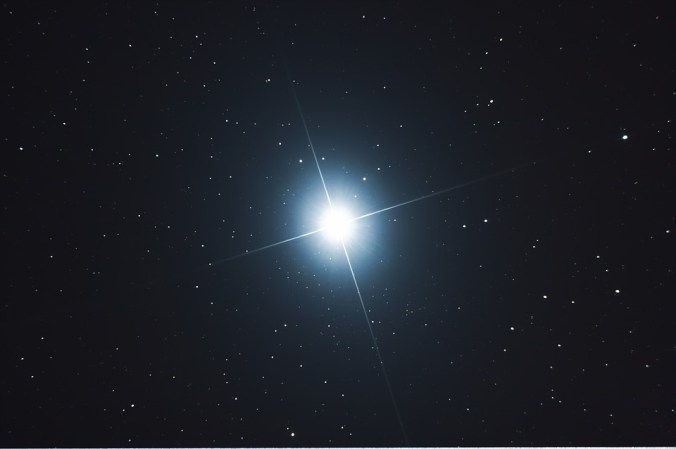
The dog star ‘Sirius’ is now high and visible in winter skies looking South. Draw a line down and left from Orion’s belt and you can’t miss the brightest star in the night sky.

Sirius means ‘scorching’ and was considered a second Sun of sorts to many ancient cultures. Its incredible brightness is due to its close proximity. At only 9 light years away it’s the 5th closest star system to our Sun and a fairly typical hydrogen fusing main sequence star likely to live a long stable life of several billion years.  This is in contrast to short lived giant stars like Rigel and Betelgeuse, which are very distant and appear bright  due to their bloated sizes and massive energy output.

Sirius
Procyon is sometimes mistaken for Sirius but it rises earlier, hence its name which means ‘before the dog’.  The Arabs told a tale linking Procyon and Sirius as two sisters, who became separated by a great river (the Milky Way) while searching for their missing brother.

The Geminids

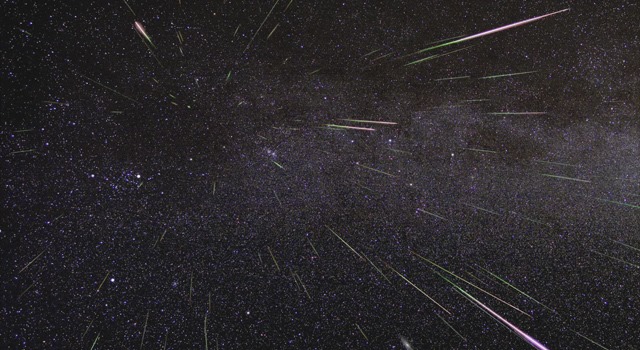
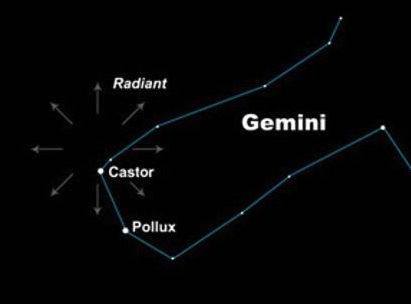
One of the most energetic meteor showers of the year is fast approaching with activity predicted between Dec 4th – Dec 16th. With the best possible observing conditions the Geminids can produce displays of up to 120 meteors per hour, although you’ll likely see rates much lower than this in reality.

Occasionally and unpredictably, meteor showers can erupt into storms. One of the most famous ‘storms’ happened in 1833 when the Leonids produced over 100,000 meteors per hour! Who knows what this December will bring.

22853366_1990781601158782_2571278860771252483_n

Observing Meteor Showers

You don’t need any special equipment to view a meteor shower, in fact binoculars or telescopes will just narrow your field of view. Grab a deck chair or a warm blanket, prepare a hot drink, wrap up warm and lay out under the darkest conditions you can find. It’s an excellent activity to do alone or if you have children they’ll love an excuse to get outside for some after dark play.

Put away any lights or bright mobile phones and simply look up and wait. Remember it takes up to 30 minutes for your eyes to fully dark adapt and any exposure to bright lights will start the process all over again. If you need a light red touches are best for preserving you night vision.

Good luck and clear skies!


24232756_1990781597825449_1759741144663717495_n

Stargazing at Balloch Brownies

I had the great pleasure of helping the 2nd Balloch Brownies gain their Stargazers badge this evening.  Brownie leader Gaener Rodger wanted an astronomer to lead the girls through basic constellations and star navigating, but I came prepared for both outdoor and indoor activities in the event of poor skies.

20171114_182035_resized

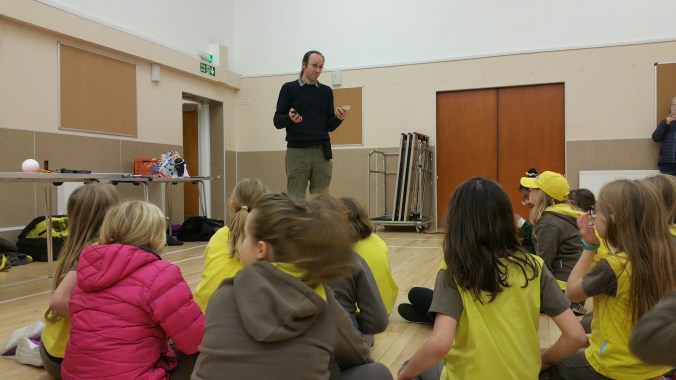
A captive and very excitable audience!

The location for stargazing was next to the Balloch hall (beside Balloch Primary) which has some fairly bright street lights nearby.  Thankfully the skies were clear enough to make out the main constellations once we’d shifted our location to the gable end of the hall, away from the worse offending lights.

polaris_big_dipper_little_dipper

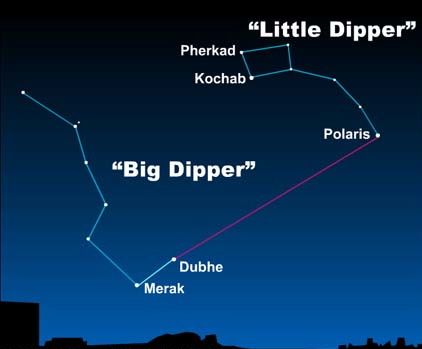
The plough or dipper is one of the best asterisms to orientate an audience and begin a stargazing tour with.  Ursa Major is also home to dozens of interesting stars and deep sky objects.

The stargazing tour lasted about 30 mins and covered the following:

  • Ursa Major and the big dipper pointers stars
  • Polaris and circumpolar constellations
  • The story of Callisto and Arkos (The greater and lesser bears)
  • Cassiopeia and the story of Queen Cassiopeia and Cepheus
  • The great square of Pegasus and the legend of Perseus
  • The Northern Cross (Cygnus)
  • Stellar physics on the differences between the stars Vega, Deneb and our Sun

Although it was quite a large group (around 20 brownies), I was amazed at the number of really interesting questions the girls kept throwing at me – what’s a light year,  what causes a supernova, how many stars are there?  The science behind the stars seems to really engage the minds and imaginations of children.

After stargazing we headed back inside for some of the indoor activities I’d prepared.  These included:

  • Demonstrating Moon phases using spheres on sticks and bright head torches
  • A competition to guess the distance from the moon to the earth (using scale ‘chocolate’ models)
  • Mars and Moon cratering using trays of flower, coca powder and lots of marbles!
20171114_183914_resized

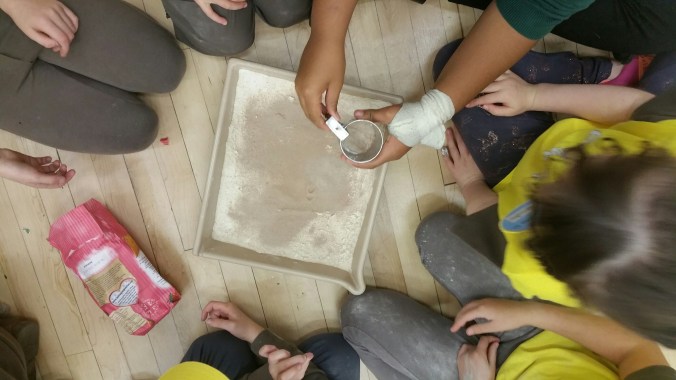
Laying down the lunar soil

The latter experiment was messy but well worth the effort, and was a good opportunity to discuss planetary evolution – why the moon and inner planets have such clear cratering and what it tells us about their age and history.

All in all it was a great evening and more importantly the Brownies seemed to have a fantastic time.

20171114_184554_resized

Discussing the impact craters

Cairngorm Stargazing Weekend and the Ghoul Star ‘Algol’

algol-star-beta-persei

Algol in Perseus – an eclipsing binary star system

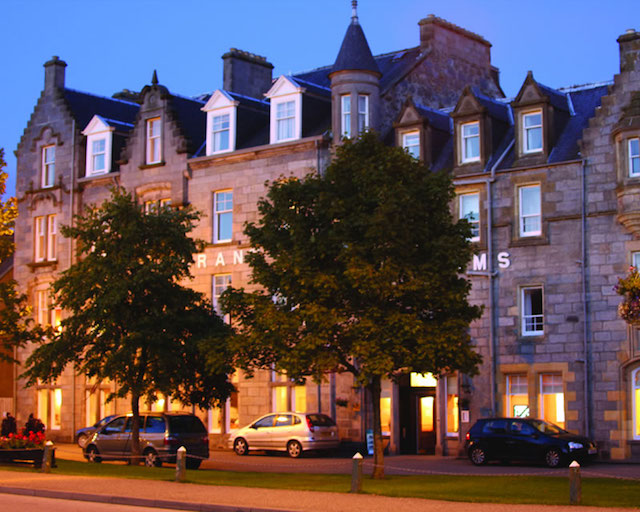
I had a great two nights of stargazing with guests at the Grant Arms Hotel in Grantown-on-Spey this weekend.  The Grant Arms is a 3 star gold hotel located on the main street of Grantown-on-Spey, and a superb base for adventure holidays within the Cairngorms National Park.  The Cairngorms also doubles as one of Scotland’s best stargazing locations due to the area’s superb dark skies and elevated position.
Hotel-at-sunset1-2

The Grant Arms Hotel in Grantown-on-Spey

After dinner on Friday I met my guests and we travelled out to the remote moors beside Lochindorb, where the skies were ablaze with stars and the Milky Way soared overhead.

Most of the main autumn constellations were on display with only the low western flank of the sky obscured by some distant weather fronts.  Some of my guests had never seen the Milky Way under really dark conditions before and were amazed at the clarity of the galactic disc soaring overhead.

We opted for naked eye and binocular observing and had stunning views of objects like the Pleiades, Hyades and the Andromeda galaxy, which was a clear naked eye target and resolved into a lovely oval haze in binoculars.  Most of the bright stars shone with stunning intensity under these conditions, allowing us to pick out clear colour differences in Orion’s main stars (just rising in the east), and within constellations like Aries and Andromeda.

During my tour I told the story of Algol, the ghoul star in Perseus, and how the ancients were mystified by its queer dimming every few days lasting several hours.  What I didn’t realise was that at that moment we were looking up at Algol during its lowest brightness, which only happens around 3% of the time you care to look at it.

11Oct05_430

How to find Algol

The reason for Algol’s periodic dimming is because it has a larger but dimmer companion star in a relatively tight orbit.  Every three days the larger companion occults Algol, reducing the intensity of light reaching an observer.  Algol is therefore classified as an eclipsing binary system.

We headed out into the darkness again on Saturday evening for more fleeting but equaly rewarding observing, with scattered cloud providing tantalising glimpses of clusters and constellations.   Afterwards we packed up and headed back to the Grant Arms for some hot chocolate, and I concluded the weekend with an astronomy presentation in the lecture theatre.

I’d like to thank my guests for being such great company and making it an enjoyable and memorable weekend.  I’ll be operating more Stargazing weekends out of the Grant Arms in the near future so keep a look out for new dates.
23456447_10155921156199766_706486519968077827_o

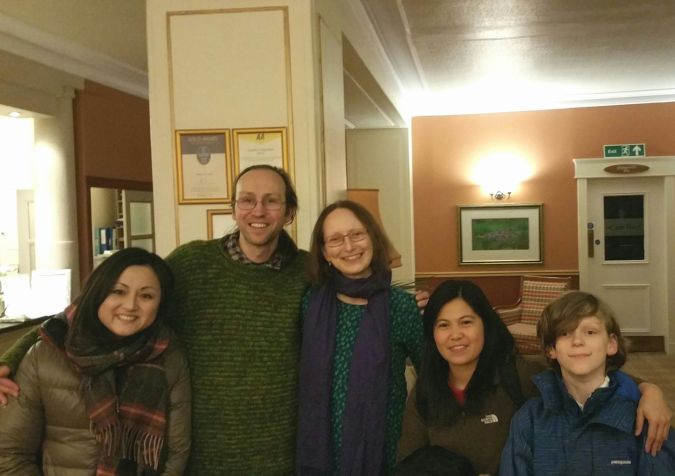
I met some lovely and interesting people during the weekend

Albireo and Double Stars

23004549_1977671072469835_6440880353890854062_o

A beautiful exposure of Albireo A and B  by astro-photographer Minos Kritikos

One of the best applications of a good telescope is the viewing of a wide range of double stars. While there are many double stars that can be split in a pair of binoculars, some of the most beautiful examples require more magnification, and that’s where telescopes excel with their narrower fields and greater resolving power.

One of the best double stars to view at northern latitudes lies in the head of the constellation Cygnus the swan – Albireo.

This beautiful indigo and gold double star really dazzles in a telescope eyepiece, and is easily resolved in a small telescope with at least 30x magnification.

The contrast between amber Albireo A and sapphire Albireo B is readily apparent in the above striking image, taken by my friend and astro-photographer Minos Kritikos.

There is still some speculation surrounding whether or not the Albireo pair are gravitationally bound – most evidence suggests they are. If so, their orbital period would be around 75,000 years.

22815394_1977674652469477_8953513486311338090_n

There are many interesting double stars you can try observing with even a modestly sized telescope – remember that most stars we can see in our galaxy (over 60%) are either double or multiple star systems.  Here’s a list of some other visually pleasing doubles to look out for.

  • Epsilon Lyrae – Lyra (binocular friendly)
  • Polaris – Ursa Minor (high magnification needed)
  • Mitaka – Orion
  • Alpha Capricorni – Capricorn (binocular friendly)
  • Epsilon Pegasi – Pegasus
  • Gamma Delphini – Delphinus
  • Eta Cassiopéia – Cassiopeia (high magnification needed)
  • Gamma Aries – Aries